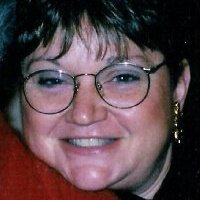
Mary Beth Wyss is a friend of The Great Spousal Unit, going all the way back to college in Ohio back in the 80s. Today she lives near Dayton with her husband after raising two great kids, one of which is in college in Dayton and one of which is serving in the military abroad. We’ve been fortunate enough to share decades of vacations and graduations and weddings, and everything in between.
Because Mary Beth is a friend of Maureen’s, and because we live almost 600 miles away from her now, I don’t talk to her a lot. Still… for about twenty years, she was the only person I knew with diabetes. When I was thinking of going to an insulin pump, Mary Beth was the one with experience enough to know whether it would be worth pursuing. When I had questions about medications or something a doctor was telling me, or if we just needed to commiserate about a bad diabetes day or bad diabetes month or bad diabetes year, well, you probably understand. We haven’t talked a lot over the years, but whenever I’ve had a question about diabetes, she’s always been there with the straight answers.
When I heard recently that she’s part of a clinical trial testing a new medication to help treat Diabetic Macular Edema, I had a lot of questions.
The following is the unedited, straight version of Mary Beth’s experiences. Even if they’re tough to read in spots, I hope you’ll read through to the end. I promise you, it’s worth it. I think you’ll get a better understanding of how important a role clinical trials play in the future of Diabetes, and all our lives.
Stephen: First tell me a little about your story. When were you diagnosed, etc. If you want to talk about the family, how things have changed since diagnosis, or anything (or nothing) else, that’s okay too.
Mary Beth: I was diagnosed at the age of 24 – one year after I was married. I had an eye infection that wouldn’t clear up after 3 months of treatment. The lead doctor in the practice had “turned me over” to one of their associates, who kept repeating the exams and telling me to continue with the drops until I finally called the office and demanded to talk to the lead doctor again. After examining me, she told me that there had been no improvement and that usually indicated that there was something else playing into the equation and she suggested a full medical work-up. She contacted my family physician who ordered a barrage of tests (EKG, EEG, Blood work, etc). When I returned to the office to review the test results, they told me it was diabetes. My blood sugar was 435 the day they did the tests. I started oral medication, my blood sugar dropped and my eye infection went away.
Stephen: When did you first get a diagnosis of Diabetic Macular Edema? What was that like? How did it make you feel? Did it change how you feel about living with diabetes?
MB: About 10 years ago I started having trouble with my vision in my right eye. My eye doctor told me that it wasn’t something he could treat and he recommended me to a Retina Specialist. I spent most of the day in the specialist’s office, going through retina scans, having dye injected into my blood stream for pictures, etc. Finally they told me there was bleeding and swelling behind the retina and he performed a laser treatment. It was scary. I had to hold really still for what seemed like an hour. Afterwards I couldn’t see very well because of what he called “sun spots”. But the treatment helped and that’s all that mattered. A few years later the problem returned and I started seeing a different set of Retina Specialists. They recommended steroid injections in the eye (my right eye). Yeah – it was a bit frightening because they were actually sticking a needle in my eye! But there was such an amazing effect – like immediate improvement – that eventually I started asking for the injection. The results lasted a year at first, then 6 months, then 3 months and then they had no effect at all. And the left eye began to show symptoms similar to the right eye, so I had to start getting injections in both eyes.
The right eye continued to reject the injections and my vision was going downhill fast. They tried injections of other medications, then laser treatment, then a combination of the two medicines and finally a combination of laser and injection but with no results. About that time one of the doctors at the practice told me there was nothing more they could offer to fight this disease and called it Diabetic Macular Edema. That’s the first time I ever remember hearing that name. I came home and researched it on the internet and – sure enough – the symptoms were the same. And I realized that it wasn’t something that had just developed – it was my Diabetes coming back to haunt me.
When the trouble first started I sensed it had something to do with the Diabetes. Diabetes is a sneaky disease and doesn’t show its effects at first. You can go years “cheating” and not pay any consequences. I guess that’s what makes it so easy to cheat. You sneak one treat and no one sees; and there is no backlash. So you try for another and another. And as long as you don’t get caught, you don’t see the harm. But then the symptoms appear and you realize that once they finally start to show, it’s too late. You can’t change your ways and make everything better. Years of “cheating” has now taken a toll on your body and you can’t reverse it. Once the symptoms start, the best you can do is figure out how to deal with them and prolong the inevitable. My eyes were the first warning shot that I got that there was a problem. They were my “Achilles heel” if you will. Diabetics are prone to heart issues, kidney issues and eye issues. My heart and kidneys are strong; guess my eyes are taking all of the abuse.
Stephen: What kind of treatments did you undergo after the diagnosis?
MB: I sort of already went into this but I’ll elaborate, in case I forgot something. The first injection was at the ophthalmologist’s office after they realized things weren’t getting better. They told me they were giving me a steroid injection, which didn’t faze me because I’d had them before for joint pain. Then I realized the injection was going in my eye! I had driven myself to the appointment so I had to call my husband to come and take me home afterwards. He had a friend drive him to the eye doctor’s office so he could drive my car and not have two cars there. I was trying to talk myself into relaxing and detach myself from the reality of the situation when I realized my husband’s driver was being attended to because he almost passed out when he saw what they were doing! They do numb your eye before-hand with a topical steroid. And then they inject a numbing drug, kind of like they do at the dentist to numb your mouth. You don’t actually feel the injection – more of a pressure as they poke. The worst part, to be quite honest, is when they put the specula in to hold the eyelids open. There is a foreign object in your eye, so your eye is trying to push it out. Oh, and at that time they were putting Betadine solution in the eye to help prevent infection. Betadine solution tends to absorb moisture so your eye starts burning and watering, trying to put the moisture back in.
The second treatment was the laser treatment. They prep you to tell you that you need to sit very still and not move your head. And you need to hold your eye still so they don’t laser something other than their intended target. You realize how serious this is and that you could make one false move and go blind. No problem. (Editor’s note: WTF? Seriously? I hope you’re joking here!) Your eye is dilated so they can see deep into the back of your eye. And they’re shining bright lights into your eye (laser) so you tend to want to blink. And your eye waters. As the lasers continue, it gets harder and harder to hold your eye open. And they shoot the laser several hundred times. I usually ask how many times they plan to laser so I can keep count and know when the end is coming. Afterwards, all you see is spots in front of your eyes so it’s hard to walk, read, watch TV, etc.
At one point in time – out of desperation I guess – they tried combining the laser with the injection. After lasering the eye – 200 or so zaps – they injected the medication in hopes that they would play well together. Nothing happened. My eye felt very “picked on” but there was no improvement. The last thing they did was to inject two different medications into the right eye. The result: Nothing but blurriness in the right eye for weeks. Unfortunately, they tried this right before we left to go on a cruise so I was no help with the driving down and saw very poorly on the cruise. Luckily I was with family and they covered for me.
Stephen: How did you find the study you’re participating in?
MB: The last time I went to see my Retina Specialist and there was no improvement, one of the doctors “leveled” with me and told me they had done everything they could do with what was FDA approved. He told me to look into clinical trials. He explained that the drugs were trial medications and had not been approved by the FDA, but they were safe. He also explained that most studies offer the medications for free and some doctors write off what insurance doesn’t cover, to get you to participate in the study. Lastly he told me, “Today’s trials are tomorrows medications. If you want to get treatment now you have to help with the research.”
I came home and sat down at my computer and started researching “clinical trials.” I typed in Diabetic Macular Edema and spent hours pouring over the results. I found trials in Maryland, Wisconsin, North Carolina, California, etc. Most of the information suggested finding one nearby because of the frequency of the visits and the expense of travel. After months of searching I was beginning to get discouraged. And then an advertising campaign started up for the Wexner Medical Center at The Ohio State University. All of these people kept talking about the wonderful things they were doing and how marvelous the facilities were. So I started digging through the website until I found the Ophthalmology Department and I found the contact information for the chair of the department. I sent him an email, explaining my situation, and asked if there were any trials going on that would help. He gave me the name and contact information for one of their doctors and I called his office.
Again I went through the symptoms, the chronology of the treatments, etc. The nurse told me the doctor was involved in a few clinical trials that I might qualify for but, of course, they’d have to examine me first. So off to Columbus we went to see yet another doctor. After another full day of tests and measurements and blood work and questions, I was told that I did qualify for one of the clinical trials he was about to start. He explained that they’d have to send in my information and apply to DRCR (Diabetic Retinopathy Clinical Research) to see if I was accepted. And after they applied and I was accepted, it was just a matter of waiting until they got the study submitted and the details worked out. I saw that doctor in April. I was accepted into the study in June. I started my first treatment in December. (Editor’s note: This is similar to my experience. I first stated my interest in participating in a clinical trial last June; participation in my first trial started in April.)
Stephen: Tell me about the trial– Who are the plan sponsors (NIH, a university, JDRF, ADA, pharmaceutical firm, etc.)? How long is it? What’s the treatment? Is it a control group vs. a group taking a placebo, or something else?
MB: Here is the official blurb from the Havener Eye Institute’s web page:
“The National Eye Institute is sponsoring a clinical trial to evaluate three different anti-VEGF injections for the treatment of Diabetic Macular Edema (DME).
The retina is a thin layer of tissue that lines the back of your eye. It is nourished by blood vessels that become affected by diabetes. DME is the term used for swelling in the small central part of the retina used for sharp straight-ahead vision due to diabetes.
Injections into the eye of drugs that block a substance called vascular endothelial growth factor (“anti-VEGF drugs”) have been used to treat DME because abnormal levels of VEGF can be produced by a retina affected by diabetes. These abnormal levels of VEGF can cause leakage of fluid from retinal blood vessels, which can cause swelling of the retina and potentially vision loss. There are several anti-VEGF drugs. The three drugs being studied are called Lucentis® (ranibizumab), Eylea® (aflibercept), and Avastin® (bevacizumab).”
The trial is sponsored by the National Eye Institute. It is a two year trial, although I can drop out at any time if I feel it’s not working. The treatment is another injection but not steroids this time. It’s more of a long term solution, rather than a quick fix. It is a blind study, in that we were not told which medication we were being given. There are no placebos. Although both eyes qualified for the study, I had to drop out of it for the left eye because the vision was deteriorating and we had to act on it right away. However, once one eye is enrolled, the other is automatically treated with the same medication! The medications are free, as promised. And my doctor is writing off whatever insurance doesn’t cover, so there really is no expense to me, other than gas to get to Columbus. And I get a Wal-mart or Target gift card (my choice) after every visit, so that kind of offsets the gas.
Stephen: What has been your experience with the trial? Give me the good, the bad, and the ugly… or pretty.
MB: As for the overall opinion of the trial, I’d do it again in a heartbeat! The pros definitely outweigh the cons. There is the travel to Columbus once a month (Editor’s note: about 1 1/2 to 2 1/2 hours each way, depending on traffic), which is an inconvenience at the worst. The office visit is about a 4 hour process, from the time I walk in the door of the office building to the time I leave. There’s a vision test to track improvement, an OCT scan to track swelling, the actual doctor’s exam and the injections. There’s a log being kept of the medications I’m taking and my overall health. There seems to me a lot of paperwork, but I don’t mind. The fact that there is no cost is huge! And after complaining about the Betadine drying my eyes and causing burning, they now just dab the actual injection site with Betadine, which helps a lot! The doctor and the nurses are great and we’re on a first name basis now. They are all about my comfort, from propping up my feet during the injection to bringing me a blanket if the room is cold.
Stephen: Finally… Any advice for people considering participation in a clinical trial?
MB: My advice: If there is a clinical trial out there that is looking at whatever you’re dealing with, go for it! The secret is to make sure you click with the doctor and his staff. And if you don’t, keep looking. Not only are you benefitting future generations of people suffering from the same symptoms, you’re getting treatment NOW for problems that they may not find a cure for in the near future. And the way I look at it, if I have to suffer – fine. But if I can help people along the way – even better!
In case it hasn’t occurred to you yet, this is some seriously brave shit. Mary Beth, thank you so much for your courage, and thanks for recounting your experiences for all of us here.


 Diabetes Blog - Happy-Medium.net