Author Archives: StephenS

Hello… I’m Stephen. I live in Baltimore, Maryland, USA with The Great Spousal Unit, Maureen. I’ve been living with Type 1 Diabetes since January 1991. I’ve been a pump user since April 2010, and I’m currently wearing the Animas Vibe pump. Also wearing the Dexcom G5 continuous glucose monitor.

I found the Diabetes Online Community in the summer/fall of 2011, and that discovery has changed my life. I started this blog in April 2012, and since then, my diabetes advocacy has continued to grow. Among other achievements, I’ve attended and spoken up at FDA workshops and participated in clinical trials.

I’ve been thrilled to serve as a facilitator for the Diabetes UnConference. And I’ve been honored to volunteer for Diabetes Patient Advocacy Coalition. You should Google both of those.

I’m currently serving as a member of the State of Maryland’s Advisory Council on Health and Wellness, where I am co-chair of the Diabetes committee. In addition, I’m part of the 2018 Reader Panel at Diabetes Forecast magazine.

I’m always searching for the perfect balance between the highs and lows of my blood glucose level and my life… always searching for the Happy Medium.

Anything you’d like to share? Please let me know… I’d love to hear from you.

Sailboats.

Sailboats
I was standing in a conference room at work the other day, waiting for a meeting to start. The room looks out over the Inner Harbor here, and off in the distance I could see a sailing class. Lots of little sailboats tacking back and forth, all with different brightly-colored sails being filled out by the harbor breeze.

Watching that scene made me think about this thing called diabetes. There are a lot of us out there faced with the daily, relentless onslaught of this chronic condition. Tens of millions of us just in the USA. According to the International Diabetes Foundation, there are over 300 million people affected by diabetes across the globe.

But we’re not all the same. Like the little boats in the harbor with green sails and blue sails and pink sails, there are people living with Type 1, Type 2, LADA (Latent Autoimmune Diabetes in Adults), and other forms of this disease. The therapies and drugs available to treat our conditions are even more different than the types themselves.

A Type 1 may be on MDI (multiple daily injections), or may be taking advantage of insulin pump therapy. A Type 2 may be taking a pill to help keep their glucose levels down, or they may ramp up their exercise regimen and change their diet significantly after diagnosis. A person with Type 1, 2, or LADA may consider making the decision to wear a continuous glucose monitor (CGM). Or not.

Some, unfortunately, do not have these decisions to make at all. For many in developing countries, a diabetes diagnosis is a death sentence, either due to lack of insulin, the ability to keep it cold or warm enough, or the lack of ability to pay for it at all, not to mention the absolute dearth of access to care and education. It hurts me to think of the fact that by pure luck, I wound up in a situation where I have access to care and drugs and technology that allow me to lead a good life, while others die for lack of basic necessities.

When it comes to research about diabetes and the search for a cure, there are many different courses charted too. Many doctors are furiously searching for the absolute source of the beginning of diabetes in a person’s beta cells, in the hope that they can stop whatever triggers the disease in the first place. Others are making progress in leaps and bounds by developing technology that, while not providing a cure, may change how we live with diabetes by helping us to stay safe and always keep our blood glucose in a stable range (I’m looking at you, Artificial Pancreas).

So just like those sailboats going east and going west, we’re all headed in different directions. We have our busy lives full of jobs and family and social media, etc. Some of us write about diabetes, some walk for a cure, some ride for a cure. Some have enough to do just fighting the demons within themselves… the ones that say “Give up” or “Why do you keep trying?”. The people who overcome that kind of challenge are champions just as much as those who make headlines and raise thousands and help others.

I’ve said it before: Diabetes comes in many flavors. No two of us are exactly alike. Except that we possess two very special qualities.

We are blessed with empathy. Living with D has made us acutely aware of what it’s like to deal with inexplicable highs and lows on a regular basis. What it’s like to deal with medical professionals who write off anything not great as entirely our fault. What it’s like to listen to people who spread misinformation, then think about it as an educational opportunity. I’m constantly amazed that I have not yet encountered anyone in the Diabetes community (online or not) who is mean or ego-driven. I think that comes from a place of empathy first. We know what it’s like… Your highs are our highs… Your lows are our lows… Your successes are our successes.

We’re also blessed with resilience. We all have the unique skill of being able to get up every day, tote our gear, and treat our condition. Every. Single. Day. How many of us think that before our diagnosis, we’d be able to keep this up for years? Diabetes teaches us resilience, and every day that we hang in there and do what we have to do is a victory.

The songwriter Jason Robert Brown wrote a lyric that goes “We have nothing much in common; but we are more or less the same”. In the song, he was talking about his brother. In my life, I’m talking about my brothers and sisters with Diabetes. We have many differences. But we are all the same.


Like These Links – Provide Support – Participate – Do Good.

You may have heard about all of these already. But just in case you haven’t, be sure to lend your support, learn, and participate in all of these initiatives:
 
 
Scott Johnson has made it to the semifinals(!) of the 2013 Insulindependence Athletic Achievement Awards contest. He needs your help to make it to the finals. Each unique view of the video below means another vote for Scott in his quest to win a $5,000 package of support for his future athletic endeavors. So view it on your desktop, your laptop, your iPad, your smart phone, and all of the PCs in the school library. And don’t forget to share this with your friends too. Scott’s an inspiration to everyone (myself most definitely included), so show your support by viewing today.


Now… A reminder to Strip Safely. Glucose meter and test strip accuracy is a big issue, and there’s a DOC initiative to do something about it. I invite you to go to www.stripsafely.com (or click on the image below) and take the quiz. Then do something about it, including writing your elected officials in Washington and telling everyone about it. Tell everyone about it. Because our lives depend on it. More to come on this issue, in this space soon.
StripSafely
 
 
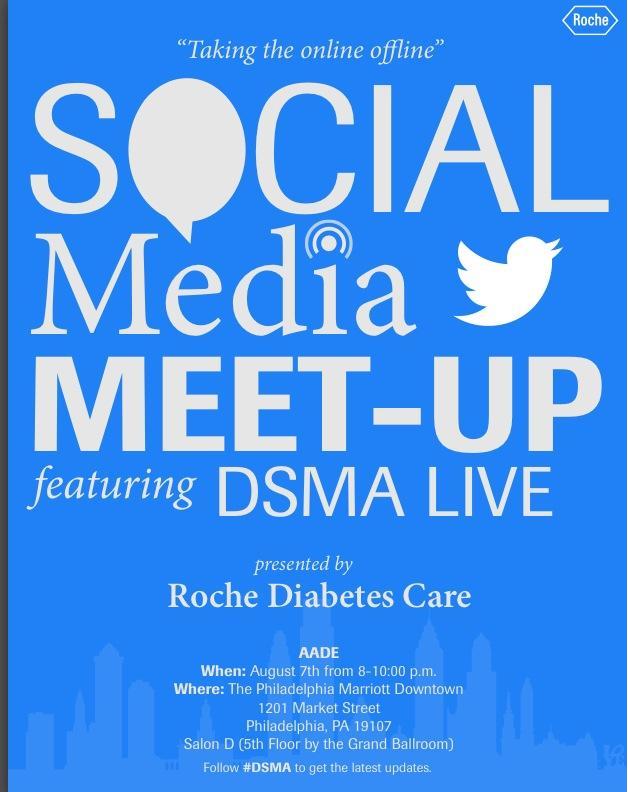
Finally… If you live on the USA’s east coast, you’re invited to join the #DSMA party in Philadelphia on August 7th. That’s during the time that the AADE convention is taking place there. Cherise and Scott will be hosting DSMA Live, and since it’s a Wednesday, I suppose there will be some #DSMA Twitter Chat going on in person too (is that a thing?) Here’s the information:
DSMA
 
 
Get involved now… Happy Hump Day!


Clinical Trial Snapshot.

DSC00895

The photo you see above is indicative of something I do every day.

As part of the clinical trial I’m participating in, I have to log onto a website every day (or every other day) and enter information related to my diabetes. I also have to upload Dexcom data for each day.

What you see in the photo is from two different days. One of those was a day with a sensor change, and a comedown from a high caused by insulin that went bad overnight (both on the second day). I use some shorthand for what I need to enter. Putting this down on paper ahead of time makes it easier once I log in to do the entry. Let me break it down for you:

On the left side, you can see the times that I’m doing finger sticks each day. Next to that is the blood glucose reading (in milligrams per deciliter, or mg/dL). Since almost all of the readings are from times when I’m eating something (three meals plus a snack at night on these two days), you’ll see the insulin bolus I’m administering next to the BG number (it’s the 4.0, 3.1, etc. on the photo). The difference was on the second day, when I did the fingersticks for calibration of the new Dexcom sensor at 8:58 and 9:18. The 9:18 fingerstick was followed up by a small 1.5 unit correction bolus. Finally, there’s the code I’m using to note what kind of meal or snack I’m having. The meals are noted as small, medium, or large, and either high carb (HC), high fat (HF), high carb and high fat (HCF), and neither high carb nor high fat (N/A).

This isn’t all of the data that gets entered. I’m also entering information about exercise and how I’m feeling that day, plus a couple of other things. All of the daily data that is entered is used by the site to help guide me toward making good choices to help manage my diabetes better. Every so often, we’re prompted to learn various things about our diabetes through core studies created by the study’s team.

I’ve started keeping all of these little sheets of paper with my daily data on it. Right now, looking at this information in its simplest form really makes me cringe about how I’m going through my day. I mean, those aren’t great numbers there. My A1c is good, but I’m anything but proud of what this shows me. These are a couple of not-so-great days, for various reasons. I’ve had much better ones, but I still don’t have any great excuses. Maybe keeping everything and looking back on it will make me consider what to do to be better in the future. At the very least it will keep me from ignoring it.

The requirement is for me to enter daily data at least five out of every seven days to continue my participation in the study. We originally started the study in April. Then we took a break, and started again in late May. Getting everything down in simple form in one place has made doing this every day for five weeks a little easier.

Now I’m starting to really think about what all of these numbers really mean, and what to do about them.


Stay cool, my friends.

Okay, so obviously, I need to post this. If only to remind myself that insulin becomes useless once it reaches a certain temperature.

About a week and a half back, I had to toss out my reservoir with something like 65 units of insulin left. My site was working well for a few days; then allofasudden, my glucose kept climbing up. Over the 300 mg/dL mark. In the middle of the day, which is very odd for me. When I got home from work, I changed out my set, and wouldn’t you know it, before long, my BG came down into the upper 90s – low 100s.

This sequence of events didn’t surprise me too much: It is summer in Baltimore, and baby, does it ever get hot and humid here. Add to that the fact that our air conditioning unit finally gave out about a week earlier, and it’s no wonder I couldn’t keep the insulin in my reservoir cold.

Fast forward to this week. Again, I have a site that’s working very well, for about 5 days (yes, I often go longer than 3 days… so sue me). And we had a new A/C unit installed about a week ago. I go to bed overnight sitting at a pretty good 96, and I had a granola bar for a snack right before turning in, so I wasn’t worried about going low. I got up for a minute about two hours later, and a quick check of the Dexcom unit showed 124. About what I expected.

Then, about 3 a.m., the Dexcom starts beeping. That loud, “you’re high, you’re high” beep. Now it says 224 mg/dL. Great.

By morning, I was at 266 mg/dL. I took the reservoir out of the pump, and it certainly felt warm to me. I must have been sleeping right on it all night. Those reservoirs aren’t always the easiest things to look through, but what was inside didn’t look like normal insulin to me anymore. So I decided to throw out 70-plus units of insulin this time and change everything over. Today was a sensor change day too, so it was a double blessing while I was trying to get out the door to work.

Novolog, the insulin I’m using right now, has a tolerance up to 86 degrees farenheit (according to their website). By the way, Glucagon is only good up to 77 degrees farenheit. Above those temperatures, bacteria living in our insulin start to break down the protein inside our vials, insulin pens, and yes, pump reservoirs. Also, according to a Mayo Clinic blog post, “Heat can make proteins like insulin harden, which increases the potential for infusion set occlusions”. They also recommend tucking in the tubing instead of leaving it out and exposed to the heat (which is what I’ve been doing).

Man, I used to love summer. Now the hot weather gives me one more thing to consider. I know I will be much more careful through the next few months.


A Silent Disease? Not Exactly.

Over the past couple of decades, I’ve heard people refer to Diabetes as a “silent disease”, or some such nonsense. I’ve also heard the same phrase attributed to high blood pressure, but this is a diabetes blog, so that’s what I’m talking about here.

It’s strange how our minds get warped by numbers, and then by what those numbers mean, real or imagined. Our lives are consumed by it because our lives depend on it.

Our minds are constantly filled with numbers: Blood glucose, insulin on board, grams of carbohydrates, insulin to carb ratios, hemoglobin A1c, and oh yeah, our weight.

We calculate and pre-bolus and super bolus and correct and exercise and try to eat healthy to keep our numbers in a good range. To be “compliant” (don’t get me started). Heck, just to feel good.

When those numbers aren’t so great, we feel that too. We feel sluggish, thirsty, ready to run off to the loo at a moment’s notice. We also feel concern, worry that we’ll develop complications because we had a bad diabetes day today, and a bad day a couple of days ago, and another one last week. Still, we have to ignore it. Close the box. Turn off the noise. Forget about it. Because another day is here to be lived, and if we want to live it well, we have to concentrate on the here and now and try our damndest to avoid the issues that tripped us up yesterday.

If we do that, and we put a few good days together, maybe a week, what do we have? A week’s worth of good numbers. And absolutely no guarantee that last week’s efforts will help us this week. Still, the numbers and what they represent pound inside our heads, invading the silence. Always with us.

Some PWDs have doctors who look at all of the data and pontificate, prescribe, and prognosticate. They want us to maintain tight glycemic control for 90 days, then explain in 15 seconds or less why we were unable to do so since the last appointment. Even if there’s no explanation. Or a really good one that proves that sudden spike last week wasn’t our fault. More to listen to.

There are good numbers sometimes, to be sure, but the feeling I get from a well-earned 98 mg/dL is always counterbalanced by the knowledge that my endocrine system will require at least the same amount of effort to keep that number in the same place tomorrow. There is no Bank of Blood Glucose to draw from when the same efforts fall short and result in an undeserved 198. We don’t have diabetes batteries to charge up so we can use them to power us when we’re diagnosed with complications.

I’ll admit that because I write and post here, I think more than I should about what it looks like if everything isn’t great with my BG or my A1c or my weight. On the surface, that may sound crazy– why worry about what someone else thinks about something so personal to me? But, in a way, I like holding myself accountable to my readers (both of you). If I can’t always be successful, I want to be sure that at least you know I’m trying hard and not making excuses. More to think about. More noise.

In the final analysis, I try to live the best I can with diabetes every day, on a day by day basis. Regardless of how things are today… when tomorrow comes, I do what I can to forget about the past. Yesterday is only a reference point. I will do everything I can today to live well, by whatever definition that is on that day. By doing so, I enjoy what I have without worrying too much about things I can’t change anymore.

And it’s the only way I can drown out the diabetes noise.