Category Archives: Events

It’s back: #IWishPeopleKnewThatDiabetes

IWPKTD

Welcome to the second annual #IWishPeopleKnewThatDiabetes Day, brought to you by Kelly Kunik, who would be pleased as punch (made with 100 percent juice) if you would share your thoughts on the subject, using the #IWishPeopleKnewThatDiabetes hashtag. Write, share, and join us for the #IWishPeopleKnewThatDiabetes and #DSMA Twitter chat tonight at 9:00 eastern time here in the USA.

It’s an interesting paradigm: Diabetes is invisible to many, though it certainly is not to those of us living with it. At some point nearly every Person With Diabetes is reluctant or fearful to open up and reveal the challenges that come with managing blood sugar every single minute of every single day for the rest of our lives. Yet, it can be cathartic, rewarding, and yes, overwhelming to actually do that and tell our story to the world.

#IWishPeopleKnewThatDiabetes is not easy. It’s not “set it and forget it”. It’s not a series of rules or directives that will move us instantly to BG nirvana if we follow them all to the letter.

#IWishPeopleKnewThatDiabetes is a lot more involved than that. It’s dealing with insurance and doctor visits. It’s dealing with keeping our insulin warm enough in the winter and cool enough in the summer so it doesn’t go bad. It’s dealing with bad infusion sites, and continuous glucose monitors that can’t work in lockstep with our meters. It’s dealing with the thirst and sluggishness of high glucose, and the hangover feeling of low blood glucose.

#IWishPeopleKnewThatDiabetes means also living with the possibility and the fear of complications. A number of co-morbidities can result from living with this disease, and if we do experience one or more of those, it doesn’t mean that “this happened because we weren’t taking care of ourselves”. And you never have the right to suggest such a thing. Ever.

#IWishPeopleKnewThatDiabetes costs one heckofalotta money. Remember, we have to not only live with diabetes every day the rest of our lives; we have to also pay for the privilege. Prescriptions, durable medical supplies, insulin pumps, CGMs, and enough supplies for unexpected lows. In my country, it amounts to thousands of dollars out of our pocket every single year, for as long as we live.

#IWishPeopleKnewThatDiabetes gets even tougher as you get older. Here in the USA, people who have come to rely on CGM technology to help them avoid dangerous lows must give up their CGM once they reach age 65, or engage in a long appeal process to keep it, because our Medicare program won’t cover it.

#IWishPeopleKnewThatDiabetes needs more voices, and more support for those voices. In the past four years that I’ve been writing in this space, I’ve come across so many brilliant and helpful people that continuously raise the level of discussion and advocacy for those living with and affected by diabetes. But no one person can connect with every person via the information superhighway. So we need more voices, from more perspectives, in more places, to bring diabetes awareness and support to match the need for awareness and support among every segment of our health care systems, economies, and governments.

Your story is important. Share liberally. Thank you for being such an important part of this community.
 

#FFLFC16: A Weekend Well Spent.

Over the weekend, I was able to attend another gathering where People With Diabetes were able to learn, share, and enjoy the company of one another.

From the team that brings you the Friends for Life conference in Orlando each July, the Falls Church, Virginia version was a welcome weekend spent with a different group than I’m used to hanging out with.

But that’s good, because I like families, I like kids, and I definitely like meeting new people. Over the course of two and a half days, I was also able to get back up to speed on the latest in Artificial Pancreas research from two groups, get firsthand accounts of the amazing development of the Nightscout system, and I was able to take in (and speak with attendees) about advocacy issues including Medicare CGM coverage, our relationship with FDA, #SuspendBidding, and more.

This event was pretty well attended, and the location couldn’t be better. From a purely personal perspective (and this has nothing to do with the content of the conference), the buffet meals were really good. Lots of options, including gluten free, and carb counts on everything.

The content of the sessions, as you might expect, varied depending on whether they were for adults, kids, or parents. The adult sessions included Dr. Korey Hood from Stanford covering diabetes burnout; a guide to applying the glycemic index to what you eat by Gary Scheiner; nearly a full day on diabetes advocacy from the super team of Christel Marchand Aprigliano and Bennet Dunlap; and finding support through social media with Kerri Sparling.

There was also an exhibit space that featured every U.S. pump maker except Medtronic, Roche (and their latest Accu-Chek meter—I’m interested), the Diabetes Patient Advocacy Coalition (with laptops people could use to e-mail their elected officials in Congress and the Senate!), and both the American Diabetes Association and JDRF.

A couple of tidbits from the weekend: we were told that this was the first Children With Diabetes conference that featured more adult attendees with diabetes than kids or families. And, it looks like Jeff Hitchcock and Laura Billetdeaux are looking at options to come back to the Capitol area for another conference very soon. Which I think would be fantastic. It was three years between events in the D.C. area, and that’s too long to wait.

The Great Spousal Unit likes to say that after a diabetes event, I come home more energized, and walking on air for a considerable time afterward. Since she made the trip with me this time, I think she now knows why. I hope she does. Because no matter how often I gather with people who walk the same path I do, it still means a great deal to me to be together with them in the same space.

Thanks to all of the staff and volunteers at Friends for Life Falls Church for being so welcoming, helpful, and informative. And in case you were wondering, I was not given anything to say that. It comes straight from the heart.
 

2016 Type One Nation DC Summit.

Saturday, March 5th marked another terrific JDRF Type One Nation Summit in the D.C. suburbs, specifically, Bethesda, Maryland. Over 800 people living with diabetes and caring for people living with diabetes were in attendance, and they saw a number of presentations from people who really know what they’re talking about.

But let me back up for a moment…

For me, the day started with an adult T1D meet and greet. It was a terrific way to say hello to the other adult PWDs in attendance. When you have so many people in the same room, it’s easy to lose track of who is a PWD (Person With Diabetes) and who isn’t. We got around 45 minutes to sit and chat informally, and I was happy to make some new friends in Andre, Tom, Moe, and Tom. I was really glad to see this become part of the agenda. And I’m hoping it returns next year.

Our summit was moderated by Stefany Shaheen, writer of the book Elle and Coach, about her daughter (who lives with Type 1) and her service dog. She’s also co-founder and President of Good Measures, which designs healthy eating plans from registered dieticians that people can access via a digital platform.
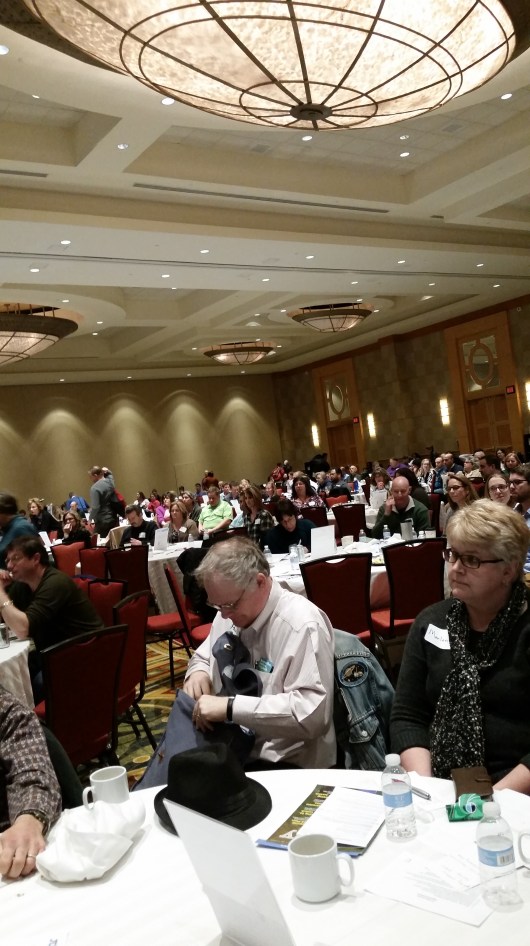
All eyes on Stefany Shaheen and Bill Parsons

All eyes on Stefany Shaheen and Bill Parsons


Okay… once the meet and greet was finished, we were all given what seems to be a pep talk by Bill Parsons, who was a former member of the JDRF’s International Board of Directors and Chair of Research; and who is now Executive Director of our Greater Chesapeake and Potomac chapter. He didn’t sugar coat diabetes (ironic), and he didn’t hide from the facts. But he did convey JDRF’s passion for reduced burdens, better outcomes, and eventually, a cure that people working with JDRF are so famous for. It was a good table setter.

Bill’s talk really got everyone in the room jazzed, and then we got to the keynote address for the day, given by JDRF’s CEO Derek Rapp. He also spoke a little at the adult meet and greet. This is the first time I’ve heard him speak in person, and I was taken by the unassuming way he delivers the heart of what JDRF is all about these days. He wasn’t just giving us a laundry list of accomplishments, but rather a reason why the accomplishments are necessary, and the assurance that JDRF isn’t giving up until there’s a cure. Which is reassuring.

Then it was on to Howard Look, CEO of Tidepool. This guy is really, really smart. His Type 1 daughter is using a homemade artificial pancreas system that Howard designed himself. Cool dad. I’ve written about Howard and how he presents his take on device data and making it available in one place, and it seems like Tidepool, the non-profit out of California, is really on fire these days. His presentation also included a live demo of the Blip app that Tidepool has rolled out. It allows you to upload pump data, CGM data, meter data, and more and get real time analytics on your numbers. All your numbers. In one place. And if you choose, your doctor can too. It’s all free. If you have a Chrome browser, you can download the app right now at tidepool.org.

Howard also covered the latest from Tidepool, still in development, called the Nutshell app. It’s supposed to be able to grab data from your fitness tracker, allow you to input data related to meals, and again, see that data in one place. Brilliant!

Gary Scheiner was at the summit again this year. He gave a really super presentation this time on how to take the sting out of those pesky post-meal glucose spikes. He gave us some really simple steps that all of us can apply. Simple suggestions, like adding a little acidity (like tomatoes) to a meal to help cut into those high glycemic foods. And eating your vegetables first, which leaves less room in your stomach for the carby stuff that pumps up the BGs. I have to admit: eating my salad first means eating less bread and potatoes with my entree. It was a very useful talk.

Next it was Cynthia Rice, Senior VP of Advocacy and Policy for JDRF. She’s another person with a real passion for bringing the concerns of T1Ds to elected officials and commpany representatives. Interested in playing a part in JDRF advocacy yourself? We could really use you. CLICK HERE to learn more.

I wouldn’t normally talk about lunch, but I will this time because of two things: 1) The buffet had carb counts for everything! Very helpful, and I was glad to see it. And 2) I got to eat lunch with the intelligent, talented, and overall wonderful Kelly Kunik, who was leading one of the youth sessions earlier in the day. I also took a little time to check out the exhibition hall, full of organizations and companies with the latest products. Bonus bonus.

Exhibition hall

Exhibition hall


After lunch, it was Dr. Sanjoy Dutta, Assistant VP of Translational Development and International Partnerships. What does that mean exactly? Well, in this case, it meant that he was able to give the attendees all the latest on research and advancement toward better outcomes and (hopefully, eventually) a cure for Type 1 diabetes. Now I am up to speed.

Any diabetes gathering that includes Joe Solowiejczyk is solid gold. Joe Solo is an RN, a CDE (Certified Diabetes Educator), and author of A Type 1 Diabetes Guide to the Universe. His talk centered around the parent/kid with Type 1 interactions that can be such a challenge. Sometimes raw, always funny, he really made a case for how to make the most of those difficult situations. If you ever get the chance to hear Joe Solo speak, don’t miss it.

Finally, it was ViaCyte’s turn. Paul Laikind, PhD, President and CEO of ViaCyte came in person to tell everyone about the exciting advancements they’ve been able to achieve in the past year. Guess what? Actual patients, real people, are trialing this solution, and with a fair measure of success so far! We’re hoping this next year brings even greater success to this innovative solution.

After a question and answer session with the presenters, another JDRF Type One Nation Summit was complete again. For only covering one day, it sure covered a lot. Special thanks to Greater Chesapeake and Potomac JDRF’s Outreach Coordinator Alex Ade for her tireless work piecing everything together. It really was terrific. Want to hang with your fellow T1Ds and get the most up-to-date information on research, as well as help managing your diabetes even better than ever? If there’s a summit headed your way soon, you can find it HERE. And next time the JDRF Type One Nation Summit happens in my area, I will try to give you plenty of advance notice. You won’t want to miss it!
 

Diabetes UnConference Las Vegas 2016.

Sunset
 
Another Diabetes UnConference is in the books. Over one hundred People With Diabetes (PWDs) and People who Love Us (PLUs) gathered over three days at the Flamingo in Las Vegas, Nevada.

This year’s UnConference was different for me because as a facilitator, I was not only involved in the conversation, I was tasked with helping to make every attendee’s UnConference experience as good as it could be.

When you think of it only that way, it seems kinda scary. But the truth is, there was over 2,500 years of diabetes experience in the room. These people know what it’s like to live with the ups and downs of a disease they have to manage 24 hours a day, seven days a week. So while it could have been scary, in fact it was exciting. And fun. I was overwhelmed by the inspirational, friendly, loving, caring individuals that I shared the weekend with. I learned a lot about compassion, anxiety, and perseverance.

Just like last year, we covered a range of subjects that matter most to people living with and affected by diabetes. Some of those conversations were raw, some elicited laughter, some included tips and tricks for navigating high blood sugar numbers or insurance snafus.

To provide a safe, supportive environment for all in attendance, we adhered to the no social media policy instituted during the UnConference. So while I can’t talk specifics, I can reveal that together, we created a space for anyone to say anything, share anything, and help with anything. This is the hardest thing to explain to people who weren’t there, but it was absolutely the most critical part of the weekend.

While it might seem scary to help facilitate at a unique group gathering like this, the truth is that it was an incredible honor to share that role with my fellow facilitators. Special thanks don’t even begin to cover the admiration I have for Christel Marchand Aprigliano and what she has created.

As I watched the sun set over the Great Plains on my flight home, I realized that its magnificence paled in comparison to the many bright lights that shone from the Diabetes UnConference Las Vegas 2016. I am grateful you are part of my tribe. I can’t wait to see you again.

The Diabetes UnConference Las Vegas 2016 Alumni.

The Diabetes UnConference Las Vegas 2016 Alumni.


The Diabetes UnConference Atlantic City 2016 will happen September 9, 10, and 11 along the boardwalk in Atlantic City, New Jersey. Come be part of the tribe. To find out more, CLICK HERE.
 

Diabetes group think.

”The virtues, like the Muses, are always seen in groups. A good principle was never found solitary in any breast.”
~Buddha~


As we head into the diabetes conference season, I’ve been reading and thinking a lot about groups, and how groups, particularly groups of people meeting in person, affect our lives and how we feel about them. And how we feel about others.

It’s not fair to say I’ve always been a joiner; it’s not fair to say I’ve never been a joiner. I’ve been a little of both through the years. Some of the things I’ve joined have been underwhelming (Board of Directors of my community association), and some have been fantastic (hello Diabetes Online Community!). Some of the decisions I’ve made to not join have been okay too. Since I’ve been old enough to vote, I’ve resisted joining the Republican or Democratic party, and I’m still a proponent of a third national party in the USA, though I would not join that either, if asked. I highly value my independence.
 
 
”I was never really attached to a clique, and I wanted to be in all the different groups; I was never a one-group kind of person. I think that’s still part of my personality today.”
~Katy Perry~


What is it that a group can do that an individual cannot? In diabetes, the answer is simple: A group can provide validation. A group can provide trust. A group can provide empathy and understanding. And that’s just for starters.

Can I survive without ever coming into face-to-face contact with another person who lives with diabetes? Sure… I did it for nearly twenty years. Those were also, arguably, among the worst years of my life. It’s the time when I encountered the worst of my diabetes. It’s the time when I struggled with careers multiple times and was knocked down repeatedly. Sometimes because I wasn’t up to the task, sometimes because someone else in the group found that the best way to get ahead was to make others look worse in contrast. That’s a side of human behavior I’ve really only seen from my generation, and I’m happy about that. I also hope I’m right about that.

At any rate, groups do not always generate the best of outcomes. And outcomes like that never lead to sustainable results. But what about this diabetes group think? How does it differ?

I’m not an expert in this field, but you have to think part of it comes from our shared experiences. We’ve all been down the same road a few times, right? That’s a good starting point. Also, we do not come into contact with others living with diabetes very often. When we do, we are often overwhelmed by an unspoken desire to ask and share and comiserate in equal measure. We want to understand another person’s diabetes as only we, as People With Diabetes ourselves, can understand it.

Occasionally, we will come together as a wonderful group of individuals as part of a shared experience. We all may have faulty pancreases in common, or faulty pancreases may be very close to us via a spouse, a friend, or a child. But rather than the inept nature of one organ being the focus, we instead gravitate toward making our lives better, using our invaluable perspectives of perseverance and empathy to forge a better future.
 
 
”Nothing truly valuable can be achieved except by the unselfish cooperation of many individuals.”
~Albert Einstein~


Recognizing all this has allowed me to change my focus from “what can I do?” to “what can I do for people living with diabetes?”. Being part of a group who knows my life because they have also lived the same life helps me trust more. It makes me want to engage in the conversation and strive toward a common purpose.

We’re not all perfect. Not all groups are perfect. But shared perspectives, the trust it brings, and the understanding and bonds that derive from it are universal, my brothers and sisters. It will never go out of style.

This weekend, I will be at the JDRF TypeOneNation Summit in Bethesda, Maryland. To find out more, CLICK HERE. If you plan to be there, let me know so we can say Hi!

Next weekend, I will be facilitating at the Diabetes UnConference in Las Vegas. To find out more, CLICK HERE.