Category Archives: Diabetes

A Pump Vacation? More to it than you might think.

Yeah, about that 3-day pump vacation I had last week: To be honest, it was a little less “Pump Vacation” and a little more “Sudden MDI Freakout”. The reasons for that are ones you can probably think of, but since this was unplanned, I wasn’t really prepared. I was lucky to have done as well as I did, when you consider these factors:

To begin with, I started back on the Lantus for basal insulin. I was still using Novolog for boluses, just like I do in my pump. But it’s been quite a while since I’ve used Lantus, and it scared the crap out of me. Prior to pumping, I had some pretty horrific lows on Lantus, and that’s the first thing I thought of when I did my first basal injection. Here’s the biggie: If I’m injecting for my basal, I need to take exercise and what I’m eating into consideration. Too much (read: ANY) eating without a bolus injection means going high. Exercising without extra carbs or without previously altering the basal injection almost certainly means eating and drinking like a juice-addicted chow hound later on. There’s no such thing as “threshold suspend” when you’re injecting.

Oh, and injections. Part of the flexibility with pumping is the obvious freedom to bolus whenever you need to, without stopping what you’re doing and finding your insulin pen, getting a fresh needle out, and injecting. For everything you put into your mouth. When I had bloused for dinner, eaten, and then Maureen’s family decided to go to Dairy Queen or something for dessert, I had to decide whether I wanted to partake and inject again. I still had to decide whether I wanted to add to my carb count for the day. But part of my decision was based on whether I actually felt like doing another injection.

And the calculations. I’ll admit it… I’m a big user of my pump’s bolus wizard feature. The first time I needed to do a bolus injection, my BG came in at 78 mg/dL. You know what that means, right? Take the 22 mg/dL I was below 100 to figure how much to reduce my bolus so I wouldn’t go low overnight. To my surprise, I found that doing these calculations in my head was like riding a bicycle (in my head). The first calculation took a while, and I practically singed some brain circuitry, but the rest were really no trouble. Good to know I can still do simple math in my head.

But I also had to remember that I was in sunny, HOT Florida. When we went out with my pump on, the air conditioning in the car kept my pump cool, and then we’d quickly go into an air-conditioned building of some sort. But I needed to take the cooler along when I had the insulin pens, or leave them in my pocket the entire time. Which can be tough with a swimsuit on. In retrospect, I should have just kept them in my pocket anyway.

All of this is just a reminder that a pump vacation may seem like a fun idea when you first think of it. But if you don’t do some real planning, you may find yourself in sudden MDI freakout mode, just like me. Make sure you have your calculations down, you’re familiar with what your insulin of choice is capable of, and make sure your meal/carb intake is well planned as much in advance as possible. If you think of these things ahead of time, you can look at even the surprise pump issues with a little less freakout and a little more vacation in mind.


Part of a well-rounded portfolio of resources.

Okay, I’ve talked a couple of times about the U.S. Food and Drug Administration, and what they do in terms of testing and approving devices and products that help us manage diabetes. Today, I’d like to share a few more FDA resources with you. I hope you find them helpful.
 
 
Did you know the FDA has a web page devoted to schooling you on illegally sold diabetes treatments?
These are those “miracle cinnamon cure”-type items that pop up in our inboxes now and again. If you’re a well-informed Person With Diabetes, you can probably spot that kind of bunk from a mile away. But some people can’t. Including people who don’t live with diabetes, who don’t understand why we can’t all be cured like Halle Berry. Send those people a link to this page, which also has links to a great video helping to further define garbage products, and a Flickr page that actually shows you what some of these products look like. Case closed.
 
 
While I’m dropping F bombs… In addition to Flickr, the FDA has a presence on Facebook too.
Be the first on your block to friend the FDA! Once you do, you’ll get the latest updates as they are posted, and I suppose you’ll be able to directly leave comments of your own. More avenues of communication can only be good.
 
 
I’ve mentioned this before, but it’s worth mentioning again. MedWatch has been the FDA’s avenue for reporting adverse reactions to drugs or devices for over 20 years now. Today we can report issues by going directly to www.fda.gov/medwatch and completing on online form. Also, MedWatch is a source for safety information on drugs and devices that are a part of our everyday lives. Over the years, MedWatch has helped inform People With Diabetes about problems with blood glucose meters, the drugs Avandia and Actos, and insulin pump infusion sets. Those issues were reported by someone, and someone at the FDA listened. And then reported on it.
 
 
In addition to these sources, you can also follow and converse with the FDA directly on Twitter at @US_FDA. If you want to keep it old school, you can still call the FDA at 1-800-FDA-1088 (1-800-332-1088).
 
 
Maybe the FDA isn’t the first place you think of going to gather information on diabetes. But any well-rounded individual should have a portfolio of important sources of data that includes the U.S. Food and Drug Administration.

That’s the end of my public service announcement. Enjoy your Friday!


Innovation is good. Innovation WORKS.

My co-workers and I were talking the other day about our recycling, and one of them mentioned that they now put out more recycling every week than they put out actual garbage. I’ve actually lived in places where a couple of decades ago, there were people arguing that recycling pickup wasn’t worth the cost to have it picked up on a regular basis. Now many of us are throwing out less than we’re recycling. Where would we be if we were still throwing everything away?

Just like when there was no such thing as recycling newspaper, plastic and glass bottles (heck, I can remember when all bottles were glass), cardboard, and metal, there was a time when performing a blood glucose check at home was a pipe dream. There was a time when an insulin pump (no injections? get out!) was something out of a sci-fi novel.

But lo and behold, over time, those devices not only became a reality, they’ve become a fixture in our diabetes lives. New things do get developed. New technology emerges. New therapies are perfected.

That’s why I get a little sad when I hear people say bad things about the artificial or bionic pancreas. It’s disheartening to hear someone dis remote monitoring of their CGM.

The reality is that these two ideas are coming to fruition at a rapid pace. We already know that artificial/bionic pancreas technology, when filtered through an appropriate algorithm, functions far better, with far less effort, in a safer way, than the average patient does on their own. Side note: Can I just refer to it as artificial/bionic pancreas now? Even now, after years of development and testing, this technology is changing further to include a bihormonal (insulin and glucagon) solution. Can you tell me you were thinking about that ten years ago?

And what about remote monitoring of your CGM? We know that Nightscout has already rolled out a solution that can allow parents to send their children to school or to sleepovers with a little less apprehension. Adults can use the CGM In The Cloud to keep their family members in the know, on a real-time basis. Was this on your list of cool diabetes ideas six or seven years ago?

I know it takes a long, long time for products to come to market. But I know that with the help of technology and some extremely smart cookies, new diabetes devices and software are going from concept to go live faster than ever before.

I know that there is still so much about diabetes that will remain dangerous, even after the latest innovations come to our doorstep. But I also know that fear of what still exists is not worth not taking steps to erase some or all of the fear of dangerous nighttime lows.

I know that a cure is still out of our grasp. But I also know that I am willing to live with incremental improvements in care and delivery systems until a cure becomes reality. And I am not willing to wait on everything until a cure is within reach.

I don’t believe I’ve ever written this before. But for the record, I am 1000 percent behind the #WeAreNotWaiting movement. Where last year there were only a few isolated pockets of innovation and collaboration in diabetes technology, there are now visible signs that collaboration and innovation are occurring and are at work right now. And that leaves me thinking that with the speed of technology, #WeAreNotWaiting will soon go from a fringe idea of faster implementation of new ideas, to an inventive steamroller that eventually leaves non-believers thinking #WeShouldn’tHaveWaited.

I was not prompted by anyone to write anything on this subject, but I was inspired by this blog post, and this one too.


Subtle.

Burnout? No, I don’t suffer from diabetes burnout.

Whenever possible, I try to break things down into simple rather than complex paradigms (actual paradigms, not the Medtronic kind). I won’t tell you that I’ve never felt the effects of the constant testing, injecting, carb counting-ness of life with this chronic condition. But for quite a while now, I’ve had the “Can’t do anything about it, might as well make the best of it” mentality.

I’m pretty good at glossing things over, making them appear to be less than they are. I’m also very good at making things appear to be more than they are from time to time, but that’s usually by mistake. Not by design. But lately, when it comes to me and diabetes, I just do what I have to do, and get through my day. As long as things are going well, nothing seems to bother me.

But something the other day made me think about that assessment.

It was Wednesday night. I came home, feeling fine. I fed the dog and cat, and ate dinner. I knew I needed to do an infusion site change. I cleaned up the kitchen, took out the trash… the usual. I read my e-mail. Listened to the Pandora for a while. Then, at about 8:45, fifteen minutes before the #DSMA Twitter chat, I finally got everything out and started my site change.

I remember thinking, as I started the process with 1.9 units remaining in my reservoir (I know there were more units than that, but that’s another subject for another day), how often I need to do a site change right before #DSMA. Also, how I always seem to have 1.9 units or less showing on my display when I actually do a site change.

That’s when it hit me. Doing my site changes like this really seems to be less about squeezing out the last drops of insulin from my reservoir, and more about the fact that I don’t want to change my site. Ever.

I thought this was happening because I’ve just been living in the moment a lot more in the last few years, enjoying the good things in my life when they happen, and doing the things I need to do only when I need to do them. But this is more than that. I see that now. When I realized what I was doing, I just got this feeling… you know? It was a subtle, yet effective reminder that I know I can’t hide how I feel about it. It almost felt like I got caught telling a big fat lie. Some D-tasks are just more than I want to deal with, so I don’t deal with them until I absolutely have to.

So what do I do now? Go on a pump vacation? I don’t think so. I think that would just allow me to create a new problem somewhere else. Instead, I’ll think about it a bit and then try to do a few things to make the site changes simpler, easier. Maybe pre-fill the reservoirs. Get my infusion sets and other paraphernalia out of my dungeon of a basement and onto the main floor, where I usually perform the change. I don’t know if that would work, but you have to start somewhere, right? Taking a few steps out of the process might speed things up and make them feel less like punishment.

It’s a strange thing when you think you’re handling something well, then you’re confronted with the reality that you’re really not. You’re just ignoring it well. The fact is, I could have a lot worse things to deal with. I need to stay calm and persevere. And get some perspective. And really: If it didn’t bother me to perform a set change every few days, maybe I wouldn’t be as interested in making things better for future generations of People With Diabetes. I’ll take being a proactive Person With Diabetes over a complacent Person With Diabetes any day of the week.


Two sides to every coin.

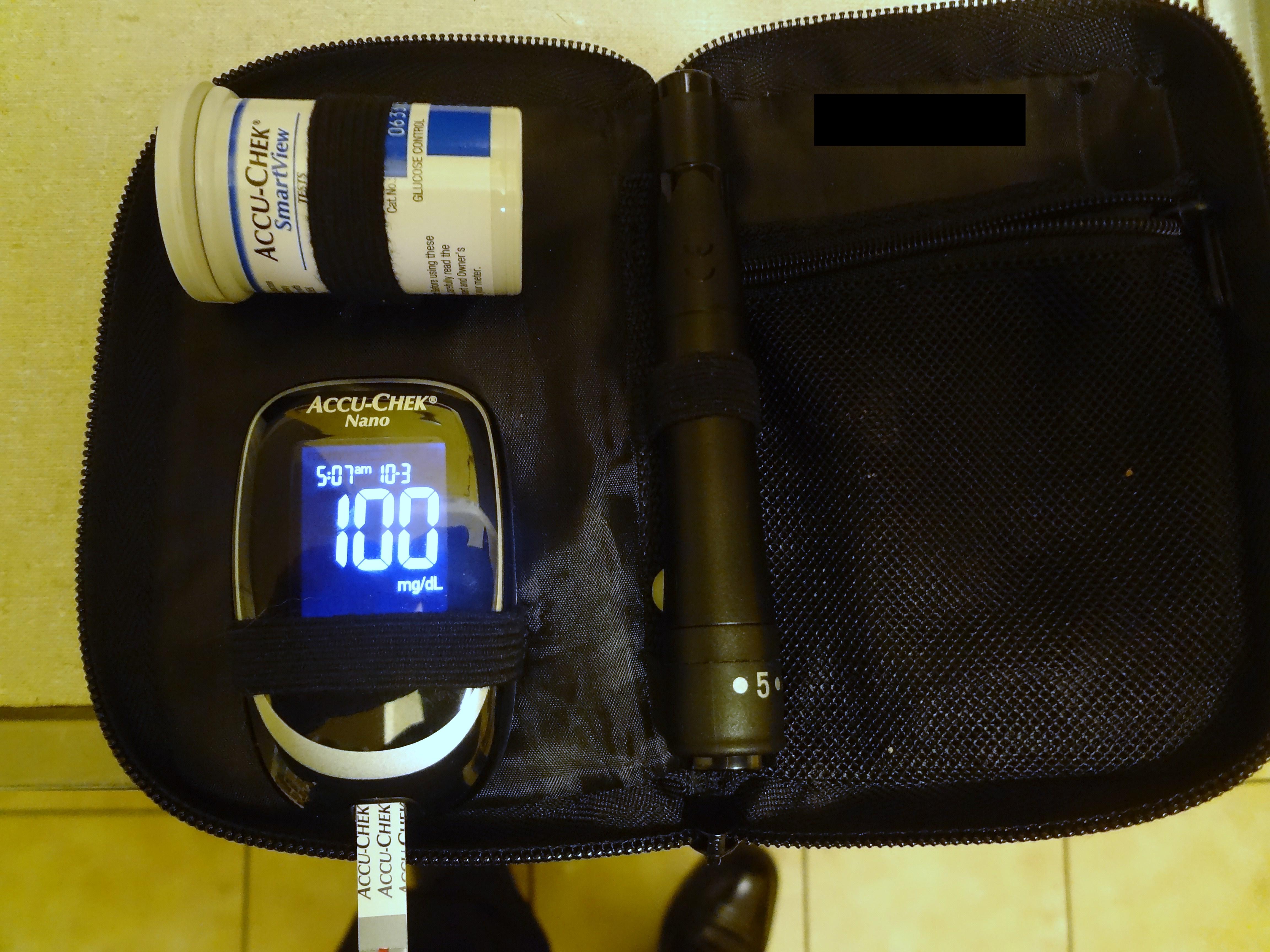
I wrote on Friday about my terrible low a week from yesterday. Wouldn’t you know? This past weekend, my BGs were all terrific. That’s a nice change from the past two weekends, which included a bad low (see Friday’s post) and a couple of wicked highs, punctuated by multiple glucose checks immediately followed by screams of “You have GOT to be kidding me!”.

This past weekend, of course, is how we want our lives to always be like with diabetes. Yet so often, when I have a few days in a row like this, I’m the first person to ignore it. Prick your finger, move on. For me, that means I miss an opportunity to pat myself on the back. It also means I miss the chance to go back and find out what happened.

DSC00251

What went right? Were my basals dialed in perfectly? Did I bolus like I invented the term? Got lucky is more like it, because I had pasta salad for dinner last night.

Whatever the reason (or reasons), getting a handle on what works for me is often as important as finding out what doesn’t. Here’s hoping your research is coming from an equally good place too.