Category Archives: Diabetes

So Worthy: You Can Do This Project.

With the end of the year approaching, I wanted to write a few blog posts with the idea of pointing you toward some important (to me, anyway) diabetes organizations.

I recognize that JDRF and the American Diabetes Association are important non-profits that deserve your support as well. But I want to dedicate these posts to other organizations that are doing important work to further the cause and improve the lives of everyone living with diabetes.

If you have a few dollars left at the end of the year, consider making a donation to these worthy organizations.

One other thing: I was not asked to write nor am I getting anything for writing about these groups.


You Can Do This Project

From their website, here’s the official language for what You Can Do This Project is all about:

”You Can Do This is a grassroots video movement, created by and for people with diabetes, that provides validation, hope, and encouragement through honest talk.

We are not a registered non-profit, we do not have any corporate sponsorships, and no one gets paid to work on this. We do what we can with what we have (and with the time we have outside of our “real world” jobs) because we are passionate about helping others find peer-to-peer support.”

I will also add this: You Can Do This Project has positively affected the lives of people living with and affected by diabetes by providing a window through which viewers can see that their experiences are not unique; that their challenges are not easy; and that their failures and successes should always be met with support and encouragement.

Started over three years ago by Kim Vlasnik of Texting My Pancreas fame, YCDT Project has, over the years, shared video from Type 1s, Type 2s, those living with LADA, athletes, parents, and just recently, parents of kids that were diagnosed under the age of two. They’ve covered topics like diagnosis stories, diabetes burnout, going to college, and much, much more. The whole spectrum, really. Whatever you’re dealing with, you’re likely to find a video about it that will help you feel less alone.

Look, I know that You Can Do This Project isn’t going to cure diabetes. But for me, just spending a little time there is pretty powerful medicine. And I am far from alone in this belief. Just a look at their media page will tell you how many others find this space pretty therapeutic too.

And don’t forget: This is all being put together, hosted, and promoted (often in person, in various locations) by people working on their own time, free of charge. Doesn’t that make you want to support them all the more? Obviously, any support you can give will make a huge difference.

You Can Do This Project is not a non-profit organization. Instead, it is a for-power vehicle that enlightens and uplifts every single day.

To make a donation to You Can Do This Project, simply go here and join the movement:
http://youcandothisproject.com/donate/
 
 
Wednesday, another look at a diabetes organization worthy of your time and money.


So Worthy: Diabetes Hands Foundation.

With the end of the year approaching, I wanted to write a few blog posts with the idea of pointing you toward some important (to me, anyway) diabetes organizations.

I recognize that JDRF and the American Diabetes Association are important non-profits that deserve your support as well. But I want to dedicate these posts to other organizations that are doing important work to further the cause and improve the lives of everyone living with diabetes.

If you have a few dollars left at the end of the year, consider making a donation to these worthy organizations.

One other thing: I was not asked to write nor am I getting anything for writing about these groups.


Diabetes Hands Foundation

Where do I begin? Diabetes Hands Foundation delivers so much value to the diabetes community, it’s hard to overestimate the importance of their impact to the diabetes landscape.

Founded in 2008 by Manny Hernandez and his wife Andreina Davila, DHF has grown to include many initiatives that benefit, educate, and provide relief to People With Diabetes everywhere. Here’s just a sample of their impact:

TuDiabetes and Es TuDiabetes: In English, TuDiabetes, and in Spanish, Es TuDiabetes, provide a place for people living with and affected by diabetes to go for support, encouragement, information, and connection. The two social networks boast over 50,000 members, and to me, that’s a heck of a village. But that’s not all.

Diabetes Advocates: Diabetes Advocates is a place where people advocating on behalf of those living with and affected by diabetes can connect, educate and empower each other. We learn how to be better advocates, we coordinate efforts to more effectively impact issues affecting us, and so much more. On its own, Diabetes Advocates is a remarkably impactful organization.
Full Disclosure: I am a member of Diabetes Advocates (note the DA button in the left column of this page).

The Big Blue Test: A popular happening during Diabetes Awareness Month every November, the Big Blue Test is a way to both get more active and help raise money for people in need, because every time you exercise and log it at bigbluetest.org, a donation is made to help people living with diabetes. So it’s a way to see the benefits of more exercise, and the benefits ($) of more exercise. Win-Win!

Those three are only the beginning. Just in this year, Diabetes Hands Foundation has been instrumental in delivering MasterLab at the Friends For Life conference in Orlando in July, and they were a big part of the historic #DOCasksFDA meeting that occurred back in November. They also provide scholarships for people to attend conferences throughout the year, which is why I first donated. Regular education and discussion is ongoing nearly every day.

If you have a few dollars you’d like to devote to a non-profit that will put those dollars to great use, you’d have a difficult time finding a better place to direct those dollars than Diabetes Hands Foundation.

If you’d like to donate, all you have to do is go online to
https://diabeteshandsfoundation.org/donate/
 
 
Monday, we’ll look at another special diabetes group helping to make our lives better every day.


Things I love about the DOC.

On Monday, I spent a little time talking about what I’ve learned from the Diabetes Online Community. Today, I’d like to talk a little bit about what I love about the DOC. Think of it as my letter of thanks on the day before Thanksgiving here in the USA.
 

  • This is going to sound sappy (I really don’t care if it does), but I have never encountered so many helpful, supportive, and unpretentious people as I have in this community. That even includes church communities.
  •  

  • It’s pretty safe to say that Wednesday nights are my favorite night of the week. If you don’t know what I’m talking about, join us on Twitter by following @DiabetesSocMed and the #DSMA hashtag beginning at 9:00 eastern time(US), and maybe Wednesday will become your favorite night of the week too.
  •  

  • The way the DOC mobilizes and helps people is inspiring and heartwarming. See Spare a Rose, Save a Child, Strip Safely, and YouCanDoThis Project for starters.
  •  

  • I love reading people’s stories. Whether someone is getting comfortable with an insulin pump for the first time, participating in a clinical trial, handling work and their diabetes or school and diabetes (or both), there’s nothing like watching those accomplishments through another’s eyes. You all suck me in and make me invest emotionally in your lives, and it’s the greatest show on earth.
  •  

  • The global nature of the DOC is incredible. I’m not only talking about people living all over the globe, but also people living all kinds of different lives all over the globe. If you’re new to this community, I think you’ll be surprised by the fact that you’re very likely to find someone just like you. “Me too” is indeed powerful.

 
About four years ago, I was feeling about as low as you can imagine. Today, there is so much for me to find out about and celebrate. Given enough time, I suspect I could double or triple this list without too much trouble at all. There is so much joy and information and advocacy and encouragement out there. I am very thankful for the DOC and what it has meant to my life these past few years.

Help me add to this list: What do you really love about the Diabetes Online Community?


Some things I’ve learned from the DOC.

If you haven’t been by this place on the internet before, or if you aren’t up on diabetes talk in general, let me tell you that DOC stands for Diabetes Online Community. Loosely defined as places and people that those of us with whacked pancreases connect with in cyberspace.

There are lots of communities online, and like many others, ours is a place that teaches as well as supports and connects. Here are some of the things that either I didn’t know, or didn’t know very well before I discovered the DOC:
 

  • There are so many people who go through the same things I go through every day. Many of them handle managing their diabetes better than I do, and I’ve learned something from each of those people.
  •  

  • Insulin on Board—I was mostly oblivious to insulin on board before reading blogs from people describing how they account for it in their diabetes management. I had heard of IOB; I just didn’t understand it at all.
  •  

  • The art of the Pre-Bolus—I had never considered pre-bolusing ever, and had never had a doctor suggest it, before I read about it online. I wish I had the link to the first really great blog post I saw about it. I’m the kind of person that is helped a lot by pre-bolusing.
  •  

  • Dual Wave, Square Wave, and Super Boluses—I had seen the options on my pump for square wave and dual wave boluses, but didn’t dare try them because I didn’t know if they would help me, or how they would help me. Reading how others have mastered these, plus the super bolus, has given me the confidence to try them from time to time myself.
  •  

  • How to travel with diabetes—I’ve always thought I was an intelligent travel planner. In reality, I had just been going through the motions and been lucky. After reading/seeing/Tweeting with people in the DOC, I’m a much more savvy packer, and I’m able to get a lot of gear in a small space if I have to.


As always, nothing written here should be taken as medical advice. Still, there is so much we are still learning from each other. As our community grows, the chances to teach and to learn will grow. I really like that.

So let me ask you: What have you learned from the Diabetes Online Community?


Diabetes is hard. But we’re worth it.

Diabetes. Our lives with diabetes is a balancing act.

Keep those numbers in between 80 mg/dL and 120 mg/dL. We know that a hemoglobin A1c reading under 7.0% is optimal. As we also know, there are studies that show that people who achieve this are more likely to spend a fair amount of time with hypoglycemia (dangerously low blood sugar) than people who don’t. Among other things, hypoglycemia can potentially do damage to our hearts and our brains. Of course, if our A1c is over 7.0, we’re faced with a number that makes us feel like we’re not successful. It makes us want to do all that we can to get it under that number. Even though that could possibly mean additional risk of hypoglycemia. That’s a lot to consider.

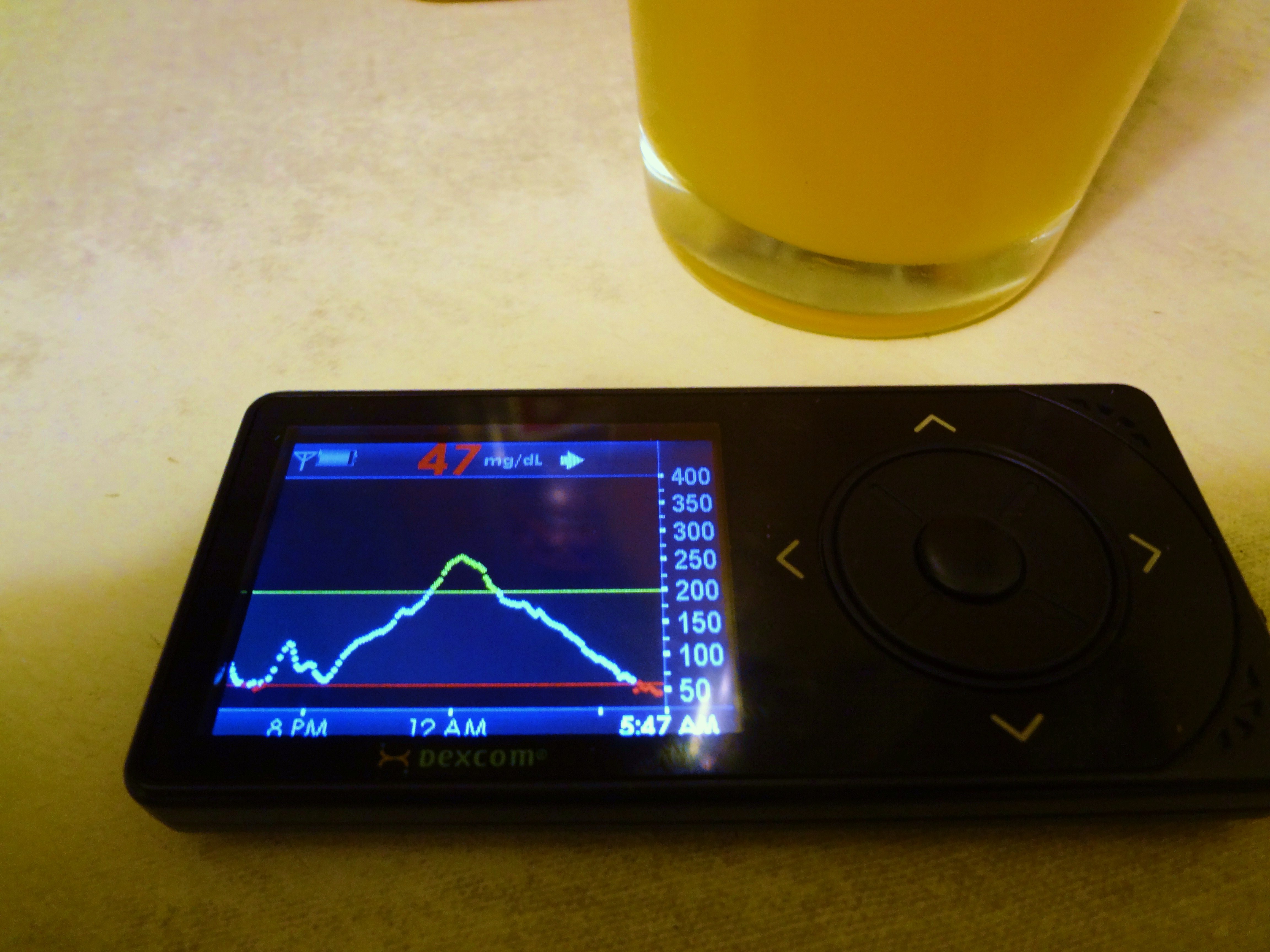
But wait… there’s more. The closer our numbers are to perfect, the closer we are to bad lows. What do we do when those lows occur? We treat them, with juice or peanut butter sandwiches or cookies or Nutella or whatever works. Or all of those things, plus a couple more. Because above all, hypoglycemia is scary. It’s a near-death experience that shakes our confidence and makes us want to make it go away as quickly as possible. So sometimes we over-treat. Which leads us to hyperglycemia (high blood sugar) later on. And pretty soon our glucose management looks like this:

DSC00849

The hyperglycemia? In a word, that’s frustrating. Partly because we’re aware (we’re more than aware) of the complications it might bring years down the road, and partly because we don’t want our hard work go to waste just because we decided to eat something because it would save our life. Hyperglycemia makes us sluggish, tired, thirsty, and again, frustrated. And while we can encounter it after over-treating a low, we can also encounter it due to a bad injection site, bad insulin, or a crazy metabolism that can have us under 100 one day and over 300 the next. While the “eat 15 grams of carbohydrates, wait 15 minutes and check” idea is the standard for treating lows, it can take hours to come down from those highs. It may take the ingestion of copious amounts of water, lots of exercise, trimming our diet, extra insulin, or any and all combinations of the four to bring us back into range. Or back down into hypoglycemia again.

Add to that the fact that we’re more susceptible to infection, more likely to encounter eye and foot problems, under additional risk of heart trouble and stroke, and also facing people in our lives who just don’t understand why these things are true and want to blame us instead of helping us, and you can see why diabetes ain’t no kiddie game.

Yet we go on living our lives, in wondrous and amazing ways. We often have parents and spouses and girlfriends and boyfriends and just friends who help us and give us the strength to know that we’re worth all the trouble. If you’re not living with diabetes and you encounter someone who is, remember that diabetes is a moving target, it’s always, and it’s hard. The best thing you can do is live our lives alongside us, displaying the assets of perseverance and empathy that all people living with diabetes possess. Just ask us… we really are worth it.