Author Archives: StephenS

Hello… I’m Stephen. I live in Baltimore, Maryland, USA with The Great Spousal Unit, Maureen. I’ve been living with Type 1 Diabetes since January 1991. I’ve been a pump user since April 2010, and I’m currently wearing the Animas Vibe pump. Also wearing the Dexcom G5 continuous glucose monitor.

I found the Diabetes Online Community in the summer/fall of 2011, and that discovery has changed my life. I started this blog in April 2012, and since then, my diabetes advocacy has continued to grow. Among other achievements, I’ve attended and spoken up at FDA workshops and participated in clinical trials.

I’ve been thrilled to serve as a facilitator for the Diabetes UnConference. And I’ve been honored to volunteer for Diabetes Patient Advocacy Coalition. You should Google both of those.

I’m currently serving as a member of the State of Maryland’s Advisory Council on Health and Wellness, where I am co-chair of the Diabetes committee. In addition, I’m part of the 2018 Reader Panel at Diabetes Forecast magazine.

I’m always searching for the perfect balance between the highs and lows of my blood glucose level and my life… always searching for the Happy Medium.

Anything you’d like to share? Please let me know… I’d love to hear from you.

8 Questions.

You know, sometimes things roll around in your head and you just need to get them out so you can let them go. Like these eight questions:

1. Have you ever used your BG readouts to choose lottery numbers? Just me? Here’s the game:

Let the Powerball or Mega Millions jackpots get really high. Then take your BG number from either your CGM or your glucose meter throughout the day and play those numbers. Of course, you have to use just two digits, so if the number is 123 or 223, you play 23. If the number is 84 (the jackpot numbers only go up to about 60), you switch it so you play the number 48.

I’ve never won the lottery with this scheme, but if I did, wouldn’t that make a terrific story?

2. Does anyone ever think that a president who would fire his Secretary of State via tweet would actually care about anyone living with a chronic condition?

Ever?

3. Would you rather have a CGM sensor that you can stop and restart for weeks, or one that requires exactly zero fingerstick calibrations for only ten days? I think we’re going to find out the answer to that throughout the rest of 2018. At any rate, this is the way of the future, so love it or leave it, this seems to be the way we’re going.

4. After hearing the recent news about Facebook not only selling user profile information, but also the ability to access mobile device data without our consent (and don’t try to shame me for this practice by reminding me that I agreed to the terms of service when I created my account around a decade ago)… are you more reluctant to upload all your device data somewhere?

If I were going to run for president, or the senate, or if I would be up for a cabinet post, maybe. But I think my diabetes device data is pretty low on the official russian operative priority list.

5. What’s your next big focus in diabetes advocacy? Is it insulin affordability? Is it learning more about the FDA drug approval process, or finding out about the tricks pharmacy benefit managers play with formularies? There are still many avenues of diabetes advocacy we can pursue, and one amazing place to find out and take action on them all.

If you live in the USA, go to diabetespac.org and download the DPAC app. Use it to join the chorus of caring patients, caregivers, and other Americans who are taking action on these and even more issues in quick, easy steps that will have you feeling great about advocacy without spending every waking hour wondering how you’re going to squeeze it into your schedule. And one of the best things about DPAC is that they’re totally non-partisan. There’s room for everybody.

Use the easy button. Get the DPAC app.

6. If I donate to a JDRF or ADA ride or walk for someone else, but don’t actually participate in any of them myself, am I a bad supporter of those causes?

I happily donate to others’ JDRF or ADA fundraisers. But I’ve never ridden in a JDRF ride. After doing a few ADA rides and paying all or nearly all of the minimum contribution needed to participate each time, I’ve given up on those too. I’m sure they’re still wonderful happenings, and I still have the energy to do them. But at this point, the price of admission is just too high. Right now, I’m okay with helping four or five people reach their goal of participating, instead of helping only myself. Is that wrong?

7. Is lack of appetite a sign of old age? I’m just not the foodie that I once was. I eat far less today than I’ve ever eaten as an adult. If I could eat anything right now… I don’t think I could choose anything. For the most part, I’m just eating for sustenance. I’m not losing any weight, but I’m certainly eating less.

I’m exercising more too, if that matters. But I’ve always been active anyway.

Finally…

8. What should I do on my birthday? It’s next week. It’s not a milestone birthday, so I’ll probably just go to work and come home and be grateful I can still go to work and come home.

I think winter has lasted far too long around here.
 
 
Great… now that I have that out of my head, I can go play those lottery numbers. What have you been thinking about lately?

Diabetes By The Numbers: Grainne Flynn

Diabetes By The Numbers is BACK!

Thanks to everyone who waited patiently while I worked to retool the podcast. It took a while, but I am happy to be sharing another interesting conversation with you.

Today I’m speaking with Grainne Flynn, who is a passionate writer and diabetes advocate living in the Republic of Ireland. I’ve been reading her blog, Blood Sugar Trampoline, for some time, and I got to meet her in person last October at the joint Diabetes Sisters/Diabetes UnConference get-together in Alexandria, Virginia.

Did you ever strike up a conversation with someone and instantly feel comfortable? That’s how you’ll feel hearing Grainne. We talk about Blood Sugar Trampoline, the amazing Thriveabetes conference just completed… and she even shares her three must-visit places on the Emerald Isle. I hope you enjoy our conversation.

And thank you so much for listening. Again.

DBTN

Reference Material – Click below for more information on this topic

Grainne Flynn writes about her life with diabetes at her personal blog, Blood Sugar Trampoline:
BloodSugarTrampoline.com.

Grainne is a co-founder of the diabetes empowerment organization Thriveabetes, which works to foster education and connections in the Republic of Ireland, and hosts a yearly conference:
Thriveabetes.ie

Advocacy: You’re invited.

When it comes to diabetes and advocacy, it’s interesting to note that the one thing we might all have in common (other than a messed up pancreas) is that we’re all different.

Some people are dedicated to connecting others, either because it’s what they want to do, or because they see a need and want to do something about it. To that end, Cherise Shockley’s @WOCDiabetes Twitter account serves both purposes. It connects women of color living with diabetes so they have a place to share common stories, connect with one another, and feel like they’re not alone.

Some advocacy organizations want to focus on research, while others want to focus on policy and education. They all serve a purpose. But they’re definitely not all the same.

There are non-profits like Tidepool, which provides a platform for people to upload their device data and other important information, and then share that with their health care team, and also share it anonymously for research. That’s a lot for one organization.

There are #OpenAPS groups all over the country, helping people put together their own closed loop insulin delivery, even before any industry-developed options are even approved by the U.S. Food and Drug Administration. And non-profits like Bigfoot are using their talents to develop solutions that could make our lives even better. Where would we be without the inspired leadership these groups provide?

There are individuals who participate in clinical trials, sometimes multiple clinical trials, who often thanklessly help advance research into treatments, drugs, and devices designed to make our lives better. You’d be hard pressed to find a more noble endeavor.

And there are still thousands of us out there blogging, podcasting, and using other social media to tell our stories and the stories of others living with and affected by diabetes. The result of all this output of storytelling is increased access to information, viewpoints directly from the patient, and connecting others who are living the same kind of existence.

Where am I going with this? I want you to know that there are many different types of advocates and advocacy happening in the diabetes world today. And certainly, you can be a part of it.

On a personal level, I’ve always participated in things that I feel meet one (or more) of three criteria:
1) It’s interesting to me
2) I’m good at it
3) I am actually allowed to participate

That criteria has kept me from participating in the JDRF Ride for a Cure events (not good at fundraising), and some clinical trials (didn’t meet the criteria, so not allowed to participate). But it does mean that I’ve been able to attend and report on FDA public workshops (interesting to me), and serve as a part-time moderator of the Wednesday night DSMA Twitter chats (I’m good at it and allowed to participate).

Wherever you are in your diabetes journey, know that there are many opportunities for you to step forward and learn, connect, and volunteer. If you have even a sliver of time and a passion for doing something that could help you as much as it helps others, there is a place for you.

All of us will benefit from your participation. And I will be forever grateful for your selfless dedication.

This is my diabetes.


This is The Great Spousal Unit, walking our dog at Fort McHenry in Baltimore, home of the Star Spangled Banner, probably one of the greatest public picnic spots in the entire country.

We go there at least a couple of times every year. Usually in the morning, when we grab a couple of portable chairs, two large cups of coffee, a little breakfast, the Sunday newspaper, and the pooch. We take the entire morning, leisurely going through the paper, discussing the latest and how it makes us feel, and taking Boomer for a walk or two. We don’t usually return until early afternoon, choosing to take the long way home via city neighborhoods we haven’t been through for a while, to see how they’re doing too.

As I’ve gotten older, and my diabetes has gotten older, these brief moments in time become more and more precious, and essential. Work, internal and external relationships, diabetes and diabetes advocacy all play a part in ramping up the focus on every minute of every day. But those last two things… diabetes and diabetes advocacy…

If you’ve never lived with diabetes… imagine having more time for quiet mornings with those closest to you. Imagine having the time to turn your interests and passion into a hobby rather than a mission.

This is my diabetes.

This is Boomer the Dog, and Max the Cat. As you can see, they get along pretty well.

Neither Boomer nor Max are certified alert pets or therapy pets. The service and friendship they provide fall short of and expand far beyond those definitions. Max does have a knack for knowing when my blood sugar is low, or at least a knack for getting me to focus on treating a low. Boomer provides that rock solid dependability that helps you to know that no matter what, he’s on your side and he’s not going anywhere. When you’re excited about an achievement, or you’re sobbing due to some insult swallowed or dream dashed, he’s always there, tail wagging, ready to pick you up.

If you’ve never lived with diabetes… imagine your dog or cat as just a buddy, not a family member. Then imagine having the gift of a beloved pet who will celebrate triumphs over diabetes and commiserate over losses due to diabetes with you. No questions asked, no conditions. Imagine how incredibly special that can be.

This is my diabetes.

Photo courtesy of Rhonda B


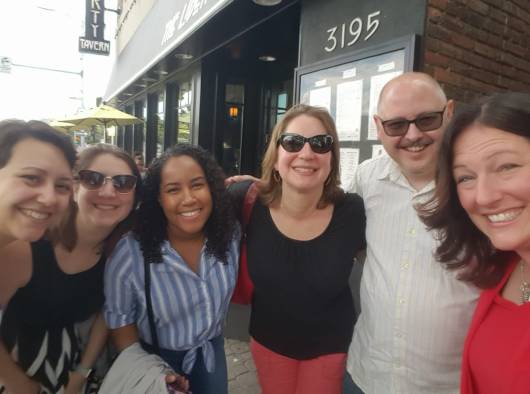
These are some of my friends who live with diabetes.

Having a friend is spectacular. Having friends who understand you is like Christmas. Having friends who understand you, don’t judge you, and want to hang out with you now and then is like having Christmas every day of the year.

These people know you. They know what you go through. Sometimes, they’re rule breakers like you. They can help you navigate problems with devices, or give you insight into a new drug you haven’t tried. They’ll also help take your mind off the fact that you have a chronic condition you won’t ever be able to shake off. They are worth their weight in gold.

If you’ve never lived with diabetes… imagine feeling alone in your disease, feeling like you’re the only one who understands or ever will understand what you’re going through. Imagine the despair that can bring on after a couple of decades. Then imagine suddenly being accepted by new friends, just for having a busted pancreas, just because they too have known the despair. Imagine the gratitude you’ll feel and the renewed sense of purpose it gives you, every time you interact with them.

This is my diabetes.

Hey listen, maybe your life is a lot like this. Maybe you have a dog or a cat too. Maybe they bring joy to your life. Maybe you’re doing okay, and if you are, I am truly happy for you. We all deserve happiness.

I don’t know where my life is going from here. I only know that because of the people, the pets, and the experiences in my life, my outlook isn’t as bleak as it once was, and my diabetes is all the better for it. In fact, things are pretty damn great right now. We all deserve happiness.

This is my diabetes.

This is my diabetes.


This is my insulin pump. It is my lifeline of sorts, in that it allows a steady rate of insulin to be infused into my body throughout the day. Also, it lets me add extra insulin to cover the carbohydrates I eat, and to correct any high blood sugar numbers that might happen from time to time.

If you’ve never lived with diabetes… imagine this external device as part of your life 24 hours a day, seven days a week, forever. The only time it comes off is when you swim or take a shower. It can also add a level of concern about what might happen in the future, should something break, or should insurance stop covering some or all aspects of this therapy.

It will also be the subject of additional scrutiny from TSA agents when you go through security screening at the airport. As I’ve found out firsthand, that’s including when you go through the TSA Pre-Check line.

This is my diabetes.

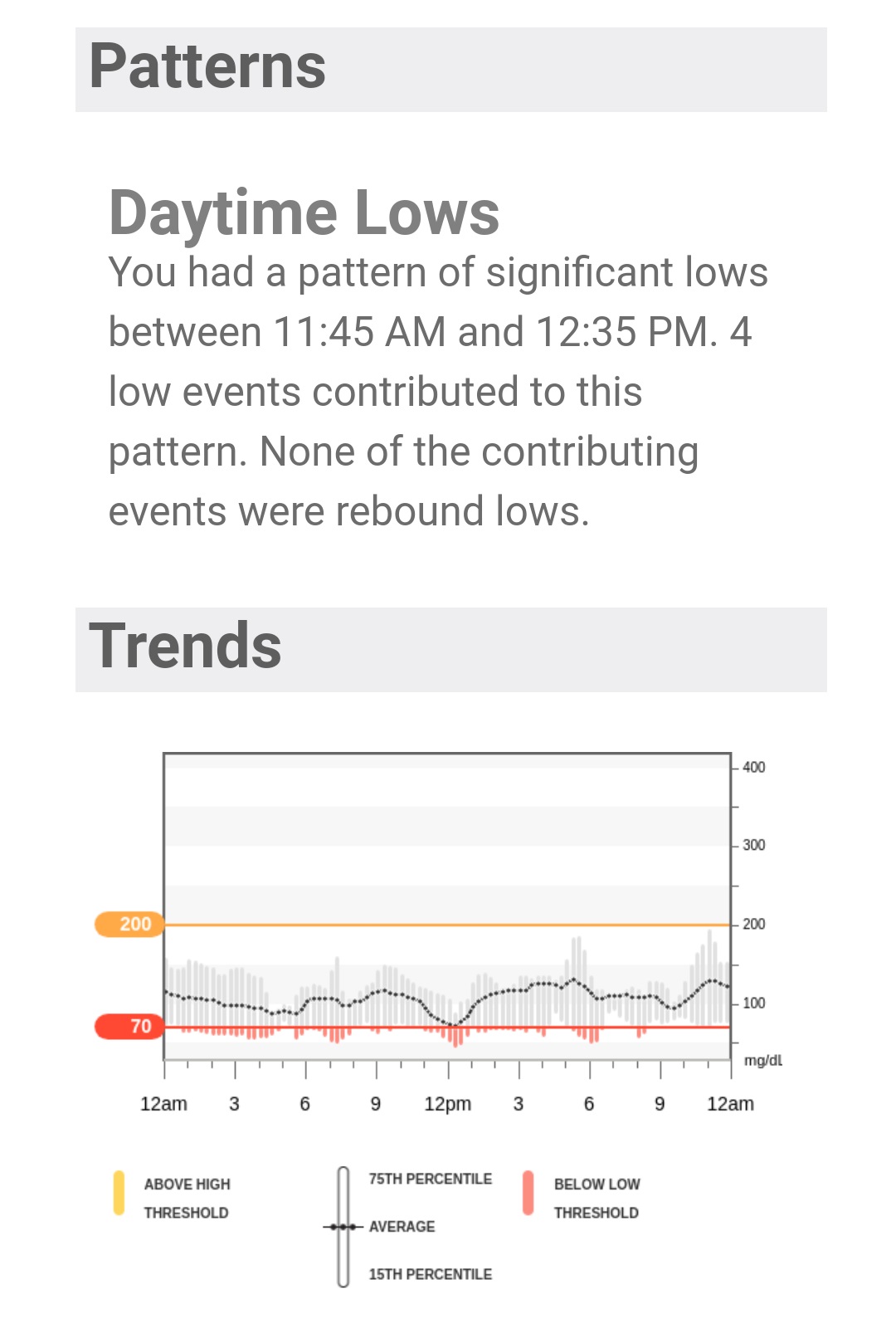
Here’s a Dexcom Clarity report. It gives me valuable information on glucose trending for the past seven days. Among other things, it helps me to know if I need to consider changes to the basal rates on my insulin pump.

If you’ve never lived with diabetes… imagine an extra level of concern about what might happen in the future, should the report not be as well as expected. Imagine living with concern over just the anticipation of a report or a simple lab test. Concern about the future is something I try to put in a box, safely stored away until the time when I might have to address it.

Frankly, I don’t know if I could handle it if I started to worry about potential complications all the time.

This is my diabetes.

I have a quarterly appointment with my endocrinologist next month. I have a meeting with my primary physician a month after that. I’ve already been to the ophthalmologist this year. And I have to schedule time with a podiatrist and my dermatologist too.

Meanwhile, there are prescriptions to fill. I have a couple of everyday medications that are refilled every 90 days. Add in the insulin I need, which I need to have refilled every 90 days too. Then there are strips for my glucose meter, sensors for my CGM, infusion sets and reservoirs for my insulin pump.

My out of pocket expense for all of this, the amount that insurance does not cover, has passed $3,500 per year.

If you’ve never lived with diabetes… imagine spending the price of a European or a Caribbean vacation every year just to stay healthy. Think about not finishing college, just so you can afford your medication and supplies.

And that’s not counting the cost of the time it takes for all of those things mentioned above.

This is my diabetes.

If we handle all of this well (and who can do that all the time?), we’re considered obsessive about our disease, making it a bigger part of life than it should be. If we don’t handle it well, we’re considered “non-compliant”, or worse. And that’s without any outside influences like stress at home or in our careers.

In addition to a constantly vacationing pancreas, we go through these internal struggles too, all the time, every day.

This is my diabetes.