Author Archives: StephenS

Hello… I’m Stephen. I live in Baltimore, Maryland, USA with The Great Spousal Unit, Maureen. I’ve been living with Type 1 Diabetes since January 1991. I’ve been a pump user since April 2010, and I’m currently wearing the Animas Vibe pump. Also wearing the Dexcom G5 continuous glucose monitor.

I found the Diabetes Online Community in the summer/fall of 2011, and that discovery has changed my life. I started this blog in April 2012, and since then, my diabetes advocacy has continued to grow. Among other achievements, I’ve attended and spoken up at FDA workshops and participated in clinical trials.

I’ve been thrilled to serve as a facilitator for the Diabetes UnConference. And I’ve been honored to volunteer for Diabetes Patient Advocacy Coalition. You should Google both of those.

I’m currently serving as a member of the State of Maryland’s Advisory Council on Health and Wellness, where I am co-chair of the Diabetes committee. In addition, I’m part of the 2018 Reader Panel at Diabetes Forecast magazine.

I’m always searching for the perfect balance between the highs and lows of my blood glucose level and my life… always searching for the Happy Medium.

Anything you’d like to share? Please let me know… I’d love to hear from you.

#IGNITEInterop – Let’s all communicate (Part 2).

DSC01377
Since it’s only 40-some miles away (though a two hour commute) from home, and I got enough advance notice, I headed to Washington, D.C. last Thursday for HCI-DC 2014: Igniting an Interoperable Health Care System.

The event was co-hosted by two different groups: The Gary and Mary West Health Institute, which, according to its website, “is an independent, non-profit 501(c)(3) medical research organization whose mission is to lower health care costs by developing innovative patient-centered solutions that deliver the right care at the right place at the right time.” And the Office of the National Coordinator for Health Information Technology (trust me, it’s an actual government office).

The idea of the day was to get as many people in the room as possible to talk interoperability in health care. Not just, “Can I get my CGM to talk to my pump”, although there was some of that. But there was also a lot of talk about how to push for standards in medical record-keeping, and making them accessible to health care professionals, in the same format, worldwide. Imagine this: I have an accident in another city, I get rushed to the ER, and a doctor could pull up all of my medications and doses, and my pump settings, etc. Today, all of that might be on paper somewhere, and depending on the timing, a doctor may or may not be able to get access to it right away. You get the picture.

There were things I liked about this conference, and things I didn’t like. I hope I can explain a bit here. Yesterday, I talked about the things I liked. Today, things I didn’t like.
 
 
What I didn’t like:

Unless they were hiding under a chair or something, there were no manufacturers present at this gathering. I don’t know if they weren’t asked to attend, or if it was too long a trip from California or Europe or wherever they are, or if they just didn’t want to talk about interoperability at all.

If it’s that last thing: Let me just share something I mentioned in a conversation with someone over lunch that day.

I’m sure that the cost of the CareLink software is baked into the overall cost of my Medtronic insulin pump. But if Medtronic, for example, decided to make their code available to all, or if they agreed to adhere to a standard software protocol with future products, I would still want an insulin pump. And you know what? If they did get on board with interoperability, I might actually want to buy their pump even more. Insulin pumps and CGMs won’t go away once their data is “democratized”, to borrow a phrase I heard that day. Each patient will buy what’s best for them at the right time, but they will still want pumps and CGMs. And if manufacturers finally move toward a standard for device interoperability, they would finally be free to spend less time worrying about how to make their software proprietary, and spend more time worrying about how to make a better product (disclosure: I’m perfectly happy with my insulin pump right now, even if I see it as less than perfect).

There was something else that touched me that day. I want to move delicately around this subject. But… here’s the thing: There were a few female presenters (like, three). All the rest were male. Nearly everyone in a panel discussion or presenting was white.

Now, I realize that even if there was a concerted effort to bring more diversity to the stage for HCIDC 2014, there probably still would have been an overabundance of white people facing the audience. That’s just the way it is. But the fact is, the audience was pretty diverse in itself. Enough so that there were a couple of tweets from others who noted the steady stream of people walking onto the stage wearing a dark jacket, white shirt, and a tie.

Washington is a very diverse city. America is an amazingly diverse country. For next year’s event I kind of hope the presenters, or the members of panel discussions, will reflect that diversity just a little more.
 
 
So, now my overall take on this event:

I liked it. I really liked what I heard from everyone, onstage and off. I’m encouraged by where the discussion about interoperability is headed in the future. The will to make this happen, or at least get down the road a little farther, is really starting to crystallize.

But without manufacturers becoming part of the discussion, we’re not going to get very far. As Malcolm Gladwell alluded to in his keynote address, “No one will work toward interoperability in health care unless it is framed as urgent, imperative, life or death”.

Well, guess what? It is. Interoperability isn’t everything. But it is a game changer, because it would 1) Free up already overworked people from writing and entering so much data that can’t be shared anywhere else but at the point of care; 2) Lower costs for manufacturers, because once a standard is in place that everyone can follow, work on proprietary software will be minimal; and 3) Help improve patient outcomes, due to devices working together to ensure safety and optimal results for the patient, rather than being in their own silos just so they can generate more imagined revenue for the maker.

I agree… the time is now. We have the means and the determination to make interoperability in healthcare a reality. I hope this event comes back next year, and I’m looking forward to what kind of changes will happen between now and then.


#IGNITEInterop – Let’s all communicate.

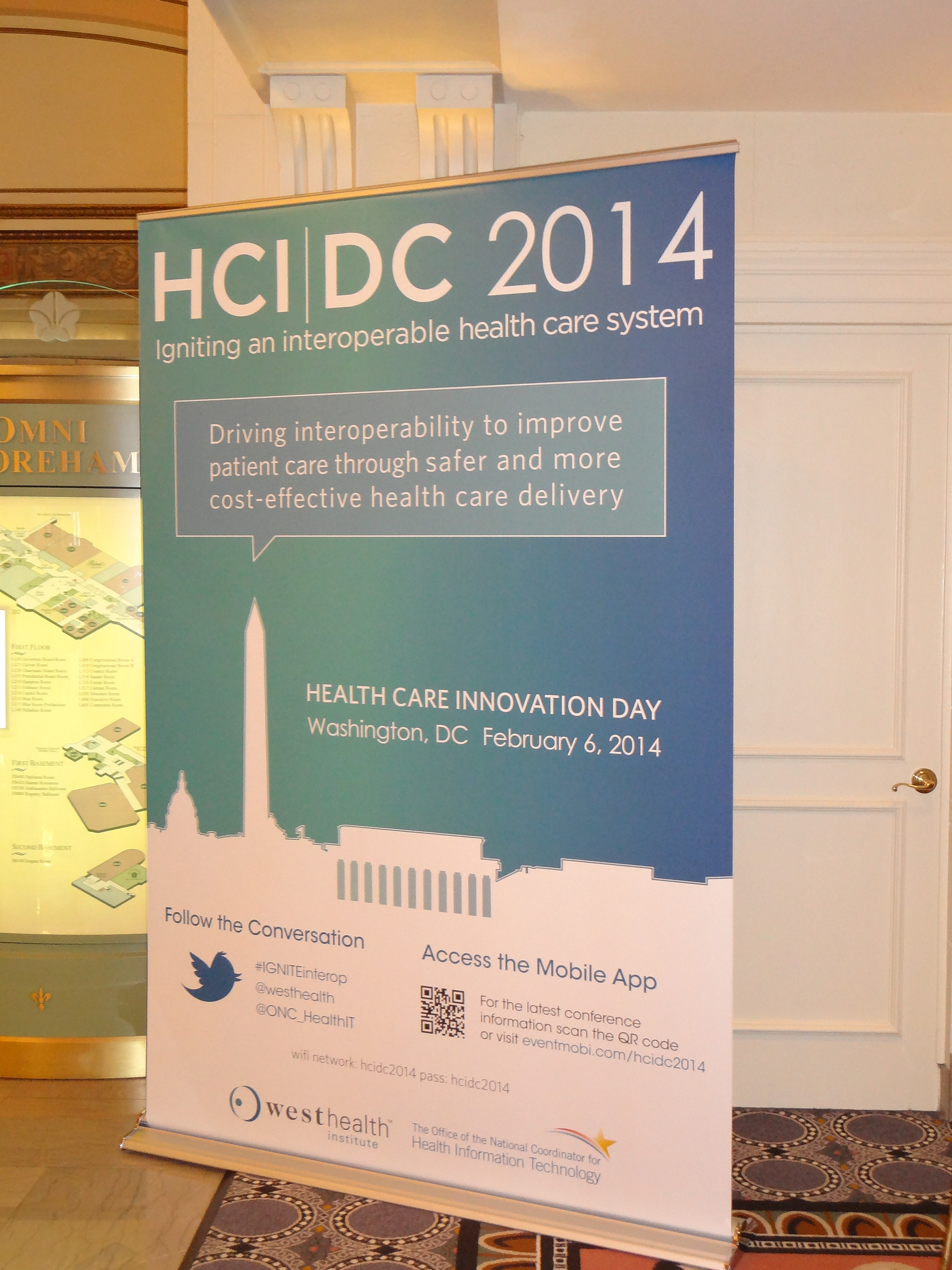
Since it’s only 40-some miles away (though a two hour commute) from home, and I got enough advance notice, I headed to Washington, D.C. last Thursday for HCI-DC 2014: Igniting an Interoperable Health Care System.

DSC01339The event was co-hosted by two different groups: The Gary and Mary West Health Institute, which, according to its website, “is an independent, non-profit 501(c)(3) medical research organization whose mission is to lower health care costs by developing innovative patient-centered solutions that deliver the right care at the right place at the right time.” And the Office of the National Coordinator for Health Information Technology (trust me, it’s an actual government office). The idea of the day was to get as many people in the room as possible to talk interoperability in health care. Not just, “Can I get my CGM to talk to my pump”, although there was some of that. But there was also a lot of talk about how to push for standards in medical record-keeping, and making them accessible to health care professionals, in the same format, worldwide. Imagine this: I have an accident in another city, I get rushed to the ER, and a doctor could pull up all of my medications and doses, and my pump settings, etc. Today, all of that might be on paper somewhere, and depending on the timing, a doctor may or may not be able to get access to it right away. You get the picture.

There were things I liked about this conference, and things I didn’t like. I hope I can explain a bit here. Today, I’ll give you the things I liked. Tomorrow, things I didn’t like.
 
 
Things I liked:

The first panel discussion covered Perspectives from the Point of Care. It was an interesting discussion moderated by the Chief Medical Officer of the ONC (Office of National Coordinator for Health Information Technology). The panel included some great voices from a healthcare provider point of view, and from the patient point of view, including Anna McCollister-Slipp, Co-Founder of Galileo Analytics and a fellow Type 1. A large part of the discussion centered around Anna’s Type 1 diabetes, the devices she uses, and these two facts: 1) None of her devices talk to each other, and 2) Her healthcare providers cannot, due to rules coming down from the healthcare system they’re working in, download any information from her pump or CGM. From first-hand knowledge of the conversation, I can say that everything Anna said, and everything she advocated for, was right and correct and she was a super advocate for PWDs everywhere. I wish you could have been there to hear it.

Pretty much every discussion during the day was like the one above. There was a real feeling that the time is right to move toward interoperability in health care. One of the photos that really brought the point home was when we were shown someone in an ICU room, with about ten different machines at work helping to keep the patient alive. And none of them talked to each other, or shared their data with any system in the hospital. So doctors or nurses needed to view what was happening with each machine, then write the data down in a chart or a folder, then enter some of that data into the hospital’s system. How much time does that take? How much care is not being given to the patient while a doctor or nurse is compiling data like a drone?

I liked the following statements that were made (please understand that most of these are paraphrased):

Anna McCollister-Slipp: “An A1c is helpful, but kind of like using The Farmer’s Almanac to plan your afternoon. My endo needs to be able to see my CGM data”.

Stephen Jones, President and CEO, Robert Wood Johnson University Hospital and Medical Center: “If health care systems develop uniform standards, we can then use our buying power to drive interoperability, and force the issue with manufacturers and vendors”.

Dr. Michael Johns, Chairman of the Center for Medical Interoperability: “We need to move now, or we’re letting down the next generation”.

There were many comments like this throughout the day.

Also, I very much liked the keynote speech from Malcolm Gladwell, best-selling author of The Tipping Point and other books, and a former writer on the medical beat for the Washington Post. Which, he reminded us, meant that if he were still at that job, he’d be covering the event this day for the paper.

He used three examples of how interoperability in other arenas allowed for increased outcomes for consumers and businesses, not less. How the interoperability wasn’t always made possible by the people who designed the parts that inspired the interoperability. And how the time is now… the moment is right for pushing this cause forward. He mentioned how there are three roadblocks to interoperability: Culture, meaning how things are done today and how people expect them to be going forward; How to frame the message, because sometimes it’s more than shouting, but rather getting people to understand when, and why they have reached a critical moment that requires change; and the concern over Consequences to change. Maybe one part of a business does suffer, but another part of the same business grows as a result of the implementation of interoperability. There was a good recap of the speech written at Healthcare IT News by Diana Manos, and I will refer you there for more:
http://www.healthcareitnews.com/news/gladwell-interoperability-war

A couple of the things he said that resonated with me:

“The time for deep thinking about interoperability is over. We already know it’s important. The resources are there. Now we need to act.”

“No one will work toward interoperability in health care unless it’s framed as urgent, imperative, life or death.”

Tomorrow, more on this event, especially what I didn’t like, and my take on a few things.


Remember to Spare a Rose… Don’t forget to Save a Child.

SpareARose

(click on the banner to give– now)


The Spare a Rose, Save a Life campaign is getting closer to its target every day. They’re $6,000 or so toward their goal of raising $10,000 by Valentine’s Day to provide life-giving insulin to children in need around the world.

The notion of the Spare a Rose, Save a Life campaign is simple: If your intent is to give a dozen roses to someone special this Valentine’s Day, why not give eleven and donate the cost of that 12th rose (about $5.00 USD) to the International Diabetes Federation’s Life for a Child campaign? Only $5.00… You can handle that, right? You might even be able to handle more than five bucks.

What does that money buy?
 
 
Five dollars provides life-giving insulin for a child in a developing country for an entire month.

Thirty dollars helps to keep a third world child with diabetes alive for six months.

Sixty dollars worth of insulin sustains life for a child with diabetes living in Haiti, Kenya, the Phillipines, and 40 other countries for an entire year.

There are just a few days left in the campaign, though you can give to Life for a Child anytime. Won’t you help? Let’s continue to show how special and giving the Diabetes Community is.

The need exists… Some have the means to help… And all of us have the ability to communicate. So join in the final push toward the goal for Spare a Rose, Save a Child. If you haven’t yet, consider making a donation today at sparearose.org/give. Or click on the image at the top of this post. Oh, and don’t forget to share this initiative with all of your Friends on Facebook and Followers on Twitter.

Let’s go over that $10,000 number and revel in the lives that will be saved through your efforts.


If this Champ With Diabetes can do it, I can too.

Time to introduce you to another one of our medal winners. Trust me: You’re going to want to read this story through to the end. Just reading about this athlete’s accomplishments makes me want to get out and conquer the world. Though I’ll settle for a metric century ride, a triathlon, and a 5K run (not all at the same time).

Bob Parant has been living with Type 1 Diabetes for 41 years now. The Long Island resident was diagnosed back in the 70s while getting a physical prior to competing in college (this is the second of our athletes diagnosed during sport physicals). As Bob says, it was the Dark Ages of diabetes:

“No computers, no glucose meters, no pumps, no support groups, no chat rooms and very little education on the disease and how to live with it.

Coach told me diabetes was dangerous and to take care of myself. That burned me up. What I did know at that time was exercise was good for diabetics. There was not much out there regarding handling your highs and lows while exercising. So from that point on I have always played a sport and worked out while finding the proper balance of carbs and low blood sugars.

Right after that diagnosis I played rugby for 7 years, then played softball and over age 30 hardball baseball league. After the team sports I relied on running on a regular basis and did many races varying distances. I then moved to biking as it was easier on my feet.”

Pretty great, right? But wait… there’s more. Brace yourself.

Three years ago, Bob lost part of his right leg due to infection secondary to diabetes. Think he was going to let that get him down? Think again. Bob unequivocally states:

“The diabetes never stopped me and the leg was NOT going to stop me either.

July 2013 I rode in my second JDRF Ride for the Cure. I was able to ride 65 miles in the JDRF Ride to Cure Diabetes in hilly Vermont and raised $7000. The previous year I won the ‘Spirit Award’ for the ride and the ‘Crankees Intrepid Award’ for most inspirational rider for the year and also raised $7000 that year as well. I cannot explain the feeling of accomplishment and pride after my battle to come back from the leg and diabetes. My family and JDRF family were all there cheering me on. As you can imagine, crossing that finish line both years was quite emotional. The first year I literally broke down at the finish line. Athletics have always given me goals and pushed me to stay positive in every situation and never give up or say ‘I can’t’ in sports or life. I hope by telling my story that this can encourage diabetics to get moving, stay active and that will keep you positive, eating better and more consistent A1c’s.”

BP

Even though all of that sounds like Bob is already busy 24 hours a day, he still finds time to serve as Research Information Volunteer for his local JDRF chapter, and he helps with the Kids Walk program at local schools. In addition to that, he was asked to speak at New York’s big Promise Ball this past year, where 2.1 million dollars were raised for JDRF.

Bob Parant, for your dedication, your perseverance, your triumph over adversity, and the inspiration you give all of us, we are proud to recognize you as a Champion Athlete With Diabetes. I promise you I’ll be thinking about you while I train and compete this year.

——————————————————————————————-

You don’t have to be a beast of an athlete like Bob. Just get out and get going! If you’re living with diabetes, and you’re active; or if someone close to you is living with D and is active, we’ve got an honest-to-goodness medal we’d like to award you. It looks like this:

DSC01178

There are only four simple things to do to get yours:

1. The athlete receiving the award must be living with diabetes.

2. The athletic event must have taken place in the last six months. For now, we’re going with a pretty loose interpretation of the word “event”. If you feel you’ve accomplished something important to you, that’s an event. ‘Nuf said. And yes, we’re flexible on the six month thing.

3. Send me an e-mail at champswithdiabetes@gmail.com. Tell me your name, name of the athlete (it’s okay if it’s you), and your address (gotta know where to send the medal). Most important, tell me what athletic goal was accomplished, and when. Extra points if you tell me how you felt accomplishing the goal. Full disclosure: I reserve the right to use your testimonial here, on Twitter, and on Facebook. I will not use your name if you don’t want me to. As always, I will never share private information.

4. When you receive your medal, it would be great if you post a photo of it around the athlete’s neck. You can send a Tweet to @ChampsWithD (hashtag: #champdathletes) or post it on the Champion Athletes With Diabetes Facebook Page.

I think D-Athletes are amazing. It takes a tremendous amount of planning, effort, and bravery to compete, or maintain an exercise routine. Heck, sometimes, it’s everything we can do just to walk around the block. Getting out of your comfort zone and taking that brave step is something that should be recognized and rewarded.

If it’s a big deal to you, it’s a big deal to me too. I want to support you, or support the Athlete With Diabetes in your life. Send an e-mail for your award today.


Diabetes Art Day. Get your helping of diabetes stew.

It’s Diabetes Art Day once again! Founded by Lee Ann Thill in 2010, Diabetes Art Day is designed to help people affected by diabetes connect through creativity. It’s all about expressing how you feel about diabetes. Really, the thought-provoking art that has already been produced on this special day is nothing short of amazing. And it’s only going to get bigger from here.

I’m not going to kid you and tell you that I’m good at art, but I did create a little something this year. Honestly, I’m slightly embarrassed at this offering. But at least I tried. And I get it… it’s important to express yourself creatively sometimes, because it helps you tap into your feelings a little deeper than what goes on at the surface.

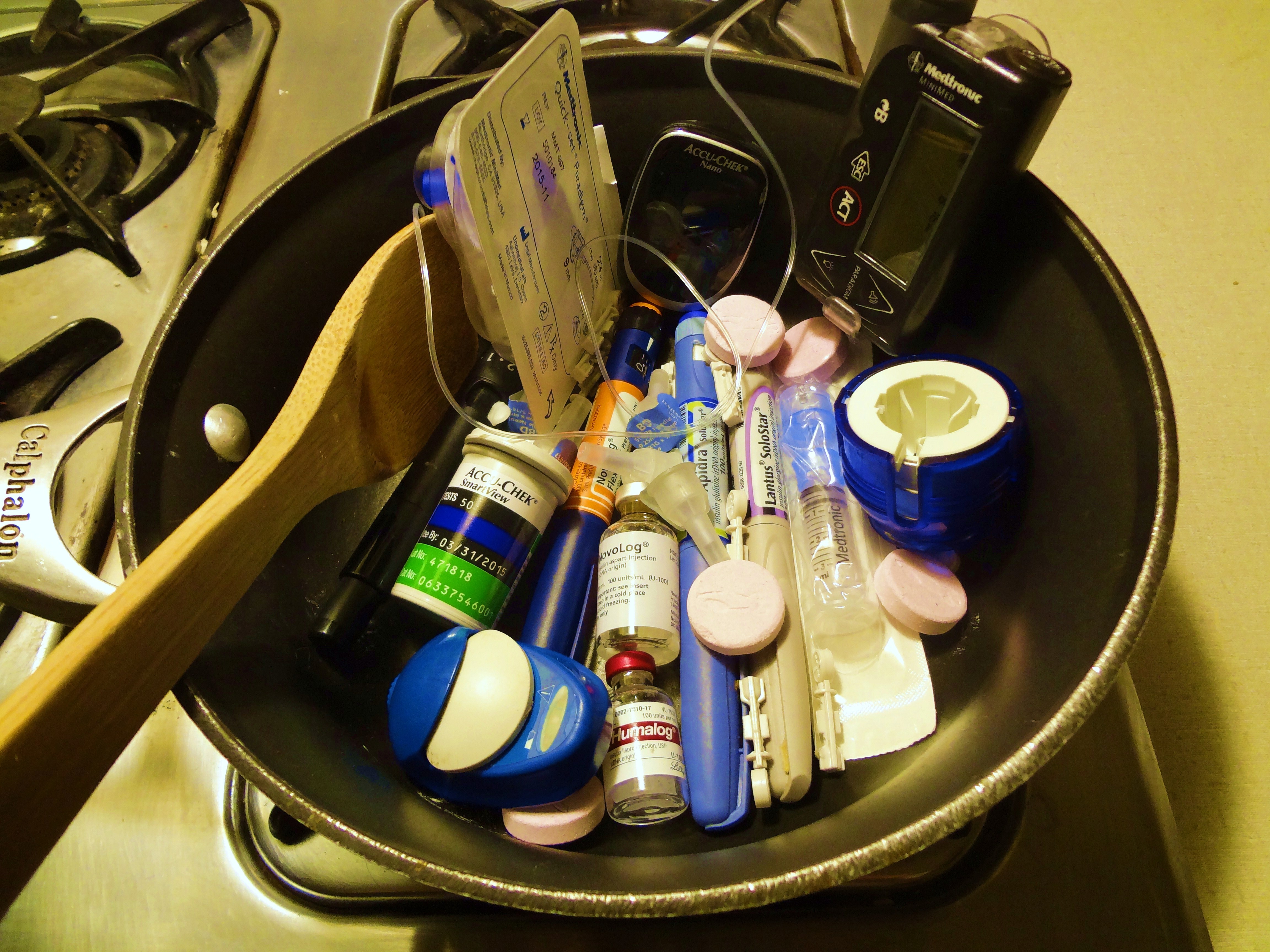
The idea of my photography piece is to leave an impression of the many things (drugs, infusion sets, reservoirs, pumps, CGMs, glucose tabs, insulin pens and pen needles, meters, lancets and lancing devices, and more) that are part of our lives Every.Single.Day.

As I was filling the pot with “ingredients”, I started to get a feeling of the overwhelmingness of it all. I mean, that’s a lot of baggage to carry around, so to speak. And that’s just the outward-facing part.

If you’re lucky enough to not be living with diabetes, you may not be aware of a lot of the things that are part of our lives all the time. If that’s the case, dig in and have a heaping helping of some Diabetes Stew.

DSC01334

If you’re living with or affected by diabetes, I encourage you to create something on this day. Once you do, upload your Diabetes Art Day project (which will undoubtedly be better than mine) here. You can also use Facebook and Twitter (hashtag: #DArtDay) to share your work, and you can share your work on any of the diabetes social networking sites like Diabetes Daily, dLife, and TuDiabetes.

I am definitely looking forward to what I’ll see on yet another fun and exciting Diabetes Art Day.