Tag Archives: dsma

Please share your thoughts: #IWishPeopleKnewThatDiabetes

Denver teacher Kyle Schwartz started this wonderful #IWishMyTeacherKnew initiative, in which she asks her students to write down on a post-it note what it is that they wish their teacher knew. The story is inspirational and uplifting, and reading about it brings tears to your eyes sometimes, and it’s been all over the news lately. HERE is an example, courtesy of CNN.

Kelly Kunik and I both saw this story at around the same time, both of us had similar ideas, but she beat me to the punch in designating today as #IWishPeopleKnewThatDiabetes day. Because she’s just awesome that way.

Look for my takes on this below. Look for additional brain spewing and general thoughts on this meme throughout the day on all social media. And tonight’s DSMA chat is all about #IWishPeopleKnewThatDiabetes… the Good, the Bad, and the Ugly. Join us at 9:00 ET in the USA by following @DiabetesSocMed and the #DSMA and #IWishPeopleKnewThatDiabetes hashtags.

Here we go:

#IWishPeopleKnewThatDiabetes sometimes causes high BGs in the mornings that are a pain in the ass to deal with. But… #gameface

#IWishPeopleKnewThatDiabetes is not equatable or equitable to anything else. Even to yesterday. It’s day-to-day, monitor it all the time, never gonna get a vacation from it.

#IWishPeopleKnewThatDiabetes looks normal, and even manageable, from behind the face of this blog; but in reality, I deal with the same problems, the same headaches, the same highs and lows, that everyone else living with this disease deals with. You are not alone, dear reader.

#IWishPeopleKnewThatDiabetes makes me work harder than my co-workers will ever know.

#IWishPeopleKnewThatDiabetes has caused me to experience near-death hypoglycemic low blood sugar battles at work, at home, in the grocery store, during workouts at the gym, on vacation in multiple countries, and just about anywhere else in my 24 years with diabetes. It has sapped my energy and killed brain cells and while I try, I can’t be guaranteed to not experience another one today. Or tomorrow.

#IWishPeopleKnewThatDiabetes makes me want to simultaneously invest large (to me) sums of money in and kick the teeth out of insurance companies that make life and death decisions for me and my friends based on nothing other than “delivering increasing returns to shareholders this quarter”.

While we’re at it, #IWishPeopleKnewThatDiabetes is making people who already can buy or sell anything they ever wanted increasingly richer, while making other people increasingly have to choose between food for their families, keeping the lights on at home, and paying the mortgage; or buying the drugs and devices that will keep themselves or their loved ones alive on the other. On a monthly basis.

#IWishPeopleKnewThatDiabetes made me one of those people who once had to choose between food, keeping the lights on at home, and paying the rent; or buying drugs, DME, or going to the doctor when I needed it. On a weekly basis.

#IWishPeopleKnewThatDiabetes has blessed me with not only a faulty pancreas, but also the kind of daily resilience that some can only dream of. And empathy that, unfortunately, some others will never understand. That will not keep me from trying to help them understand and empathize with the daily resilience that me and all of my brothers and sisters with faulty pancreases possess.

and…

#IWishPeopleKnewThatDiabetes has connected me with so many people living with and affected by diabetes through daily interactions, Twitter exchanges, blogs, Facebook, healthcare professionals, the scientific community, and as yet unknown additional outlets that inspire, empower, and I know, will eventually overwhelm the bejesus out of this stupid, effing, disease.

If you’d like to add more, join us tonight… and by all means, leave a couple of things #IWishPeopleKnewThatDiabetes below.


#DSMA Recap: Diabetes/Depressive/Depression

I don’t do this often anymore, but I wanted to touch on last night’s #DSMA Twitter chat. The chat was all about diabetes and depression, how we recognize it, how we treat it, and what kind of resources we lean on when we’re in need.

I learned a lot.

First, some facts. According to a study published three years ago by the U.S. Centers for Disease Control and Prevention, one in ten American adults report depression. The first paragraph of the web page devoted to it tells the story:
”Depression can adversely affect the course and outcome of common chronic conditions, such as arthritis, asthma, cardiovascular disease, cancer, diabetes, and obesity.”

The Depression and Bipolar Support Alliance cites a statistic that says that 8 ½ percent to 27 percent of people living with diabetes also experience depression.

An article published on diaTribe earlier this year takes it a bit further, noting that:
“Diabetes distress is much more common than clinical depression and affects up to 39% of people with type 1, and 35% of people with type 2.”

So depression, or diabetes distress, actually, is a common occurrence among people living with and affected by diabetes. At the same time, there’s a lot of hand-wringing over why we don’t know more about it, and why don’t we reach out more often to those who are feeling this way, and how do we solve this problem?

I’m obviously not an expert, though I can claim to be one of those people who have suffered diabetes distress off and on throughout my 23 years living with Type 1. My biggest problem was that when these moments occurred, I didn’t know where to turn or who to reach out to. And I have to admit to worrying about who to reach out to, because I didn’t want to be seen as a crazy nut, or have my symptoms advertised to the world. I was lucky enough to get through these times with a minimum of help and family and friends who helped me find perspective.

But as in many things, I think the solution begins with ourselves.

We need to make it okay, normal, to recognize the need for good mental health. We need to stress that seeking help when we need it is a normal thing, and it’s a vital part of managing our diabetes. We need to be willing to state this over and over again to people inside and outside of our community. We need to affirm the notion that relying on the resources we need to help us feel better makes us strong, not weak.

And when we see someone who is suffering, we need to hold their hand, look them in the eye, and if we can, help them find their soul and their dignity. This diaTribe post has some great pointers, and links to a number of resources that can help you begin coping right now:

http://diatribe.org/issues/65/learning-curve

If that doesn’t do it for you, and you still feel you need help, please reach out to me and I’ll try to point you in the right direction. Know that if you are living with diabetes and depression, you are not alone. You will never be alone.

I support you… no conditions.


8 Vacation Observations.

I’m feeling somewhat refreshed after a week away, but also a little bummed about the change in temperatures at home, and mostly about the dwindling amount of sunshine in the days here in North America. To begin the week, since I seem to be stuck at eights lately, I thought I would offer eight observations from the previous week:

Transportation Security Administration: We’re still finding different rules in different airports. In Baltimore, take out your iPad, and take off both your shoes and your belt. In Fort Myers, you can leave your belt on, and you can leave your iPad in your bag. But regardless of where you go, don’t forget to empty your pockets. I got yelled at (and I mean YELLED AT) by a TSA agent at BWI, but my pockets were empty. He was very, very unhappy, and came out from behind the barricade he was behind, walking straight toward me, pointing. Until I pointed out that what he saw was my insulin pump, after which he said “Okay, just go through here and we’ll take care of you right away”. With a smile on his face.

Pump Vacation: I took an unexpected pump vacation for a few days down in Florida. After being in the pool for a while, with my pump in a cooler (inside a plastic bag– thanks Kelly), I took it out, reattached, and started receiving button errors that I’d never seen before. I couldn’t get the ACT button on my Medtronic Revel pump to work at all. I worked with it for about half an hour and started to get some functionality back, but the ACT button was still spotty, so I just took the battery out and went on MDI for about three days. I reconnected Friday night, and everything seems to be okay, but the ACT button still needs a little extra oomph to work properly. I’m happy to report that despite all this, diabetes played a mostly secondary role this past week. But this is a huge wake-up call for me, a big reminder that because my pump warranty expired over 6 months ago, maybe I shouldn’t wait too much longer to decide on a new pump.

How would you like to be cooked? Why is it that while you’re on vacation, you’re always worried about getting too much sun, but as soon as you’re back, you think you didn’t get enough? Inquiring minds want to know.

Speaking of not enough: When did I get the mentality that I’ll never be able to do enough diabetes advocacy? When I started this blog, I wanted to help where I could, thinking that I probably wouldn’t be able to do much. By this point, I’ve accomplished about ten times more than I ever thought I would, but it just doesn’t seem to be enough. Oh well… I guess I’ll continue to try to help where I can, as long as there is a need. And unfortunately, there is still a need.

Reading: My reading at home is mostly at the rate of ten pages at a time. That’s how many pages I can read on the train to work, during my short lunch, and on the train home. Thirty pages per day. So vacation is usually when I get a chance to dive into something without missing a stop (I’ve been known to do that). On this trip, I read the fabulous Billy Crystal autobiography Still Foolin’ ‘Em, which will make you laugh out loud in public places, often. Great background stories on the projects he’s worked on over the decades too. I also read through Blog Inc., by blogger Joy Deangdeelert Cho. It’s mostly about monetizing your blog, which I’m not much interested in. But there are some great tips on blogging in general that I found useful, and that you might find useful too. I especially liked the interview with Emily Henderson on page 115 where she talked about why she started blogging.

The ATL: Travel both ways this time was routed through Atlanta’s Hartsfield-Jackson International Airport. For the life of me, I can’t understand why an airport that claims to be the busiest in the country makes my wife with arthritic feet walk half a mile (literally) to find out what gate her next flight departs from. And while we’re at it, why do pilots still make an announcement that says “If you need help finding your next flight, an attendant will be at the end of the jetway to help you”? Because those attendants don’t exist. They were “right-sized” out of the company while you were adding 50 bucks to my fare so I could actually take the luggage I’ve never paid extra for before. We did find someone at an empty gate a few gates down, who refused to look up our connecting flight and pointed us in the general direction of where we could find our departure. If we moved fast enough so we wouldn’t miss it.

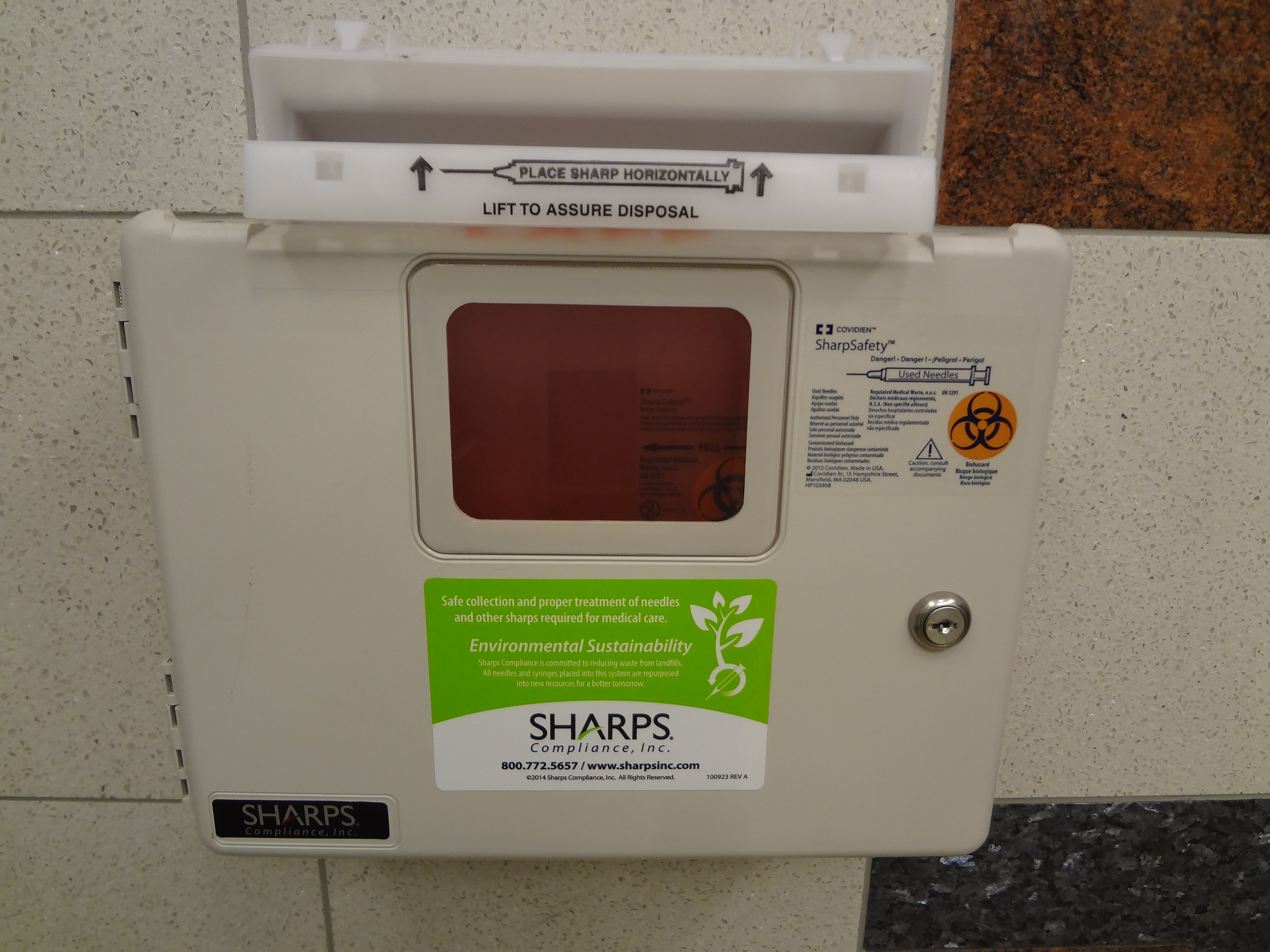
Bonus: The ATL does include sharps containers in the restrooms. I found this one in the back of the Men’s room in terminal D next to the urinals. Great idea, bad placement.
Sharps-container

DSMA: Despite wi-fi that was slow as molasses, I was able to sit in on last Wednesday’s DSMA Twitter Chat, and it was still one of the highlights of my week. I think it’s safe for me to say my life would be a little LOT less happy without that crazy hour of questions, answers, encouragement, and support. Even on vacation.

Finally… Pictures! Here are a couple of sunrise photos from Sanibel, Florida. One, sunrise looking toward Bonita Beach and Estero at low tide, and one showing the famous Sanibel Lighthouse. Enjoy your Monday!
Sanibel-Sunrise

Sanibel-Lighthouse


September DSMA Blog Carnival: Can I get a copy of those notes?

This month’s DSMA Blog Carnival topic goes back to the August 20th Twitter chat, asking a question that I have a difficult time answering:
 
 
Do you request a copy of your medical notes? If so, how often? If not, why?
 
 
I hate to show my ridiculous ignorance on this subject, but the answer is no.

I have never asked for a copy of my medical notes. Ever. I’ve asked for a copy of prescriptions. My endocrinologist sends them in directly to my prescription provider, so if I didn’t ask for a copy, I wouldn’t have a record of what I’ve been prescribed.

But other than the prescriptions, I’ve pretty much let my doctor, nurse practitioner, etc. take the notes and keep them to themselves. To be honest, I’ve never thought about asking for the notes before. It makes sense. I’d like to know what my file looks like. I’d like to know if they make a mistake in a diagnosis or a therapy or a prescription. However, right now, my only reason for asking for a copy of my medical notes is to satisfy my own curiosity.

But the question does make me think of something that’s been at the forefront of my mind lately. I need to start putting together a file full of notes of my own.

I got this idea from a co-worker, who showed me the tablet he uses on a daily basis. On it, he has his elderly mother’s critical medical information. Information like doctor names, addresses, and phone numbers. All of her doctors. If her general practitioner tells her she needs to make an appointment with her podiatrist, he just pulls up the information from the tablet and makes the call right away. He’s also got data on prescriptions, their strength, and how often they need to be taken. This helps when a doctor prescribes one thing, then another doctor prescribes something else that might interact badly with what she’s already taking. If she suddenly finds herself in the emergency room, he has all of her information in one easy-to-read place.

I realize something like this isn’t always well received by medical professionals, but I also know that all of my data is in separate places right now. And having all of my information in one place can’t hurt. I also know that if I were to find myself in a situation where I couldn’t speak for myself, my spouse would want that information at her fingertips. There’s the chance that it could get hacked and stolen and used for nefarious purposes. But I think the benefits of having such a cache of information on an easily-accessible platform would outweigh any potential risks.

So there you have it… A very meek “No” to our question this month. But, as always, the Blog Carnival topic has me thinking about how to better manage my diabetes. And that can only yield positive results in the future.

This post is my September entry in the DSMA Blog Carnival. If you’d like to participate too, you can get all of the information at http://diabetescaf.org/2014/09/september-dsma-blog-carnival-4/


August #DSMA Blog Carnival: Got any ideas?

This month’s DSMA Blog Carnival topic asks us to do a little thinking. Ready?

Last month, on July 21st, the DSMA Wednesday evening twitter chat celebrated its 4th anniversary! We’ve talked about a lot of diabetes-related topics, but there always seems to be more to discuss. With that in mind, let’s look back to our chat from July 16th and give some DSMA feedback. We’d like to know…
 
 
What topics are you interested in discussing during DSMA?

I’m interested in exploring what we don’t know about diabetes. Related topic: What I discovered that I hadn’t known before. I’ve lived with diabetes for 23 years. But you know what? I’ve learned a lot just in the past year. I’ve learned about new insulin pumps (still haven’t made a decision). I’ve learned a little about how algorithms driving an artificial pancreas system work. I’ve learned that medications designed with Type 2s in mind sometimes work well for Type 1s too, and vice versa.

And speaking of that…

What are two topics that you wished we talked more about?

Topic 1: Breaking down the barriers between Types.

We have more in common than we think. Let’s talk about what those commonalities are! Here are some sample questions:

– What trait does your type have that another type has too?
– What about your type makes living with diabetes difficult? (not more difficult—just difficult)
– What one thing does your type do every day that other types do?
– What’s easy about living with your type that isn’t easy about living with another type?
– If someone not living with your type were having a bad day, what would you tell them?

Topic 2: Diabetes Inspiration.

We’ve all been down into the abyss of diabetes burnout, shame, and stigma; most of us have found the inspiration to climb back up again. What inspires you? Sample questions:

– When was your last bad diabetes day?
– When was your last good diabetes day?
– Doing _____ always makes me feel better
– True or False: Having a goal always keeps me motivated to do my best
– Name a person, place, or thing that inspires you
– My advice to anyone feeling down is ________
 
 
The great thing about the weekly #DSMA chats is that this horde of people with a shared condition and their unique-to-the-patient perspective on it gets one hour every week to meet and greet, share triumphs and despairs, and interact with each other in a way that just doesn’t happen anywhere else. It’s a source of learning, camaraderie, and inspiration crammed into one little hour. And I wouldn’t miss it for the world. Talk to you Wednesday night!
 
 
This post is my July entry in the DSMA Blog Carnival. If you’d like to participate too, you can get all of the information at http://diabetescaf.org/2014/08/august-dsma-blog-carnival-4/