Tag Archives: diabetes

JDRF TypeOneNation DC Research Summit. Where else?

Last Saturday, people from the USA’s Mid-Atlantic region living with and affected by Type 1 Diabetes gathered for another TypeOneNation Research Summit in Bethesda, Maryland, just outside Washington, D.C.

This was my third DC summit, and usually I go over all the presentations in great detail, trying to pass along the information I gathered on a wide variety of topics over the course of about seven hours.

Instead of doing that again, I think I’d like to ask you a few questions. These questions are especially for those of you with TypeOneNation summits coming up in your area soon, but also for those who may have skipped this year’s DC summit and want to know what it was like. So… Let me ask you:

Where else would you get expert advice and a chance to ask questions about diabetes and exercise, and the best way to handle both, from the amazing Gary Scheiner, author of “Think Like a Pancreas”?

Where else could you find out the latest on beta cell encapsulation, including updates on clinical trials and photos of the procedure actually being done?

Where else could you find out the science behind Emotions and Diabetes from the insightful Diane Herbert?

Where else can you get all of the above and an update on the latest in Artificial Pancreas development from the excellent (and humorous) Dr. William Tambourlane?

Where else can you discover what’s on the T1D research horizon from JDRF’s National Director of Research Investment Opportunities, Tom Brobson?

Where else can you get all of this plus additional sessions, plus a great panel Q and A session with all of the presenters, moderated by the incredibly intelligent Molly McElwee Malloy?

Where else can you bring your T1 kid to share in a safe, fun environment with other T1 kids?

Where else can you meet other adults living with Type 1 Diabetes, who help share information, write blogs, and share tweets from the presentation with the world?

imageWith Heidi, writer at D Log Cabin, who will also be with us this weekend in Las Vegas for the Diabetes Unconference(!), and Jehan, who tweets from @gigi_tweets2.
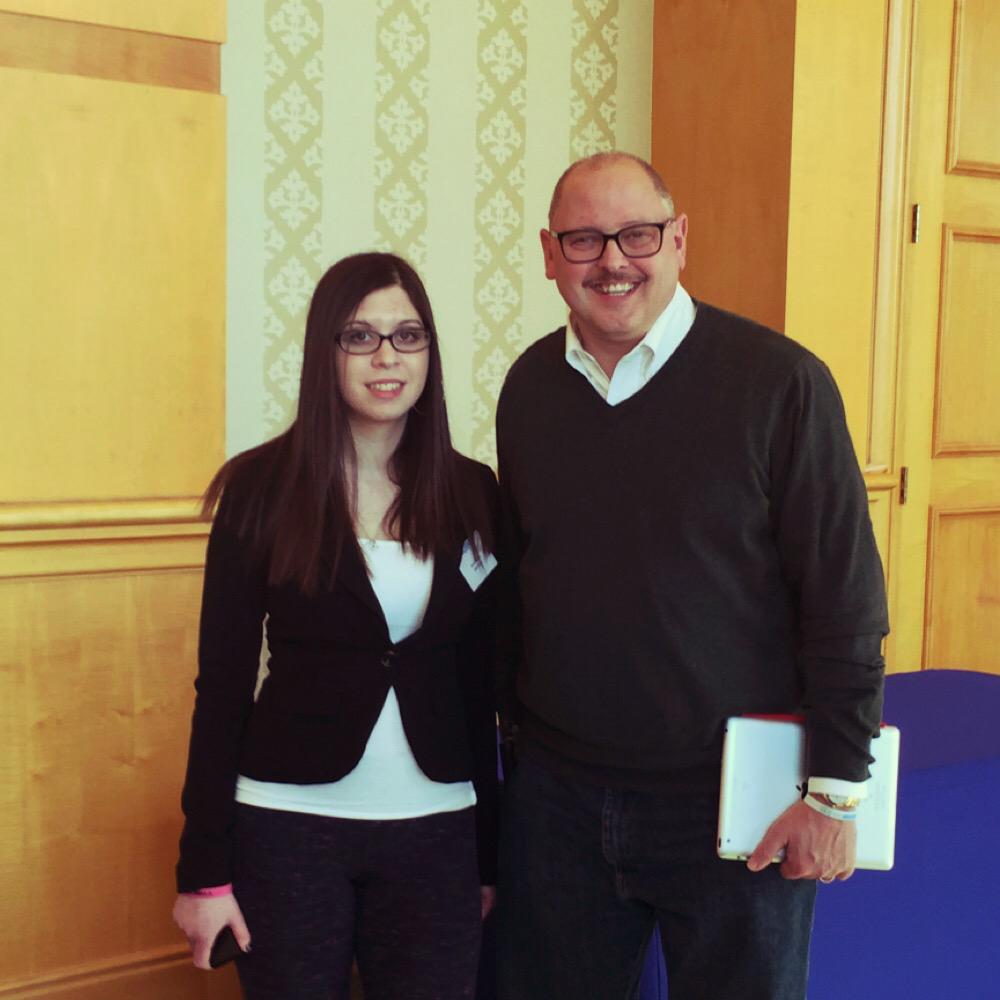
 
 
Jenni_JDRFWith Jenni Maizel, who was tweeting from her own account and handling the @JDRFGreaterCP account too.
 
 
This is just a sample of what you get when you go to a TypeOneNation summit. I haven’t even mentioned the exhibit hall or the book signings. Personally, I was encouraged by the fact that there seemed to be a lot more adult T1Ds in the crowd of over 900 Saturday than there were in years past. There were also lots of D-Moms and D-Dads who are learning more than ever before, who were sharing with other D-Moms and D-Dads, and were also asking questions of Type 1 adults in attendance, who were sharing their experience. During this summit, there seemed to be as much interaction and information-sharing among the tables as there was on stage.

There are still TypeOneNation summits to be held in several places around the USA, including this Sunday at the Sharonville Convention Center, about five minutes from where I grew up in the Cincinnati area. CLICK HERE to find out where the remaining summits will be held and how to register (Free!).

Until there’s a cure, we have each other. Find out the latest on Type 1 Diabetes research, the latest in what JDRF is up to, and more, in a welcoming place full of people who are climbing the same mountain. If you haven’t made the commitment yet, let me urge you: GO.

Where else?


#DBlogCheck: Building Community.

It’s another D-Blog Check-In Day (for my previous thoughts on #DBlogCheck, see here and here).

Christopher Snider, who writes at A Consequence of Hypoglycemia, started this idea a while back. Basically, it’s a day where we’re less of a lurker and more of an active online participant in the Diabetes Online Community, by leaving a comment on every post we read on diabetes blogs, Tumblr, Instagram, and so on that we see.

If you read something today, leave a comment. Even if it’s just to say “check” or “I’m here”. Be sure to share and encourage others to do the same on Twitter and elsewhere by using the hashtag #dblogcheck.

It’s a way for us to support those bravely sharing their stories, a way to build community, and more than that, it’s a way to continue the dialogue among the vast hordes living with diabetes and helping those living with diabetes. That’s what I’d like to talk about today.

Writing this blog for nearly three years means that I’m not exactly a rookie anymore, but I’m not quite a seasoned veteran either. Even so, in the limited time I’ve been doing this, I’ve seen how the diabetes community has evolved. It’s true that the DOC is no longer a nascent community of random people shouting into the ether. Instead, it’s a vast interconnected network of people who know each other personally, know each other online only, or don’t know each other at all, but are nevertheless hanging on every word that is written.

Can you imagine what it must have been like in those early days? Writing out thoughts and posting them without knowing who was out there to see them? But someone did. And those initial readers responded. They connected, the same way you and I are connecting today. You know what? That kind of writing and that kind of response is still the basis of what grows the DOC, reaching more people, changing more lives.

Meanwhile, the community of it all has really grown in the last few years. Off the top of my head, I could probably list a dozen or more diabetes initiatives and organizations that have taken flight, including my own (notice the photo of the medals in the upper left corner of this page), through the sheer nature of someone raising their hand and saying I’m here, and someone else responding. How does that happen?

Through participation.

Through your participation.

Through your positive response.

It has all happened through your commitment to community.

As you comment today, think about what it means when you say “Yeah, me too”, and “Yeah, I think that’s a great idea”, and “Hey, what if you tried this”. Because while it still takes a great idea to start something, it also takes a great response to make a community successful.

So think about what your involvement means to this ever-growing community. What it means to someone who is finding their voice. What it means to someone advocating on your behalf before government officials. What it means to those raising money for an important diabetes cause. What it means to someone thinking about getting people together to encourage and support one another.

You, dear reader, are just as important as anyone else in our diabetes community. Let me take this moment to thank you for the insightful, inspirational, and encouraging comments you’ve left here so far. Let me also encourage you to continue to stay engaged with this wonderful community. You’ve made it the safe, empowering, and uplifting place it was long before I showed up. And you’ll make it the bigger, even better place it can be long after I’m gone.

Unless, of course, they find a cure first. Then you’ll have something even bigger to be proud of.


Friday Reminders.

A couple of quick Friday updates before I go back and park myself in front of the nearest space heater:

The FDA Office of Minority Health Will Host a Webinar About Commenting to a Docket. Want to learn more about adding your voice to a U.S. Food and Drug Administration docket concerning your health (HELLO, Advocacy)? Efforts from the Diabetes Online Community to add the voice of the patient to FDA considerations has been extremely helpful and is absolutely necessary. Find out how to do it, and why it’s important for you to add your voice, during a webinar hosted by the FDA’s Office of Minority Health on March 25 from 2:00 p.m. to 3:00 p.m. Eastern time.

For more information, and to register for the webinar, CLICK HERE
 
 
#DBlogCheck Day is back this Tuesday! Spearheaded by Christopher Snider of A Consequence of Hypoglycemia and the Just Talking Podcast, D-Blog Check-in Day is a day when we spend time commenting on every blog, Twitter feed, Instagram member, and so on that we see, even if we just say “check”. As Chris says, it’s not about page views; it’s about saying I’m here and I support you. It’s about continuing to build community.

CLICK HERE to find out more, and don’t forget to link your posts there on Tuesday.

Be sure to check in, leave a comment, and boost the spirit of someone bravely telling their story.
 
 
Finally… If you live in the USA, don’t forget to move your clocks ahead one hour this weekend. That also means please remember to update the time on your diabetes devices. I know I’m getting older, because this “Spring Forward” event seems to happen earlier every year.

If only Spring would come along with the change…


Confession time: CGMs.

So with all of this talk about travel and safety and doing the right thing, I’m still not a consistent continuous glucose monitor user. Here’s my confession:

I don’t want to be a CGM user.

I hope my endocrinologist isn’t looking at this today (she does look in every once in a while). But she’s already familiar with my resistance on the subject. Let me see if I can explain this. I’m sure all of the points I’ll make here can be shot down with common sense wisdom that just about anyone living with diabetes can understand. But there are a few reasons why I haven’t made CGM use habitual.

When I first started using an insulin pump five years ago, I also started wearing a CGM all the time. The CGM I was using was horrible; it had accuracy issues, and it was always painful to insert. It was so frustrating that after about nine months, I gave up on it. I won’t go into it anymore, but I think that was where my reluctance started.

Actually, the biggest, most overriding reason for not wanting to wear a CGM is that I do not want one more thing attached to me 24/7/365. That’s not to say that showing a CGM transmitter in public, at the pool or in the shower at the gym, would cause me embarrassment. Those days are long over. I couldn’t care less about that, and I certainly didn’t have a problem with it when wearing a CGM during clinical trials.

No, the problem of “one more thing” is bigger than that. It’s not only wearing something else all the time. It’s having to plan out site changes for two devices rather than one. It’s having to pack supplies for two devices rather than one. It’s fighting with insurance profiteers over coverage of two devices (and supplies for those devices) rather than one. It’s having to carry around a receiver in my already overcrowded pockets. It’s dealing with real estate issues earlier because I’m constantly violating my body in two places at a time instead of one.

I think there might also be, hidden somewhere deep, an aversion to gathering data for my endocrinologist to go through and find fault with me. My current endo is not like that at all, and I know she would never shame me if my numbers didn’t look so great. However, old wounds take time to heal. On the other hand, this would probably be the easiest place for me to give a little. In reality, I know this would not be an issue, so why should I continue to make it one? Patients are not always perfect either.

After going over my concerns with my endo, she suggested that instead of wearing a CGM full time, maybe I use one for ten days or two weeks in between appointments. That way, she could at least get a little data on how my BGs were trending throughout each day. This seems reasonable, and not too intrusive. But has that made me start the process over again? No. Old wounds take time to heal, and old habits die hard.

I’m not sure I’m solving anything here. But this is how I deal with issues like this: I talk about them, to myself, family, and friends, and in doing so, I often talk away some of the concerns (read: fears) of change. I know that CGM technology is better, and with the rollout of Nightscout and Dexcom Share, many people are able to add an additional layer of security in the advent of a hypo away from home. Why wouldn’t I want to make that a part of my care too?

I don’t think I’m there yet. But I’m getting closer. Secretly, I’ve even made lists of who I would share my data with… even “backups”.


Be safe, take advantage of the opportunity.

Since this blog is about diabetes, naturally, part of it is going to be about my diabetes. Today, it’s about my diabetes and the challenges of travel. I’ve spent a fair amount of time talking about diabetes and travel on Twitter recently, and a little on Facebook too. Sorry about that. This is what’s happening in my life right now.

First, what this post isn’t: IT IS NOT MEDICAL ADVICE. Please check with your physician, endocrinologist, or diabetes educator before traveling, and certainly before making any changes in your diabetes routine.

Now, what this post is: It’s a few things I’ve learned over the years. Not exactly what to do for specific circumstances, but rather some things to keep in mind as you travel from place to place. Feel free to add to the list by leaving a comment below. More information is always better than less.

1. Check with your physician, endocrinologist, diabetes educator, or all three before you travel. A no brainer, right? See “What this post isn’t” above. This is especially true if you haven’t traveled for a while. Your medical team may be able to give you expert advice that would take you hours to gather via blogs and other social media. And they can give you a copy of your prescriptions, which is a must to have wherever you are.

2. Changing time zones? Determine a “best practice” scenario for updating pump settings, basal amounts, and dietary needs. I don’t have great advice here, and it’s not backed up by science. Do research (along with your medical team) to find out how to best handle time zone changes, including the possibility of making no time zone changes at all, either with devices or routines (a lot of athletes do this). Again, it’s not backed by science, but what I do is change the time on my pump to match where I’m going when I’m about halfway through my trip. A six hour flight across the country? I change the time to match where I’m going at around the three hour mark. I can’t tell you why this works for me, but it does. Find out what works for you (read #1 above again), and if you can, make it routine.

3. Check your BGs early and often. Travel usually involves a lot of walking, even if you’re just making your way through the airport. Also, a change in time zones, eating out for every meal, and other influences (drinking, anyone?) can make for weird and wonky blood sugar numbers. I have learned, the hard way sometimes, that testing more than I do at home is not only common, it’s necessary when I’m on the road.

4. Never, ever, go to bed with a low or even semi-low blood glucose reading. I don’t care if you’re traveling with your spouse. I don’t care if you’re traveling with someone else. I don’t care if you’re staying at a friend’s house. We can’t always avoid hypoglycemia. But if we’re sure that we’re in a good range when we go to bed, even if the number on the meter is a little high, we’ll be much less likely to encounter a middle-of-the-night low, a disruption to our time away, and a disruption to the time spent with the person we’re with. Again, this is something I’ve learned the hard way. Don’t make my mistakes.

To provide additional peace of mind, consider adding a continuous glucose monitor to help you manage your BGs on the road. Or, if you’re using a CGM now, consider taking it to the next level and employing Nightscout or Dexcom Share technology.

These four things to remember go in addition to the things we already know: Pack enough supplies and medications, wear medical alert information (it may save your life as it has saved mine), and (in the USA) know your rights as a traveler.

As we all know, diabetes is not simple, and it’s not easy. That doesn’t change just because you’re away from home for a few days. In fact, it complicates things. But that is no reason to avoid travel. For me, I think the emphasis needs to be on staying safe and being as ready as possible for anything that might be outside the norm.

Doing so allows me to take advantage of every opportunity possible when I travel. I love to travel. I don’t want to miss out on anything. Managing diabetes on the road can be very different from how I manage things when I’m at home. Remembering these four simple things helps to provide peace of mind for myself, to those I’m traveling with, and those who are waiting for me at home.

Have any outside-the-box traveling and diabetes tips? Feel free to leave yours in a comment below.