Tag Archives: diabetes

Diabetes By The Numbers: Clinical Trials and an invitation.

Clinical trials come and go, and often they may seem like the same thing is just being tested over and over again. But it’s really not like that at all.

Case in point is the clinical trial beginning at the University of Virginia Center for Diabetes Technology. Jess Robic and Jennifer Pinnata from the CDT are here to talk about this trial specifically, and to answer a few questions surrounding clinical trial participation in general.

This trial is specifically recruiting MDI (multiple daily injections) users, but it’s using algorithms developed for use in artificial pancreas systems. There are many super interesting aspects to this study.

The best part is all the diabetes stuff you get as part of participation in the trial. It includes:

– Insulin for the length of the trial
– Use of an innovative insulin “smart” pen
– Use of a Dexcom G5 continuous glucose monitor
– Test strips for the length of the trial
– A stipend, dependent on the number of in-person study visits you complete before the end of your participation.

Seriously, if I was an MDI user, I would sign up for this trial yesterday.

——————————————————————————————–

A quick note: this interview was conducted two days before the unrest in Charlottesville, Virginia on August 12. If you’re wondering why we’re so cheery in the interview, and why we’re not even acknowledging anything about the racial discord of that weekend, or the fact that someone lost their life, it’s because it hadn’t happened yet.

In the aftermath of that sickening weekend, all of us decided to wait a bit before airing the episode. If you qualify, I hope you will consider signing up for this study… I believe it will help lead to something truly unique in insulin delivery for people living with diabetes.
DBTN

Reference Material – Click below for more information on this topic

Jess and Jennifer talk about CDT’s Recruitment Database… to join the pool of potential clinical trial participants, CLICK HERE.

To see the clinical trials currently recruiting and taking place at the University of Virginia, CLICK HERE.
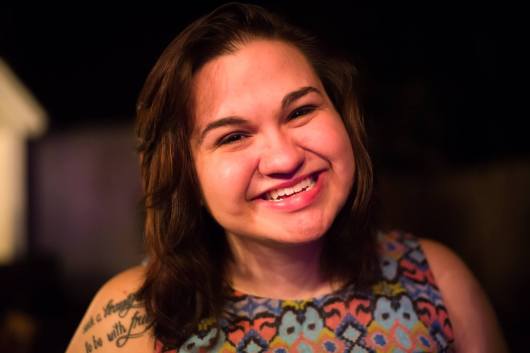
Diabetes By The Numbers: Mindy Bartleson.

Mindy Bartleson is accomplished. I don’t think that’s overstating it. What’s really amazing is how accomplished she is at only 24 years of age.

Mindy lives with a number of chronic conditions, diabetes being one of them, and we talk about them here. Many people remember her from her previous work at College Diabetes Network. She has a really super blog. Her writing has been featured on numerous websites.

And now, she’s written a book.

We talk about the book, about what it’s like to live with so many things and go to college and write a blog and write a book too.

This interview is being aired in conjunction with the kickstarter campaign designed to help Mindy get her book published. CLICK HERE to contribute… the end result will be well worth it.

Here’s a pretty revealing look at one of nicest people you’ll ever get to know.

DBTN

Reference Material – Click below for more information on this topic

Help Mindy publish her book! To donate to Mindy’s Kickstarter campaign,
CLICK HERE.

Mindy’s blog is titled There’s More To The Story, and you can find it here:
blogMoreToTheStory.com

Conversations.

“Are you a brittle diabetic?”

Wow. Two things I don’t like to hear in one sentence. But… if you live with diabetes long enough, you’re going to hear questions like that.

I actually had a great conversation with the person who asked that a couple of weeks ago. Once I explained about how “brittle” is not actually a medical term, we got down to the science of diabetes and what it’s really like to live with this condition every day for the rest of my life.

They shared that their spouse is living with diabetes, and the three of us spoke for a while. We talked about what hypoglycemia feels like, and how our spouses reacted. They were concerned that low blood sugar meant failure. I explained that the better you manage your diabetes, the closer you are to hypoglycemia all the time. I think it was an A-Ha moment.

“Is that a pager?”

“No, it’s my insulin pump. You know, you’re only the second person to ask me that!”

I don’t know why, but whenever I use that second sentence in response to that question, it seems to put people at ease. Once I rolled that out, I was able to downshift into why I wear a pump (it’s my choice for my diabetes), and my CGM (I didn’t like it at first, but I’m getting used to it).

I was able to talk about interacting with others online, and how that eventually led to things like a blog and a podcast, and diabetes conferences and FDA workshops and clinical trials, and the importance of all of those.

“Why did your blood sugar go so low?”

This is a question I get when there’s a low that happens more than once, at the same time of day, in front of the same person. It’s a well-meaning question… someone sees something that concerns them, and they want to help me avoid repeating the scenario.

The problem is, there could be a hundred answers to that question. Either I’ve gone low because diabetes just doesn’t react the same way every day, or because I’m trying something new with diet or exercise and I haven’t figured out the perfect routine yet. Or, this just isn’t my diabetes week… it happens. Or, maybe I just made a mistake and I feel bad enough already and I don’t want to admit it.

There are a number of conversations that happen due to my diabetes. Sometimes short, sometimes detailed, sometimes tinged with self-assurance or regret. I don’t know about you… but what I know about myself is that I need to keep engaging in these conversations. It’s not always about feeling great. It is always about enlightenment and being more comfortable being myself, and being myself with my diabetes.

We have a winner!

How many of you remember this post from a few weeks ago?

I have received multiple responses to this, and I am happy to announce that we have a winner.

Because a second, generous donor (who wishes to remain anonymous) stepped forward, we were able, together, to provide registration for the Diabetes UnConference and two nights’ stay at the Embassy Suites Alexandria, the host hotel for this gathering.

Like I said in the original post, I realize this doesn’t make everything suddenly more equal and inclusive at diabetes events throughout America. Especially in light of the terrorism that took place in one of my favorite places in the world, Charlottesville, Virginia last weekend, this seems like a rather meek gesture.

Sometimes we can’t change the whole world… but we can influence our little part of it.

I am thrilled about sending our winner on this trip, and they are excited about attending.

I’m not sharing the identity of the winner. I thought about it. But I felt that whether I did or I didn’t reveal, I could be open to criticism. By not revealing, someone could say that I’m trying to make it about me, or hide the fact that I did this. That’s a ridiculous argument, but someone could say that. If I did tell everyone who it is, I risk looking like I’m showing them off for my own benefit, which, frankly, is not what this scholarship offer or the Diabetes UnConference is about in any way.

So our scholarship winner is free to share that they are the scholarship winner, should they want to. But again, in the spirit of inclusion, I want them first and foremost to be thought of as a welcomed attendee… as a valued member of our tribe… as a respected contributor to our community… as a person.

For now, there is still time to register for the Diabetes UnConference Alexandria (co-located with Diabetes Sisters’ Weekend for Women conference), happening October 13-15. Room reservations are filling up fast, so if you want in, your time is limited.

I can truly say that it has often been imitated, but never duplicated. It is that special and unique. Come to our gathering and share. Experience. Explore. Not about diabetes life, but about life with diabetes. No structure. No judgement. Find your tribe. Love them hard.

See you in October!

Disclosure: I will be part of the team of facilitators at the Diabetes UnConference Alexandria October 13-15, 2017. All opinions are my own.

Diabetes Prevention Programs.

In my daily commute, I saw this on the subway train the other day:

I found out that this poster is part of a diabetes prevention and awareness campaign undertaken by the Maryland Department of Health. They’ve developed a nice website, with videos and reference links, that show people the importance of identifying diabetes and prediabetes as quickly as possible.

This mirrors an effort by the Centers for Disease Control and Prevention, which has its own website devoted to identifying those at risk of Type 2 Diabetes, and giving them the knowledge and resources to help them deter diagnosis for as long as possible.

Why are we seeing efforts like these at the state and national level? In my state, over 1.5 million people are said to be living with prediabetes, and only a little more than 10 percent of them know they are at risk. Multiply that by 50, plus the District of Columbia, plus U.S. territories and outlying islands. That’s a lot of people, folks.

Both the state and national programs focus on doing three things:
 
 
1. Take a simple quiz to find out if you’re at risk for developing diabetes (or ignore the quiz because, take it from me: you’re at risk)

2. Talk to your doctor. Your doctor should (emphasis on the word should) have advice for you on how to manage your life going forward, should you be at risk

3. Take a diabetes prevention class. More knowledge is always better than less knowledge, and that’s especially true when it comes to diabetes
 
 
Honestly, I don’t know much about prediabetes. And I really feel that if you’re going to get a diabetes diagnosis, you’re going to get the diagnosis. But why not hold it off as long as possible? I think that’s what these programs are really trying to accomplish.

And just in case you’re wondering: You are worth every effort it takes to feel better and be healthier. Why not take advantage of the many tools at your disposal?
 
 
To find out more about Maryland’s Diabetes Prevention Program, go to:
powertopreventdiabetes.org

More on the National Diabetes Prevention Program run by the Centers for Disease Control and Prevention can be found at:
www.cdc.gov/diabetes/prevention/index.html