Tag Archives: diabetes

May #DSMA Blog Carnival: People trump Proprietary.

The May DSMA Blog Carnival topic has required a lot of thought on my part. And to be honest, I’m not through thinking about it yet:

This is a grassroots initiative calling for diabetes data and device interoperability — so that we PWDs have full access to our own data, can share it as we like, and can use on whatever apps or platforms we choose without being locked into some proprietary product from just one manufacturer. For the month of May, we’d like to know:

Why does open D-data & device interoperability matter to you? How might your life improve if open data were the norm?

I originally wrote about this in a story about an interoperability conference I attended back in February.

To me, the problem with “proprietary” software (or “proprietary” anything else, for that matter) is the very ideal of proprietary: To continue sole ownership of and profit from a device, or an algorithm, or something else, forever. Or at least until the next proprietary thing can be developed that will replace the original. By nature, something proprietary is designed to be kept proprietary by its owner not just now… but for generations to come. Never ever shared.

But these companies paid for their product to be developed, right? They should be allowed to profit from it, as much as they want, right? Who am I to suggest they open up their code?

I’m all for profit. I love profit. Proprietary and profit go together like bacon and eggs.

Unless you keep kosher. And there’s the rub with “proprietary”.

Not everyone is the same. Some of the people in the world are blessed with bodies that have fully functioning pancreases. Some are not, and they are People With Diabetes.

Some People With Diabetes are blessed with wonderful insurance plans that pick up a large part of the cost for a new insulin pump, continuous glucose monitor, or test strips. Some are not, and they struggle to afford even the daily insulin they need to survive.

Some people never have to worry about where their blood glucose is headed at any given time. But there are People With Diabetes who deal with hypoglycemic unawareness, something that keeps them from being able to recognize life-threatening lows and treat them in time. For these people, a continuous glucose monitor, the best one they can lay their hands on, is a daily life-saving instrument that they cannot do without.

Some people are lucky enough to have access to world-class healthcare resources, where doctors and nurses can look over them whenever necessary to help them manage those times when they might wind up in the hospital. And some people wind up in the emergency room, waiting desperately for care, because the hospital they have access to still writes down every last statistic about every patient, then manually enters all of that data into a computer, then photocopies the paperwork and files it away in a vault somewhere… instead of accessing a standard system that includes all of the patient’s medical history, their prescriptions and doses, pump and CGM data, and their doctor information, leaving doctors and nurses free to, you know, actually practice medicine.

The thing that profit-protectors fear, I think, is that we’ll suddenly go away as customers the minute they open up their platforms. But here’s the thing: I would still want to wear an insulin pump. People would still want CGMs to monitor their blood glucose. I’m going to need insulin as long as I live with Type 1 Diabetes.

Your customers are not going away, profit-protectors. But… How would the lives of both groups of people described here be changed, if the standard of medical software development was focused on the patient… No—On all patients? What other discoveries (and sources for profit) could be discovered by playing with the rest of the kids in the sandbox and making people healthier?

Understand me: Profit is great… capitalism is a good thing. But not at the expense of any of my fellow People With Diabetes. People trump proprietary every time. But don’t fear, profiteers. Open platform or not, your products, and your customers, are not going away anytime soon.
 
 
This post is my May entry in the DSMA Blog Carnival. If you’d like to participate too, you can get all of the information at http://diabetescaf.org/2014/05/may-dsma-blog-carnival-4/


Didn’t you mention something about a clinical trial?

Yeah, so I started a new clinical trial almost two weeks ago. This one, like the others, is being conducted out of the Center for Diabetes Technology at the University of Virginia, and also at UC Santa Barbara and the Mayo Clinic in Minnesota.

If you missed any of my other references, I’ll tell you straight out: This trial has an artificial pancreas element to it. That’s exactly how I’m describing it, because really, the trial is literally weeks worth of work by myself and others to prepare for about 36 hours on a closed loop artificial pancreas system. Here’s the sequence of events as I know it right now:

First, I went to Charlottesville to get screened for the study. This meant going through a physical, getting blood drawn for an A1c, having an EKG performed, the whole nine yards. We also went through the consent form (about 20 pages or so), and I submitted my medical history. This included things like confirming I was Type 1, that I’m not currently seeking treatment for things like alcohol or drug addiction, listing any hospital stays I’ve ever had, and listing out all of the medications I take on a daily basis, and in what amounts. The hardest part about these visits is that my BGs get so ramped up driving down to Charlottesville that I’m always running high when I arrive. The Jersey Turnpike has nothing on Interstate 81.

After the screening visit, I drove back home (more stress—I don’t know if I made it below 200 mg/dL all day) and waited for the phone to ring, telling me whether I had been accepted or rejected from the study. I had been rejected from two previous AP trials (different reasons), so I wasn’t holding my breath over this one. But I was accepted, and I was thrilled.

The following week I started a week of data collection by inserting a Dexcom sensor. I also started using a meter given to me to specifically be used for this trial. And I started keeping a daily diary. It included information on whether I was sick, whether I did a pump site or CGM sensor change, how I was feeling, how stressed I was about hyperglycemia and hypoglycemia, and whether I worked out that day. In addition, I needed to record times, BG fingerstick numbers, and carb counts of everything I put into my mouth. For an entire week. At the end of the week, I uploaded pump, CGM, and meter data, and faxed the daily diary info to the research team.

What was the purpose of all this? So the team at UVA could use my data to help build an algorithm specifically for me. When we finally get to the point where I’m hooked up to the closed loop system, the algorithm will work to help anticipate BG trends and carb intake, and make updates to insulin delivery as a result. Cool, yes?

So what’s next? Next are two separate admissions in the Center for Diabetes Technology’s research house in Charlottesville. I don’t know which visit will be which yet, but I do know that one of the visits will involve being on the closed loop artificial pancreas system itself, and one visit will not. The idea, as I understand it, is for the team to compare results on the closed loop system versus results from an open loop system in which I’m making decisions on my own, just like I do today.

My first admission is next week. Wish me luck! Actually, no… wish the dedicated team of researchers, developers, doctors and nurses luck. They’re doing the hard work of creating something that could be a game changer in terms of insulin therapy for people living with diabetes. Remember this: In all of these studies conducted, there have been zero overnight lows. My hope is that I can help further research into this and other advancements that are making the lives of the newly diagnosed better than I ever could have imagined at my diagnosis back in 1991. You and I are worth the effort.

I’ll try to give as much of a play-by-play account of what’s going on as I progress through the trial. Watch this space and Twitter for more.


Our latest #ChampDAthletes medal winner drives really, really fast.

Reed

Our latest Champion Athlete With Diabetes medal winner is NASCAR Nationwide Series driver Ryan Reed!

Ryan drives the number 16 Roush Fenway Racing Drive to Stop Diabetes℠ Ford Mustang presented by Lilly Diabetes (how’s that for getting all the sponsors in?). This is his second year on the Nationwide circuit, and his first full year driving every week.

I was able to chat for a few minutes with Ryan over the phone last week as he prepared for his first start at Iowa Speedway (he finished 16th).

First, ‘cause I’m a guy, I asked him about racing stuff: How things were going with Roush Fenway Racing in his first full year. I congratulated him on being ranked 10th on one of the most competitive racing series in the world (he moved down to 12th after Iowa, but that still means there are about 38 drivers behind him in the standings). He mentioned how things were going well, about as well as could be expected, and how it’s great being associated with such a professional organization. He’s just trying to learn all he can so they can continue to improve. What were the goals this year? Just want to continue to do well and make everyone happy. Sounds like my life, only 150 mph faster.

Then we talked a little about diabetes. Diagnosed three years ago at age 17, what was the initial feeling like after diagnosis, and how did it then feel once he got to a point where he knew he could still do anything he wanted to (except make insulin)? Well, the diagnosis was about the toughest time of his life. Since then, it’s been about learning as much as he could so he could confidently go behind the wheel again. He learned a lot at USC’s Clinical Diabetes Program under the direction of Dr. Anne Peters. They’ve also worked with Type 1 Indy Car driver Charlie Kimball. And that, along with the support of family, was just what he needed to get his confidence back. I would also add that getting the support of one of the most successful race teams in the country means others have confidence in him too.

So… what does race day look like for a driver with diabetes? It begins by making sure his Dexcom is working properly. The receiver is mounted to the dash in his race car so he can always see how his BG is trending. He has a special way to stay hydrated while he’s driving, with a dual unit that allows him to either drink water or a high glucose drink, depending on whether he’s trending higher or lower. If necessary, there’s a dedicated member of Ryan’s pit crew that has been trained and is ready to deliver an insulin injection.

I should also mention that Ryan is founder of his own non-profit, called Ryan’s Mission, that works to build awareness of diabetes and support those living with and affected by diabetes. According to the American Diabetes Association, “The Drive to Stop Diabetes℠ campaign, through Ryan’s Mission 501(c)3, will donate 100 percent of all net-proceeds to the Association.”

Yet another example of inspirational achievements from an athlete living with diabetes. Ryan Reed, we salute you!
 
 
So… what about you? How great would it be for you to say you earned the same medal that Ryan Reed received? I encourage you to nominate yourself or the special Athlete With Diabetes in your life today.

Four simple things will mint your medal, and only the first three count:

1. The athlete receiving the award must be living with diabetes.

2. The athletic event must have taken place in the last six months. For now, we’re going with a pretty loose interpretation of the word “event”. If you feel you’ve accomplished something important to you, that’s an event. ‘Nuf said.

3. Send me an e-mail at champswithdiabetes@gmail.com. Tell me your name, name of the athlete (it’s okay if it’s you), and your address (gotta know where to send the medal). Most important, tell me what athletic goal was accomplished, and when. Extra points if you tell me how you felt accomplishing the goal. Full disclosure: I reserve the right to use your testimonial here, on Twitter, and on Facebook. I will not use your name if you don’t want me to. As always, I will never share private information.

4. When you receive your medal, it would be great if you post a photo of it around the athlete’s neck. You can send a Tweet to @ChampsWithD (hashtag: #champdathletes) or post it on the Champion Athletes With Diabetes Facebook Page.

If it’s a big deal to you, it’s definitely a big deal to me too. I want to support you, or support the Athlete With Diabetes in your life. Send an e-mail for your award today.


#DBlogWeek Out-of-Order Day 6: Saturday Snapshots.

DBlogWeek

For the 5th year in a row, diabetes writers from all over the world have been participating in a solid week’s worth of informative, educational, and inspirational blog posts. To find out everything you need to know about Diabetes Blog Week, click on the banner above. A big Thank You to Karen Graffeo for making this happen every year!

With everything going on in my time on Maryland’s Eastern Shore Saturday, I didn’t get a chance to post my Saturday Snapshots. But here it is on Monday instead. I’m a little out of order, but I hope you like the photos from Saturday’s Chesapeake Bay Tour de Cure anyway.

Saturday’s topic was:
Today it’s time to share some pictures for Saturday Snapshots. Back for another year, let’s show everyone what life with diabetes looks like! With a nod to the Diabetes 365 Photo Pool, let’s grab our cameras again and share some more d-related pictures. Post as many or as few as you’d like. Feel free to blog your thoughts on or explanations of your pictures, or leave out the written words and let the pictures speak for themselves.

Full disclosure: I had planned to do the 62 mile Metric Century ride on Saturday, but after checking out the cue sheets (the route descriptions) for all the rides, I decided to bike the 31 mile event instead. Why the change? I didn’t really like the 62 mile route, to be honest. And I really liked the 31. Also, Maureen was with me at a ride for the first time in a while, and I thought it would be nice to spend more time with her and less time on my bike. Now, without further ado, my Saturday ride. And thank you to everyone who graciously donated this year!

The support of all the Red Riders (riders with diabetes) was amazing and special.  It never gets old.

The support of all the Red Riders (riders with diabetes) was amazing and special. It never gets old.

At the registration table, before I got my Red Rider jersey.  The woman in yellow behind me came all the way from Seattle for this ride.

At the registration table, before I got my Red Rider jersey. The woman in yellow behind me came all the way from Seattle for this ride. Whoever you are, Thank You.

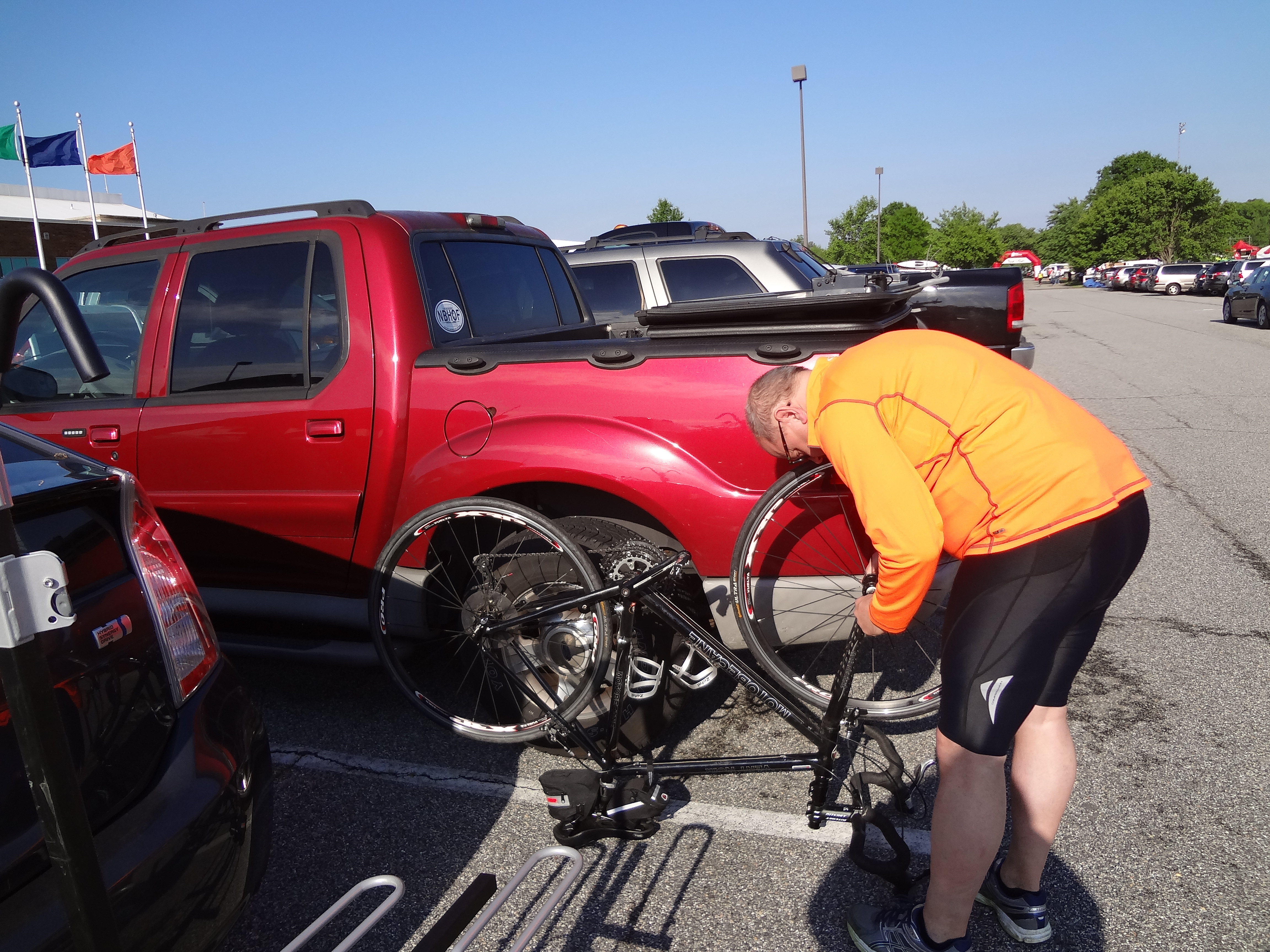
Putting the front wheel on my bike before the ride.  This is notable only if you want to see what my truck looks like, or you really wanted to see a 52 year old in bike shorts.

Putting the front wheel on my bike before the ride. This is notable only if you want to see what my truck looks like, or you really wanted to see a 52 year old in bike shorts.

At the start.  Finally got that Red Rider jersey on.  There were way more riders than last year.  Yay!

At the start. Finally got that Red Rider jersey on. There were way more riders than last year. Yay!

These next two are great looks at beautiful Maryland farmland.

These next two are great looks at beautiful Maryland farmland along my ride route.

DSC01566

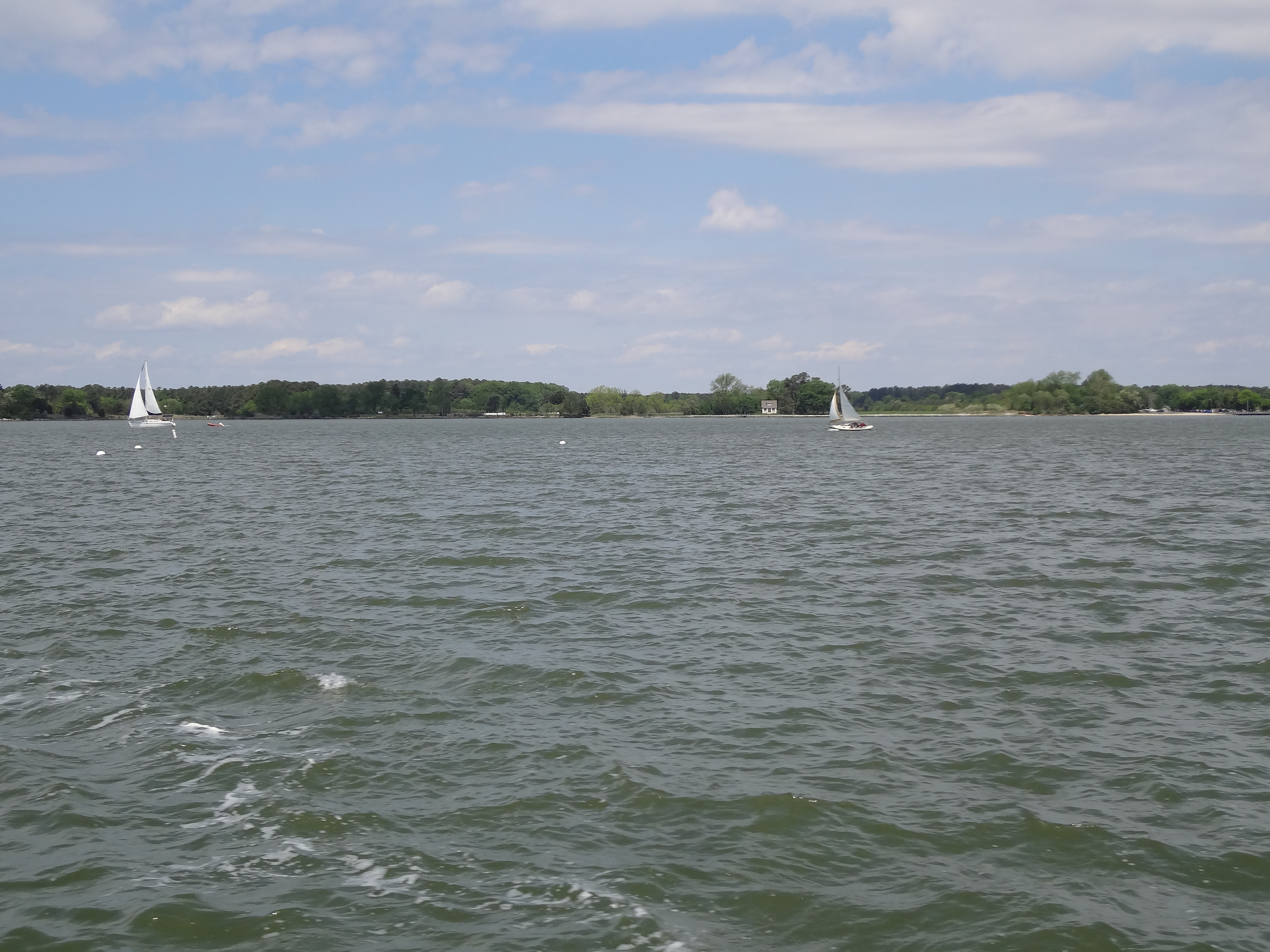
Riders getting on the Oxford to Bellevue ferry.  This was the location of our rest stop Saturday.

Riders getting on the Oxford to Bellevue ferry. This was the location of our rest stop Saturday. I’ve got a lot of shots on the ferry, so I’ll just let those roll now.

DSC01546

DSC01545

DSC01549

DSC01553

I've given away a lot of medals in the last six months... it's been a while since I've been given one.

I’ve given away a lot of medals in the last six months… it’s been a while since I’ve been given one.

I've met Leigh Ann DePope via the Wednesday night DSMA Twitter chats.  This was the first time I'd met her in person!  She volunteered all day Saturday.  Thank you!

I’ve met Leigh Ann DePope via the Wednesday night DSMA Twitter chats. This was the first time I’d met her in person! She volunteered all day Saturday. Thank you!

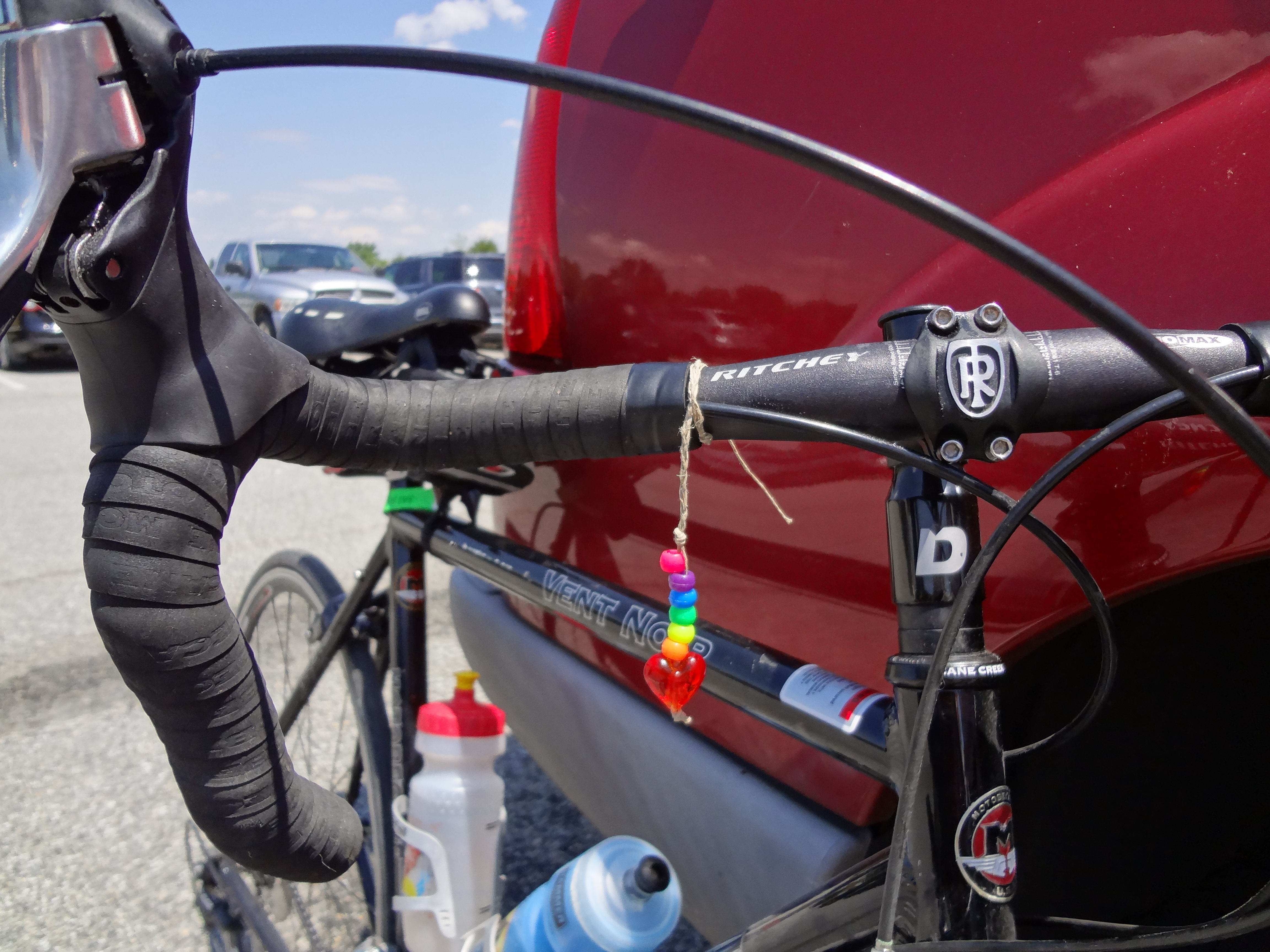
Finally… As I was packing things up, a woman and two little girls came up to me and asked if I was a Red Rider. I said yes, and they explained that they made these, and were giving them away to all the Red Riders. I was instantly touched by their show of support. When I saw what it was, I immediately thought of one person. This is for you Alecia:
DSC01559

#DBlogWeek Day 7: Favorite Things!

DBlogWeek

For the 5th year in a row, diabetes writers from all over the world have been participating in a solid week’s worth of informative, educational, and inspirational blog posts. To find out everything you need to know about Diabetes Blog Week, click on the banner above. A big Thank You to Karen Graffeo for making this happen every year!

With everything going on in my time on Maryland’s Eastern Shore yesterday, I didn’t get a chance to post my Saturday Snapshots. But I’ll get to that tomorrow. I’m a little out of order, but here on Day 7 of Diabetes Blog Week, I need to share this with you.

Today’s topic:
As we wrap up another Diabetes Blog Week, let’s share a few of our favorite things. This can be anything from a #DBlogWeek post you loved, a fantastic new-to-you blog you found, a picture someone included in a post that spoke to you, or comment that made you smile. Anything you liked is worth sharing!

I read so many fantastic blog posts this week, and I wish I could remember all of them. But I can’t. Instead, I’ll give you two things I noticed this week. They are from a blog I’ve really liked from the beginning, and a blog I recently found that I also really like.

Practically everyone knows Allison Nimlos at The Blood Sugar Whisperer. I’ve been reading her latest blog since day one. She’s really great at telling her story, and she’s unafraid to take on difficult subjects. Like when she talked about changing career choices this week during the What Brings Me Down post on Day 3 of Diabetes Blog Week (Once More, With Feeling):

“Diabetes burnout and mental health issues is something that is talked about fairly often in the diabetes community, but things seem to stop short of actually finding answers. The DOC is certainly a wonderful place to come for emotional support, but having worked with a therapist myself, there is really something to be said for working one-on-one with someone who can help dig and explore with you. Of course, finding a therapist who understands and has experience with chronic health problems are in short supply, just like diabetes educators are in short supply. Hopefully I can do at least one, if not both!”
 
 
I recently discovered Erin Michelle’s blog at Life Beyond Glucose. She’s like a lot of the rest of us. Working hard to make it work with diabetes, doesn’t have everything figured out yet, but good at sharing the day to day experiences of her life in a way that I’m sure causes many to say “She’s just like me!”. This week she shared a nice message on Day 4’s Mantras and More post. Straight to the point, and it made a lot of sense:

“So I guess my way of coping is to try all avenues until I finally accept the inevitable. Once I accept, I’m lucky in that I can forget about it and move onto the next challenge. No magic words here. Just the realisation that nothing lasts forever.”

I hope everyone else enjoyed their #DBlogWeek 2014! For me, it continues for one more day tomorrow. Karen, I’m thrilled that you spearhead this effort every year. Thank you.