Tag Archives: diabetes

Clinical Trial Conclusion. What I learned.

This is one in a series of posts detailing my participation in a clinical trial with an artificial pancreas element. I’m writing about this to chronicle my experience, and because if I were reading, I’d want to know about every aspect of what was going on. For more on this clinical trial, click here and here.

Last week were the final two days of my clinical trial in Virginia. This week we went through everything we went through the previous week, and everything at the same time as last week. So if I ate breakfast at 7:00 a.m. the first week, breakfast the second week was at 7:00 a.m. And it was the same breakfast. Everything, food, exercise, the whole thing, exactly like the previous week. The real difference is that in the first week, the algorithm running my artificial pancreas system was based on the data collection week I had gone through earlier in the trial. The second week, the algorithm was based on my own pump settings. The idea was to compare the special (or experimental) algorithm with something based on what I work with every day. Note: I believe this explanation is different from what I had written before. Sorry about that. Sometimes I don’t get a complete, exact idea of what is transpiring until it transpires.

I have no idea how everything turned out. Which algorithm worked better? I don’t know. And I don’t care. Because what worked best doesn’t matter. Gathering data is what matters in a trial like this. Like an A1c, the scientists working on this artificial pancreas solution need data to help them decide how to improve the device going forward. Good or bad? There is no bad data.

DSC01607

What was it like being hooked up to an artificial pancreas device twice in two weeks? It was… interesting. It wasn’t as “set it and forget it” as I had convinced myself it would be. And that’s one of the takeaways from this trial that really hit home for me. No matter how my external organ will perform for me in the future, I will still need to be an active participant in managing my diabetes. It’s just that an AP device would make things easier, in theory, while providing me extra protection from dangerous lows, particularly overnight.

The other big takeaway for me has to do with how an AP system is designed to work. The idea of small micro-boluses every five minutes sounds great, until your glucose starts to get up into the 200 mg/dL range. When I see a number like that a few hours after a meal, I immediately want to perform a correction bolus. A full correction, to get my BG down to the 100 mg/dL target. So in my case, if my number was 220, I would bolus three units of insulin to bring me back down to 100.
DSC01610

But an artificial pancreas doesn’t work that way. First of all, instead of trying to correct that number to exactly 100, maybe it would try to correct that number to a range instead. That might require a different amount of insulin. Also, my device was not going to administer all that insulin at once. It’s still going to give me small amounts, every five minutes, until I softly land in a good range (for this study, that was between 80 and 140). I think the largest amount I was given at any time (other than meals) was 0.25 units. When you look at your CGM graph on the artificial pancreas, you’ll see gentle rolling hills, instead of high mountains and deep valleys. I love the thought of that. But for me, not attacking a higher number immediately will take some getting used to. Really, it will require a completely different way of looking at my diabetes.

So in the final analysis, scientists learned something from this clinical trial (I hope), and I think I learned a lot too. When an artificial pancreas device actually hits the market at some point, I’ll be viewing it through an entirely different lens. And that’s okay. Because the older I get, the more I realize that I’m not perfect, and opening myself up to different ways to manage my disease could possibly lead to something great in the future.
 
 
——————————————————————————
 
 
Here once again is my push for clinical trial participation. Clinical trials meet a very necessary need when it comes to developing drugs, devices, and therapies that will help all People With Diabetes lead better lives. I strongly encourage you to think about volunteering for a clinical trial.

The USA’s National Institutes of Health has a complete list of clinical trials taking place all over the USA, and even some outside of my country. To find them, go to www.clinicaltrials.gov and enter “diabetes” into the search box. A recent search found 11,175 studies.

In the United Kingdom, the UK Clinical Trials Gateway is a great resource for finding out about trials happening all over Europe. To perform a search and find out more, go to http://www.ukctg.nihr.ac.uk

JDRF has a very helpful web page that lists multiple sources for registering and finding out about clinical trials. Just go to www.jdrf.org/research/clinical-trials/ to find out more.

To read more about the University of Virginia’s Center for Diabetes Technology, including staff bios and more on Artificial Pancreas technology, visit the center’s website at www.medicine.virginia.edu/research/institutes-and-programs/cdt/the-center-for-diabetes-technology-at-uva.html


Recognize your inner superhero.

Is it the warm weather, or is it just that I’m getting older? I’ve recently experienced a couple of lows that were just energy-zapping. Those “I see it coming, here it is, I don’t want to move, now I need to move, and eat a bunch of stuff/drink juice/inhale glucose tabs” lows. Then, when it’s over, I experience the “I’m so tired I just want to curl up in the corner where the sun is shining through and sleep for about ten hours” hangover.

That’s what it feels like too… like a hangover. Knocked on your butt, your body is punishing you for too much insulin. Or too much exercise. Or not enough carbs. Or because your body has a history of punishing you, and every now and then it wants to assert its authority for no bloody reason at all.

That’s when we become heroes. Doesn’t make sense, does it? But think about it.

We find ourselves in a dangerous situation. Life-threatening, even. A crisis all our own, like our human body has encountered its own kryptonite. Things might be touch-and-go for a little while. But we fight back. We use whatever means at our disposal to drive the enemy away. We MacGyver solutions, we will ourselves to persevere.

And then we go right back to our regularly scheduled lives.

Hopefully, this little scenario doesn’t play out too often in your life. When it does, and you overcome, don’t forget that you are a force of nature. Diabetes cannot stop you, and you are living proof. In fact, diabetes has tried to stop you, and you didn’t let it.

It’s not in your most recent hypoglycemic episode. It’s not in your last hemoglobin A1c. It is evident in the life you lead, the job you perform, the people and organizations you help succeed, in the family and friends that surround you, and the simple fact that you are still here.

I see you. I read about you. I live with the same disease you do. Trust me when I say that when you overcome those lows, you are succeeding at something that would humble even the most confident of individuals. I recognize that about you. I hope you recognize that about yourself.

By the way, you might want to check yourself in the mirror. I thought I saw a little of your superhero cape showing in the back.


Like these links. Lotsa stuff.

This being June, there are lots of D-happenings happening over the coming months. These events are always great ways to meet people, compare notes, and learn a lot in a short time. Here goes:
 
 
Taking Control Of Your Diabetes is hosting one of its big conferences in Washington, D.C. this Saturday. It will be an all day affair that includes fitness sessions, screenings, a Type 1 and Type 2 track, and chances to see and interact with Dr. Steve Edelman, founder of TCOYD, Kerri Sparling, former NBA star Dominique Wilkins, and many more. Twenty dollars gets you all of this and lunch if you register before Saturday; if you register at the door, it’ll cost twenty-five. All the information is available here:
http://tcoyd.org/national-conferences/washington-dc-2014.html
 
 
My local JDRF chapter, the Greater Chesapeake and Potomac chapter, is getting ready for its annual meeting on June 26. The meeting this year will take place at the Discovery Communications headquarters at One Discovery Place in Silver Spring, Maryland, just outside of D.C. The guest speaker this year is Moira McCarthy, a tireless advocate, an author, and writer of the popular blog Despite Diabetes. The event is free to all, but you have to register to attend. Find out everything you need to know here:
http://greatercp.jdrf.org/event/jdrf-annual-meeting/
 
 
This isn’t scheduled until next March, but I’m hearing a lot of buzz about the Diabetes UnConference, so you might want to get on board early. Brainchild of Christel Marchand Aprigliano, it’s happening next March 13th through the 15th in Las Vegas. The UnConference is specifically for adults 21 and older living with diabetes of any flavor. What is an UnConference? I don’t think I can do the description justice, so just click over here to find out more and register before everything is booked up and sold out:
http://diabetesunconference.com/details-2/
 
 
That’s it for now. Hope your Wednesday is sunny and warm. And don’t forget about the #DSMA Twitter Chat at 9:00 EDT (US) tonight!


Clinical Trial: First Admission.

This is one in a series of posts detailing my participation in a clinical trial with an artificial pancreas element. I’m writing about this to chronicle my experience, and because if I were reading, I’d want to know about every aspect of what was going on. For more on this clinical trial, click here.

Last week, we reached the first admission for the clinical trial I’m participating in. This trial includes time hooked up to an artificial pancreas system. The AP system and the algorithm running on it was designed at University of California Santa Barbara, and is being tested there as well as at University of Virginia and the Mayo Clinic in Minnesota. As much as I can, I’m going to give you the play-by-play of everything that occurred over 48 hours or so from May 27th through May 29th.

The first thing I had to do was insert two Dexcom CGM sensors two days ahead of the admission. We needed to make sure there was enough time for the sensors to get calibrated, and for all of us to make sure things were working properly. There were two sensors because we needed one to work with the artificial pancreas system we were testing, and one as a backup, just in case. For the record, during the day and a half of closed loop testing, I had 2 Dexcom sensors and 2 infusion sets (one for the pump used in the trial, and one for my own) inserted around my midsection.

DSC01591

Then I had to actually get there. That meant driving to Charlottesville Tuesday night, so I had time for my BG to calm down before the admission officially began on Wednesday around noon. I could have gone down on Wednesday morning, but the concern for me was that among the many guidelines (read: rules) in this study, I couldn’t be admitted if my BG was 250 mg/dL or over. My glucose level really spikes after I drive anything over two hours. Since Charlottesville is about four hours away, I went down on Tuesday night.

This admission (and next week’s too) took place at the research house that the Center for Diabetes Technology has in Charlottesville. It’s close to the university and the hospital, but a lot less clinical, and that’s nice. Anyway, after a comfortable night’s sleep and breakfast the next morning, I gathered with the other participant in this trial and the staff working on the first part of this admission.

We began with a BG check, then lunch. What a great way to start! About the meals: We could eat anything we wanted, including snacks, as long as they were under 90 grams of carbohydrates. The thing is, however: Anything we ate at last week’s admission (with the exception of potential hypo treatments), we have to eat during this week’s admission. Exactly. At the same time.

After lunch, the teams started the process of getting us hooked up to the closed loop system. We had to bring our own insulin, and it’s used in an Animas Ping pump for this trial. Good for me, since I’m still thinking about a pump change, and I hadn’t used a Ping before. Once we were hooked up to the pump, and I disconnected my personal pump, we went into another room while more team members completed the rest of the steps to get the closed loop system started. There are a number of detailed steps in the process. So many that a written “sequence of events” is followed.

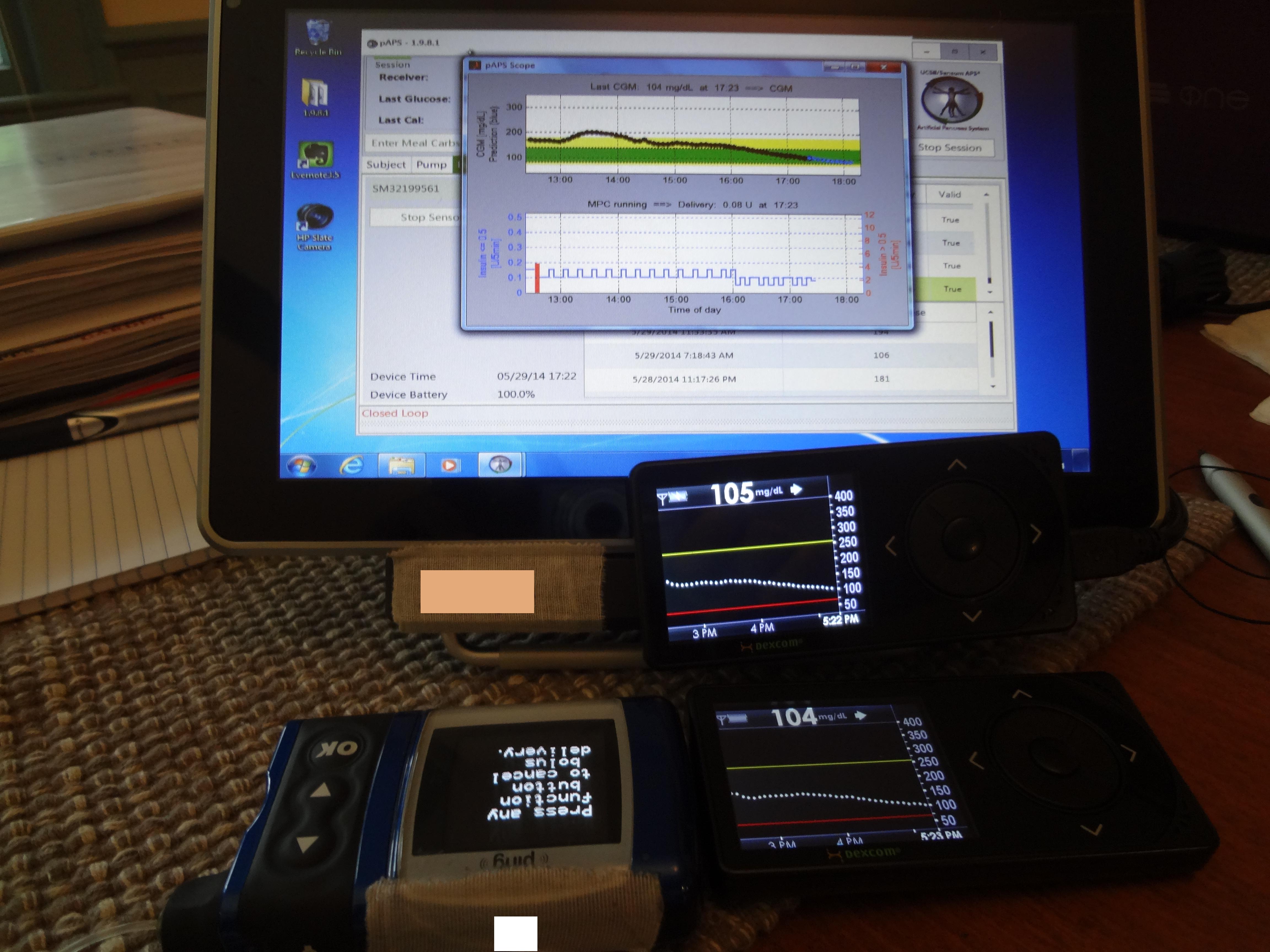
All went well, and I was introduced to everything I needed to have in close proximity to me for the rest of my time there. This included a tablet that the artificial pancreas system ran on the entire time. But it also included:

– Insulin pump (of course)

– Receivers for the two Dexcom sensors

– My OneTouch Ultra2 meter to be used in the study

– Since it’s a Ping pump, it included the meter remote that’s usually used in conjunction with the pump. In this case, the meter remote was getting data directly from one of the Dexcom units, then sending the data to the AP algorithm loaded to the tablet. That algorithm was designed to take that data and use it to give micro boluses every five minutes during the trial. For this part of the trial, for me, something between .05 and .25 units at a time. Are you still with me?

– A phone. The idea of this phone was to be able to receive messages when my BGs could possibly get dangerously out of range.

I should tell you that the tablet had one of the Dexcom receivers (the non-backup) attached to it with velcro, and the meter remote was attached with velcro to the back. Here’s a shot of everything working together:

DSC01603

Still, that’s a lot to carry around. Imagine having all of that with you, and having to have it in close proximity to you all the time. Including in the kitchen, in the shower,etc. I had a bit of exercise both days, and that meant someone on the team had to be with me with the tablet close enough to me to read the Dexcom and send insulin via remote. It was working right next to me while I participated in the Wednesday night DSMA Twitter chat.

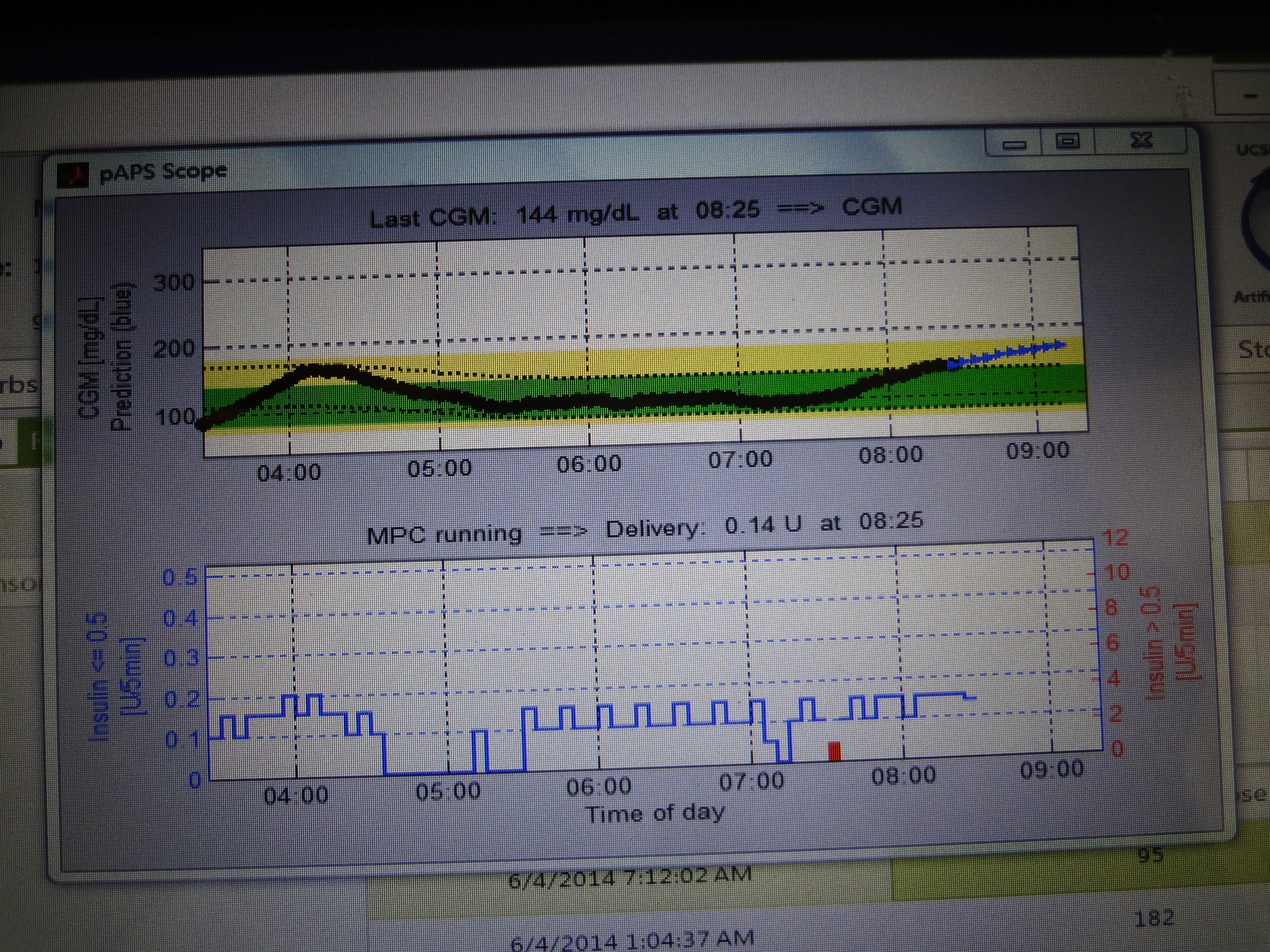
Here’s what one of the screens looked like. The top number is my BG readings from the Dexcom sensor (the black part of the line are actual readings, and the blue part is predicted readings), and the bottom graph is the amount of insulin being doled out every five minutes during the same time. The red vertical bar in the insulin graph marks my bolus from lunch.

DSC01599

As you might imagine, there were regular fingerstick BG tests throughout the admission. And every 15 minutes, night and day, someone was coming by to check my tablet and write down specific data.

Now, you might be thinking: Hey, this is crazy… Who, in real life, would put up with all of that? To which my answer is: This is a test of a system that is in development. It’s not the ready-to-take-home version of something you’ll be filing insurance paperwork for soon. At this point, I think they just want to see if what they’ve worked on so far is doing what they want.

I also realized that something like this, which in theory eliminates basal rates, requires a complete change in thinking. I can’t quite put it into words yet. I spoke a little with the doctor in charge of this testing, and between us, we understand that comparing the management of my diabetes with an AP system versus what I’m doing now is like comparing apples to artichokes. I came away with a completely different way of looking at my diabetes, and a fresh set of questions about what we need from a fully integrated artificial pancreas system once it’s ready for approval from the FDA. More to come next week!


Another #ChampDAthletes medal winner! Meet Cecelia.

Yay!!! More medal winners!

image

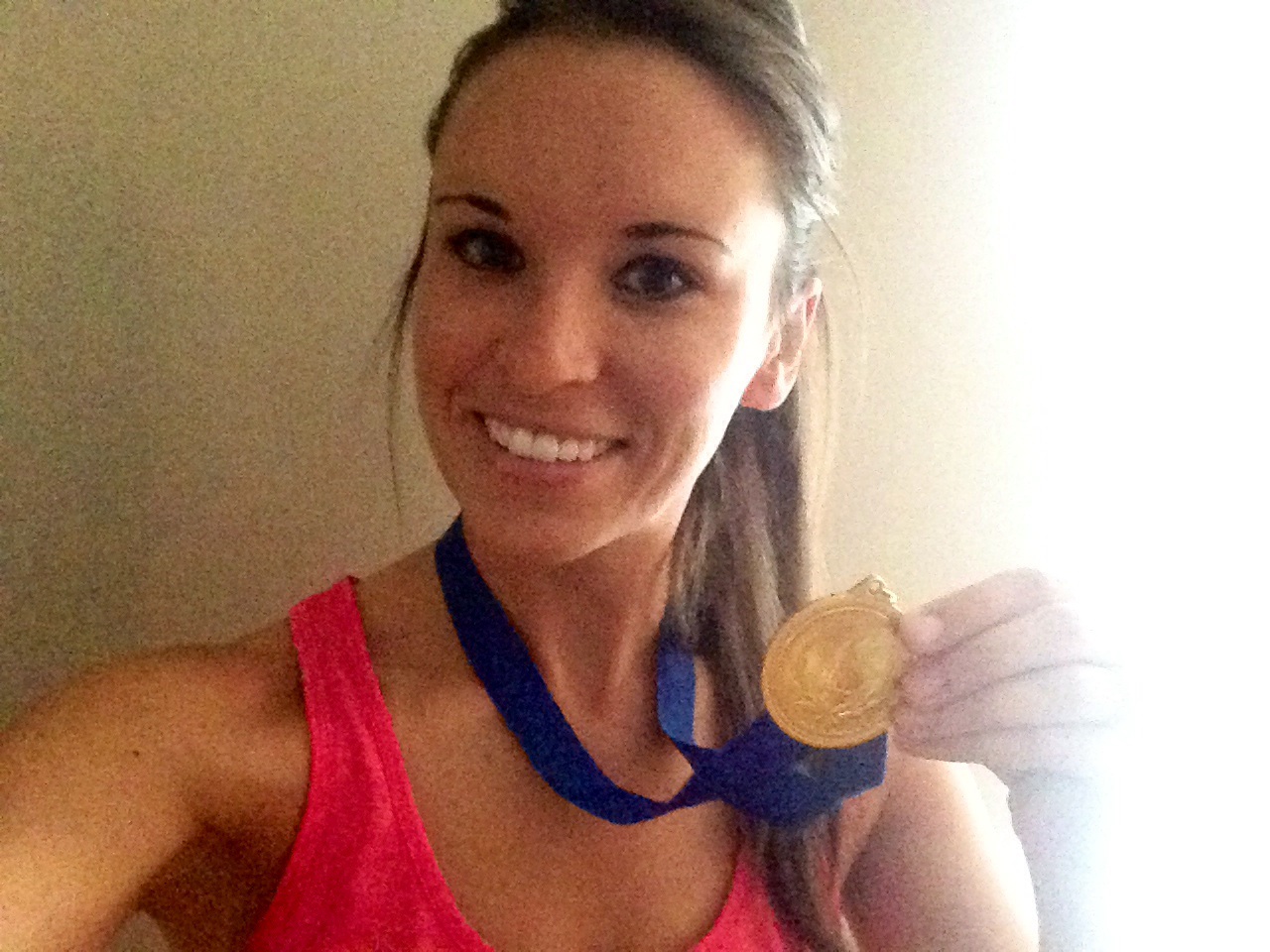
Our eleventh Champion Athlete With Dibetes is Cecelia Lodge. Cecelia is also a diabetes writer, and you can read her story at the blog Tutoo Sweet. In addition to being the writer of one of my favorite blogs, Cecelia is a runner.

She ran during her middle school years on the cross country team, and continued to run through high school. More recently, she started running again prior to getting married a couple of years ago.

Now stop me if you’ve heard this before, but…

image

Back in 2013, she was training for another run when she started showing all the classic signs of diabetes. She received her diagnosis, spent a couple of nights in the local hospital, and then:

She finished her first half marathon one month later.

That’s pretty inspirational folks. And I really loved the e-mail Cecelia sent me. I’m going to run it in its entirety here, in the hope that it will inspire you too.

——————————————

Hi!

I came across your blog post today about the athletic achievement medals you are awarding to those with diabetes. I read a previous post of yours a few weeks ago regarding this, but I was hesitant to nominate myself because, well, it felt awkward 🙂

I guess it seemed self-serving to offer up myself as a nominee, but once I thought about it a little more, knowing maybe just one person who finds my story through this could be encouraged changed my mind. It’s definitely not about the medal. It’s about showing others who live with diabetes that might be discouraged or scared or worried to follow their dreams, no matter how big or small, and that they can and will accomplish them… and come out on the other side stronger than ever.

Anyway, with that said, I am pretty proud of my achievement. I completed my very first half marathon in November 2013- a month after I was diagnosed with type 1 diabetes.

If you are interested in reading the story, I’ve blogged about it here:
http://tutoosweet.blogspot.com/2014/02/my-first-half-marathon-part-1.html
http://tutoosweet.blogspot.com/2014/02/my-first-half-marathon-part-2.html

——————————————

Way to go Cecelia! You are a brave and inspirational person, and completely worthy of the title Champion Athlete With Diabetes.

So my advice is: Be an inspiration. Not just for yourself or your loved ones. Do it for the people you haven’t met yet, who will identify with you and be inspired too. Because they will.

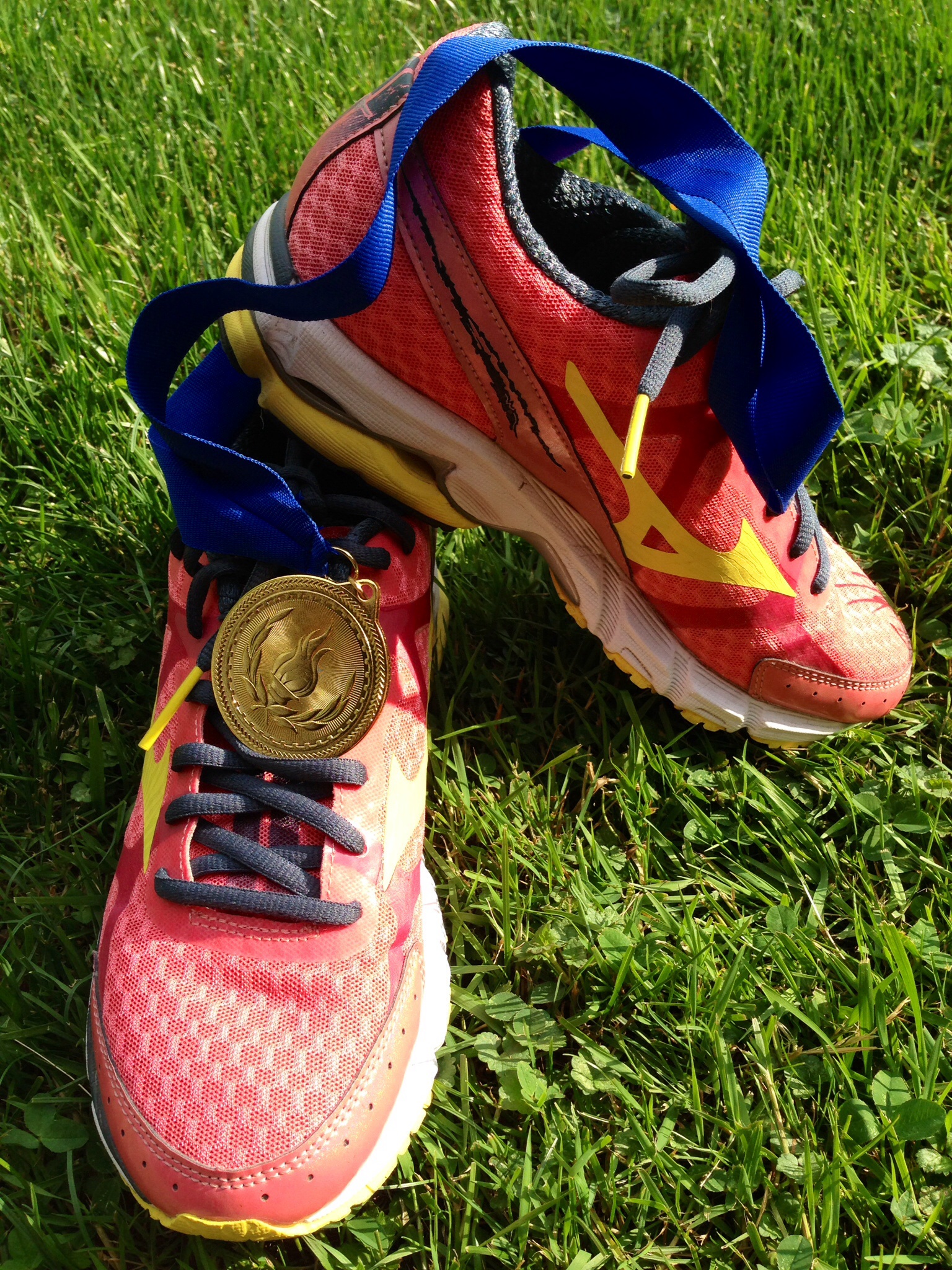
To find out more and start the process of minting your medal as a Champion Athlete With Diabetes, click here or on the medal photo in the top left corner of this page.