Tag Archives: Dexcom

Confession time: CGMs.

So with all of this talk about travel and safety and doing the right thing, I’m still not a consistent continuous glucose monitor user. Here’s my confession:

I don’t want to be a CGM user.

I hope my endocrinologist isn’t looking at this today (she does look in every once in a while). But she’s already familiar with my resistance on the subject. Let me see if I can explain this. I’m sure all of the points I’ll make here can be shot down with common sense wisdom that just about anyone living with diabetes can understand. But there are a few reasons why I haven’t made CGM use habitual.

When I first started using an insulin pump five years ago, I also started wearing a CGM all the time. The CGM I was using was horrible; it had accuracy issues, and it was always painful to insert. It was so frustrating that after about nine months, I gave up on it. I won’t go into it anymore, but I think that was where my reluctance started.

Actually, the biggest, most overriding reason for not wanting to wear a CGM is that I do not want one more thing attached to me 24/7/365. That’s not to say that showing a CGM transmitter in public, at the pool or in the shower at the gym, would cause me embarrassment. Those days are long over. I couldn’t care less about that, and I certainly didn’t have a problem with it when wearing a CGM during clinical trials.

No, the problem of “one more thing” is bigger than that. It’s not only wearing something else all the time. It’s having to plan out site changes for two devices rather than one. It’s having to pack supplies for two devices rather than one. It’s fighting with insurance profiteers over coverage of two devices (and supplies for those devices) rather than one. It’s having to carry around a receiver in my already overcrowded pockets. It’s dealing with real estate issues earlier because I’m constantly violating my body in two places at a time instead of one.

I think there might also be, hidden somewhere deep, an aversion to gathering data for my endocrinologist to go through and find fault with me. My current endo is not like that at all, and I know she would never shame me if my numbers didn’t look so great. However, old wounds take time to heal. On the other hand, this would probably be the easiest place for me to give a little. In reality, I know this would not be an issue, so why should I continue to make it one? Patients are not always perfect either.

After going over my concerns with my endo, she suggested that instead of wearing a CGM full time, maybe I use one for ten days or two weeks in between appointments. That way, she could at least get a little data on how my BGs were trending throughout each day. This seems reasonable, and not too intrusive. But has that made me start the process over again? No. Old wounds take time to heal, and old habits die hard.

I’m not sure I’m solving anything here. But this is how I deal with issues like this: I talk about them, to myself, family, and friends, and in doing so, I often talk away some of the concerns (read: fears) of change. I know that CGM technology is better, and with the rollout of Nightscout and Dexcom Share, many people are able to add an additional layer of security in the advent of a hypo away from home. Why wouldn’t I want to make that a part of my care too?

I don’t think I’m there yet. But I’m getting closer. Secretly, I’ve even made lists of who I would share my data with… even “backups”.



Because… Progress.

January is practically over, and you know what? It’s been a pretty good start to 2015.

Tandem has announced approval of their larger-capacity insulin pump.
The t:flex pump may not raise a lot of eyebrows, but it does provide something no pump has provided before: The ability to pack 480 units of insulin in the reservoir. I can’t name anyone off the top of my head who needs this right now, but I have been in support group discussions where People With Diabetes felt they couldn’t use an insulin pump because their daily insulin needs are higher, and they would have to change a set out too often, and it just wasn’t worth it to them to go through that. For many, this will solve that problem.

Not to be outdone, Medtronic obtained approval (outside of the USA) for their new 640g system.

This is the first system available to the public that will both suspend insulin delivery when a patient reaches a low point on their CGM, and resume insulin delivery when a patient’s CGM reading recovers. It also comes with additional hardware that looks to me like a PDM, and a seriously-needed upgrade to the CareLink software that, in images on Med-T’s website, look an awful lot like what you see with Dexcom’s downloads.

Speaking of Dexcom… The FDA announced approval of the Dexcom app software that allows CGM users to share their data with others in real time.

For people with hypo unawareness, sharing CGM readings with people close to you is life-changing, and potentially live-saving. Dexcom’s system will employ a new Dexcom Share receiver (the previous version was the Dexcom Cradle), and existing users will be able to upgrade at little or no cost. Of course, you and anyone you connect with (via the Dexcom Follow app) will have to have an iPhone or an iPad device to make this happen. But yay for the FDA allowing Dexcom to go through the de novo classification process, a regulatory pathway for low to moderate risk medical devices that are novel and not substantially equivalent to any legally marketed device, rather than making them go through the gauntlet of the full medical-device approval pathway.

I know, I know… all of these devices may have issues and fall short of what we are looking for from innovations in the diabetes device space. But who was talking about real-time CGM monitoring a year ago? Who was talking about pumps that suspended, then resumed insulin delivery based on CGM readings? Who was discussing larger pump capacities? Okay, well, people were talking about those things a year ago, but at least some of us didn’t expect any of these innovations to be rolled out to actual customers within a year’s time.

In the end, we can’t complain entirely that we don’t get everything we want right now, because… Progress. Things are moving forward, and I’m hoping that we’ll eventually reach a tipping point where the urge to both innovate and get those innovations to patients as soon as possible will cause device and drug makers to move at a pace that matches the rest of the world’s technological advancements.

Because… Necessary.


#DBlogWeek Day 5: Tell me a story.

DBlogWeek

For the 5th year in a row, diabetes writers from all over the world will be participating in a solid week’s worth of informative, educational, and inspirational blog posts. To find out everything you need to know about Diabetes Blog Week, click on the banner above. A big Thank You to Karen Graffeo for making this happen every year!

Today’s topic– I’d like to go off the board Alex, and take the Tell Me a Story wildcard:

Write a short story personifying a diabetes tool you use on a daily basis. A meter, syringe, pump, pill, etc. Give it a personality and a name and let it speak through you. What would it be happy about, upset about, mad about? (Thank you Heather of Unexpected Blues for this topic.)

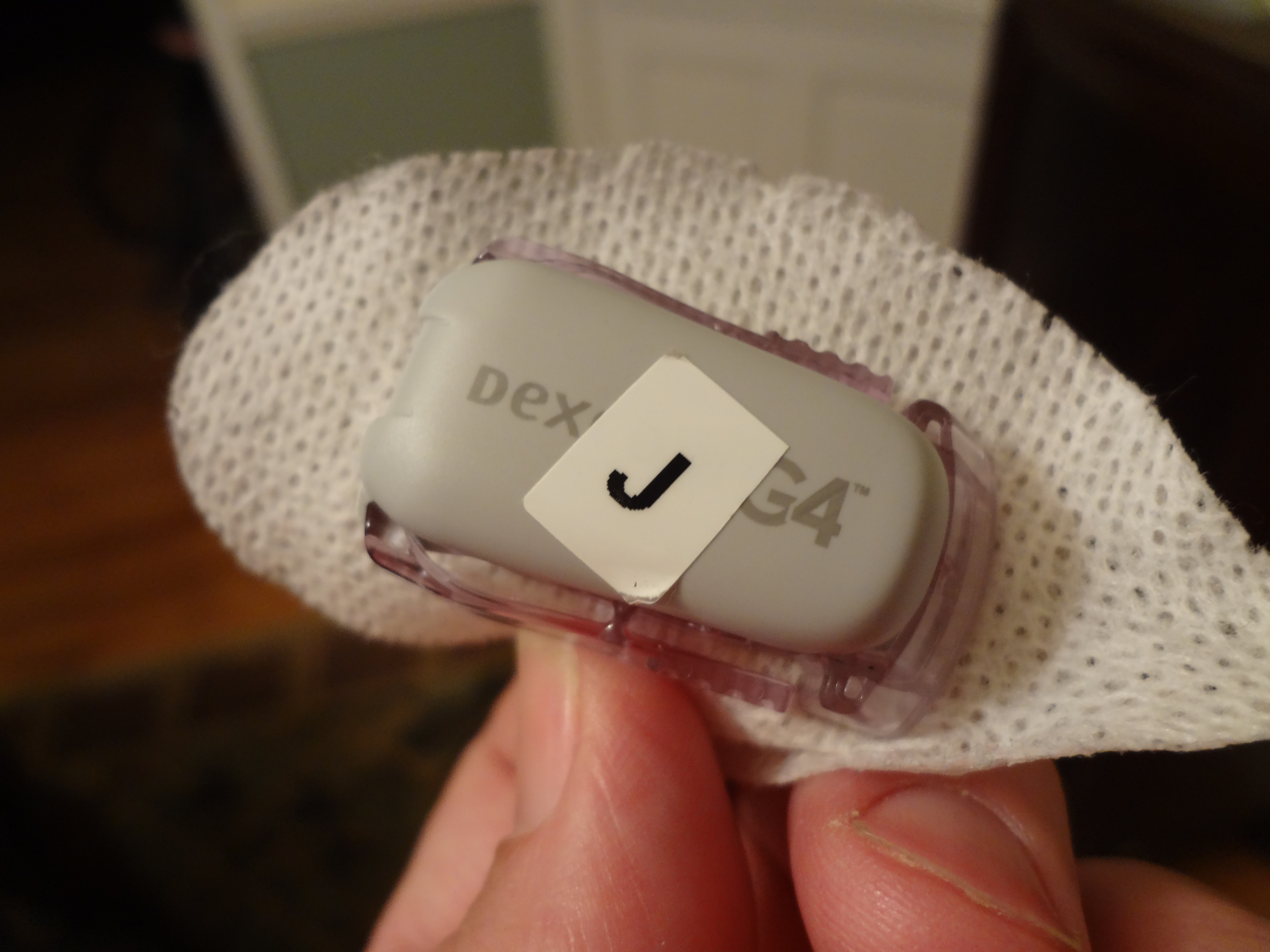
DSC01530

I feel so unloved.

Stephen has this… this… I don’t know, a phobia about external devices on his person. And he’s blaming me and my kind for it.

I mean, I’m great. I’m only the smartest, most accurate, longest-lasting continuous glucose monitor in the world. What’s not to like? Nothing wrong here.

But he always flirts with me, then just when we get comfortable together, he leaves me behind.

I’m the latest victim. Brought in to be used as part of a clinical trial. I did my work diligently, with no complaints, and when my seven days were up… he unceremoniously ripped my heart out.

Oh, he’ll be back. Who wouldn’t want a second helping of this? But when the trial is over, do you think he’ll still want me? Noooooo. He’ll go running back to his little meter and ignore me completely. He’s always like that. Just interested in what he can get out of me now, and when the need is met, I become a memory. Why do I keep going back for more?

And you know what? When the time comes that he needs me again, I’ll say I won’t go back. But you know I will. I can’t resist. I’m so weak. Besides, when he needs me… really needs me… I feel closer to him than at any other time. It’s like were attached, like I’m right there in his gut.

Who could resist that?
 
 
Don’t miss all of the great topics and posts this week, all found here.


Clinical trial, week two.

So here’s a quick update on my latest clinical trial. Okay, maybe not so quick, but I’ll try to make it as succinct as possible.

Officially, I’ll be testing the new Dexcom CGM, the G5. Not sure at this point when I’ll be hooked up to the G5. It’s a 32 day trial. For now, I’m wearing the G4 version, which I will continue to wear for the length of the study. This week, I’m traveling back to Charlottesville to go through a series of tests. On the day of testing, I’ll have an IV in my arm. I’m not sure what all of the tests will be, but I understand part of it will entail getting my glucose up over 200 mg/dL quickly, then dosing me with insulin to bring me back down quickly. I don’t know more about it than that, but I should have a couple of stories to tell later.

The team will measure the results, taking blood samples throughout the day. That’s probably the reason for the IV.

In addition to all of that, four days of the trial will be “insulin sensitivity days”, which involve eating exactly the same meals and snacks, at exactly the same time, throughout each of the four days. So if I’m eating instant grits and turkey sausage for breakfast at 6:00 in the morning (true), then a ham sandwich for lunch at 12:15, and a granola bar as a snack at 3:00, I have to eat exactly that, at exactly the same time, on the other three days too. The hard part for me is the Stouffer dinner I picked out. Easy to do the carb count, but I’m spoiled… I am not a fan of boxed dinners.

What’s the upshot of all this testing? Let me answer a question with a question: Did I mention this version of the G5 is specifically designed to speak to UVA’s artificial pancreas technology? I know I’m connecting dots that are not even on the chart yet, but in short, if these tests are successful, it should help clear the way for at-home artificial pancreas testing. That’s where patients would get hooked up to the AP, then go home for anywhere from a few days to a couple of weeks. That’s a huge leap forward in the development of this important technology, which is why I say I’m connecting dots that aren’t on the chart yet. But I can see the natural progression of the testing, and I can understand that a day like that is coming, and not too far off into the future. Okay, now I am really speculating, so I’ll stop now.

I hope to have another update next week… Thanks for supporting me through this important testing!


Clinical Trial Snapshot.

DSC00895

The photo you see above is indicative of something I do every day.

As part of the clinical trial I’m participating in, I have to log onto a website every day (or every other day) and enter information related to my diabetes. I also have to upload Dexcom data for each day.

What you see in the photo is from two different days. One of those was a day with a sensor change, and a comedown from a high caused by insulin that went bad overnight (both on the second day). I use some shorthand for what I need to enter. Putting this down on paper ahead of time makes it easier once I log in to do the entry. Let me break it down for you:

On the left side, you can see the times that I’m doing finger sticks each day. Next to that is the blood glucose reading (in milligrams per deciliter, or mg/dL). Since almost all of the readings are from times when I’m eating something (three meals plus a snack at night on these two days), you’ll see the insulin bolus I’m administering next to the BG number (it’s the 4.0, 3.1, etc. on the photo). The difference was on the second day, when I did the fingersticks for calibration of the new Dexcom sensor at 8:58 and 9:18. The 9:18 fingerstick was followed up by a small 1.5 unit correction bolus. Finally, there’s the code I’m using to note what kind of meal or snack I’m having. The meals are noted as small, medium, or large, and either high carb (HC), high fat (HF), high carb and high fat (HCF), and neither high carb nor high fat (N/A).

This isn’t all of the data that gets entered. I’m also entering information about exercise and how I’m feeling that day, plus a couple of other things. All of the daily data that is entered is used by the site to help guide me toward making good choices to help manage my diabetes better. Every so often, we’re prompted to learn various things about our diabetes through core studies created by the study’s team.

I’ve started keeping all of these little sheets of paper with my daily data on it. Right now, looking at this information in its simplest form really makes me cringe about how I’m going through my day. I mean, those aren’t great numbers there. My A1c is good, but I’m anything but proud of what this shows me. These are a couple of not-so-great days, for various reasons. I’ve had much better ones, but I still don’t have any great excuses. Maybe keeping everything and looking back on it will make me consider what to do to be better in the future. At the very least it will keep me from ignoring it.

The requirement is for me to enter daily data at least five out of every seven days to continue my participation in the study. We originally started the study in April. Then we took a break, and started again in late May. Getting everything down in simple form in one place has made doing this every day for five weeks a little easier.

Now I’m starting to really think about what all of these numbers really mean, and what to do about them.