Tag Archives: CGM

#DBlogWeek Day 5: Tell me a story.

DBlogWeek

For the 5th year in a row, diabetes writers from all over the world will be participating in a solid week’s worth of informative, educational, and inspirational blog posts. To find out everything you need to know about Diabetes Blog Week, click on the banner above. A big Thank You to Karen Graffeo for making this happen every year!

Today’s topic– I’d like to go off the board Alex, and take the Tell Me a Story wildcard:

Write a short story personifying a diabetes tool you use on a daily basis. A meter, syringe, pump, pill, etc. Give it a personality and a name and let it speak through you. What would it be happy about, upset about, mad about? (Thank you Heather of Unexpected Blues for this topic.)
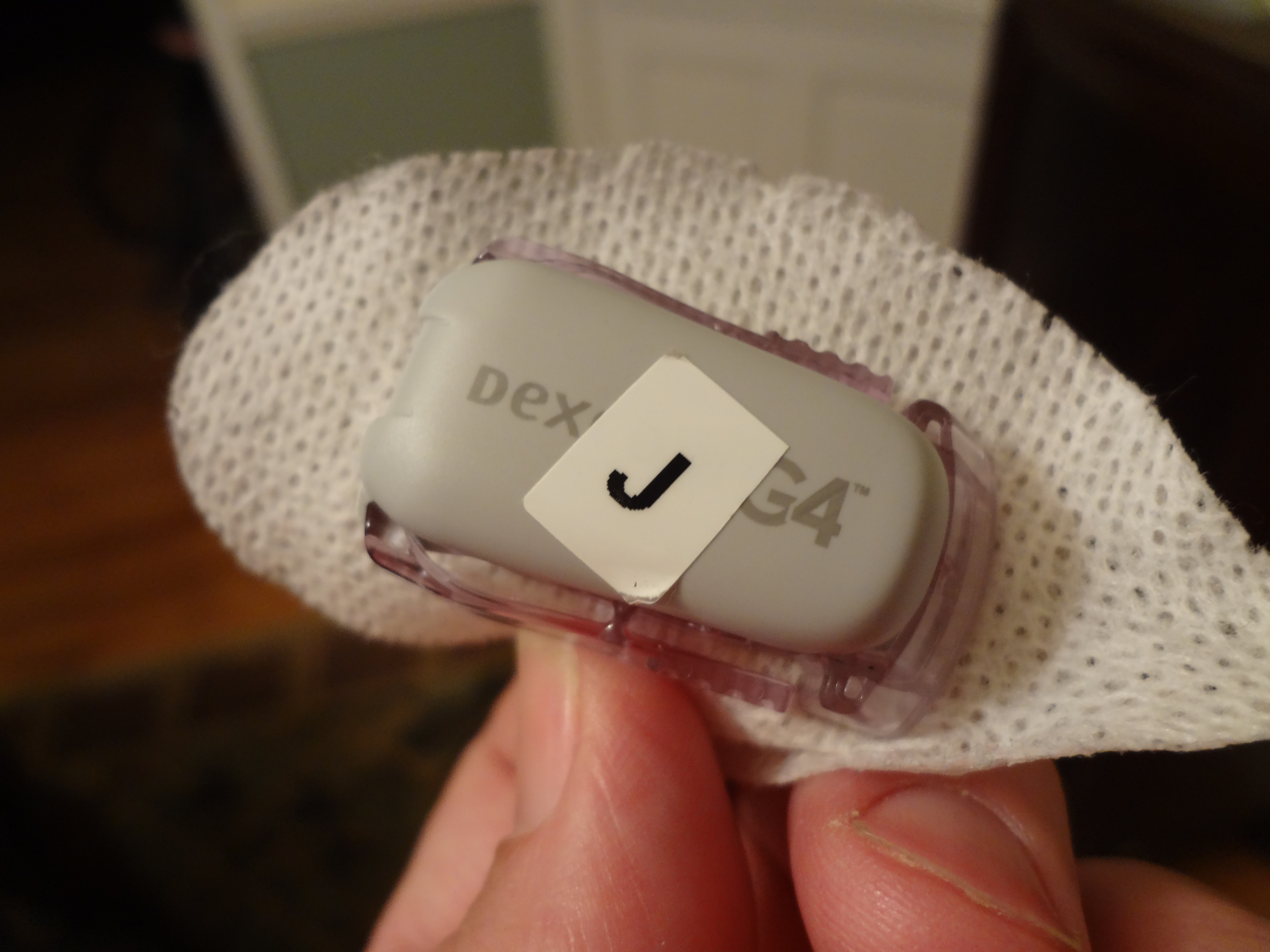
DSC01530

I feel so unloved.

Stephen has this… this… I don’t know, a phobia about external devices on his person. And he’s blaming me and my kind for it.

I mean, I’m great. I’m only the smartest, most accurate, longest-lasting continuous glucose monitor in the world. What’s not to like? Nothing wrong here.

But he always flirts with me, then just when we get comfortable together, he leaves me behind.

I’m the latest victim. Brought in to be used as part of a clinical trial. I did my work diligently, with no complaints, and when my seven days were up… he unceremoniously ripped my heart out.

Oh, he’ll be back. Who wouldn’t want a second helping of this? But when the trial is over, do you think he’ll still want me? Noooooo. He’ll go running back to his little meter and ignore me completely. He’s always like that. Just interested in what he can get out of me now, and when the need is met, I become a memory. Why do I keep going back for more?

And you know what? When the time comes that he needs me again, I’ll say I won’t go back. But you know I will. I can’t resist. I’m so weak. Besides, when he needs me… really needs me… I feel closer to him than at any other time. It’s like were attached, like I’m right there in his gut.

Who could resist that?
 
 
Don’t miss all of the great topics and posts this week, all found here.


No CGMs on Medicare? What????

On the heels of the Spare A Rose, Save a Child campaign, I’d like to ask for your help on another very important issue.

sue-b_head-square
Sue Berger, also known as Sue from Pennsylvania over at Test Guess and Go, is on a quest. And her quest is one that speaks to me, because in a little over 13 years, I’ll be right where her husband is. I’ll be 65 in 2027, and that means I’ll be getting pushed off to the Medicare system here in the USA.


Why is that a concern? Well, among other things, being on Medicare means you can’t have a CGM anymore. Oh, if you have deep pockets, you can buy one outright. But Medicare will not pay for a CGM. Doesn’t matter if you have one prior to age 65. Doesn’t matter if you need a CGM due to hypoglycemic unawareness, or just because it might help you actually stay healthier. It won’t be approved by Medicare.

Sue is working hard to change that. Up to now, she’s carried on a nearly single-handed campaign to get Congress involved. And guess what? Congress is now involved! Representative Carol Shea-Porter (D-NH) has introduced H.R. 3710: Medicare CGM Coverage Act. The resolution (H.R. stands for House Resolution) allows for coverage of continuous glucose monitoring systems if recommended by a doctor. In case your civics classes were decades ago like mine, the Act would have to pass the House, then get a majority vote in the Senate, without any changes to the Act. If the Senate approves changes to the Act, then it goes back to the House for another vote on the amended bill. If both houses of Congress finally agree on the final language, the Act goes to the President for his signature. So it might take a while, which is why your help is needed now to help get the ball rolling. Now.

As Sue mentioned in her post on this issue, a lot of the Diabetes Online Community has asked how they can help with her crusade. Well… here’s your chance. According to Sue, there are three things you can do to help get this wrong righted:

– The most effective step you can take is to ask your own Representative to cosponsor the bill. Good news! There is one co-sponsor so far, Representative Matthew Cartwright (D-PA). But we need many more!

– Call your Congressperson’s DC office and ask for the email address of your Congressperson’s Legislative Assistant for health issues.

– Email the Legislative Assistant the text of Shea-Porter’s Dear Colleague letter (available on Sue’s post), along with a personal note. That way they will understand why the issue is important to you, the constituent, and they will also have the Dear Colleague to show their boss so that he/she will know how to sign on.

As sue says, “The only way to fight Medicare’s denial of the CGM is to get the guideline changed. The best thing that we can do now is to let our voices be heard and join with Congresswoman Shea-Porter and her new cosponsor, Congressman Matthew Cartwright [D-PA17] in asking Congress to pass H.R. 3710, the Medicare CGM Coverage Act of 2014.”

This is a very important issue for me, because I’ll be in the Medicare system toward the end of the next decade. And if you live in the USA, you’ll be in the Medicare system at some point too.

At the beginning of this month, the DOC did a lot to help kids in developing countries get the insulin they need to survive. Let’s spend at least part of the second half of February fighting for those older Americans who, through no fault of their own, cannot get coverage for a CGM just because of their age.

To view Sue’s post at Test, Guess, and Go, click here.
The post also includes a sample letter you can send to your congressperson, and the Dear Colleague letter from Rep. Shea-Porter. She also has a kind of resource guide for bloggers to help with getting the word out.


What else do you want?

So GoogleX has announced their intent to develop, and find a manufacturing partner for, a glucose-sensing contact lens. Okay, great. Let’s hope their research comes up with something new and fantastic for People With Diabetes.

However, it’s not usually one device, but an entire system that matters, that helps us. In fact, I’d like it if GoogleX’s research results included several other ideas. You (and by You, I mean anyone developing new medical technology) can apply many of these notions to anything you might develop in the future. I’m including some other ideas here just because, you know, it’s my blog, and it’s Friday. Do you have ideas of your own? Feel free to get your own blog, or leave a comment below.

1. Accuracy, accuracy, accuracy. The data I’m getting from your device needs to accurately report what’s happening with my BGs, or it’s a non-starter with me. Period.

2. Can you make this technology work with the rest of my robot parts? Like, can it talk to my pump please? Regardless of the pump manufacturer? This also requires you to get on board, Asante, Medtronic, Tandem, Animas, et al. And FDA. Silos: Bad. Collaboration: Good. I believe the word we’re referencing here is “Interoperability”. See also “Open Platform”.

3. Ooh… Can we also have it upload data directly to our healthcare professionals? And can we force our healthcare professionals to actually read it and use it to help us get to meaningful outcomes? I’m not above using Pavlovian methods in pursuit of this goal. In fact, just thinking about this has me salivating like a dog.

4. Any chance you could get it to determine actual carb counts in literally everything? This is something else that would need to work in concert with another device. Look at a plate of food, blink your eye (or maybe wiggle your nose– whatever works), and have the carb count immediately display on your smart phone or Google Glass. You know, something like that might actually get me to invest in a smart phone.

5. While we’re at it, can you get any accompanying software associated with your product to work over multiple operating systems, including Windows, Apple, and all the rest? No excuses about how “we just wanted to get it to work on one system, and we’ll be working on the others soon”. Conformity: Bad. Diversity: Good.

6. While we’re still at it, can you make it affordable? Always? I mean, if you can help someone use their phone so they can see House of Cards or an adorable dog food commercial via their television set, and do it for 35 dollars, you should allow me to have access to my personal data without it costing me a fortune.

7. Can you get my insurance plan to cover it? This would eliminate the need for #6. Extra points for you if you can pull this off. Extra extra points if you can make it available to everyone who wants it. If we’re living with diabetes, we’re all equal, even if our insurance plans are not. No use getting excited over a new device if I can’t afford to get my hands on it. And I don’t need the guilt that comes with having access to something that someone else does not.

8. Can you use David Bowie’s Space Oddity in your marketing efforts for this product? No real reason, except I think it’s kind of a cool song with a great sound that lends itself to something futuristic. Even if it is nearly 45 years old. Side note: Maybe this isn’t the best choice here. Listening to it again, I realize it always reminds me of going low. That funky/weird guitar thing in the background is what’s playing in my mind during hypoglycemia. So, ummmm…. Never mind.

Those are my eight seven ideas. Feel free to add to the list by leaving the results of your brainstorming below. And please remember it’s Friday, so feel free to have fun with it too.


Testing continues. And this time I mean it.

I promised more about this when/if it actually happened, so here it is: I began my participation in a new clinical trial on Monday.

I’m not permitted to say much about it right now. It’s a 32 day clinical trial testing a new continuous glucose monitor (CGM). I’m basically wearing the current version of the CGM that’s available to consumers today for the length of the trial. For about a week during this process, I’ll be wearing the new, investigative, not-yet-available-to-the-public version. There’s also an outpatient visit with the research team that will involve, among other things, intentionally inducing both hyperglycemia and hypoglycemia. Under professional medical supervision, of course. This ain’t Flatliners, man. That will happen in about two weeks.

The interesting thing about this CGM trial is that it could definitely have implications for artificial pancreas testing. More to be revealed on that as soon as I can reveal it.

Even though I was bummed about testing out of an artificial pancreas trial, and this opportunity sort of feels like a “lovely parting gift, thank you for playing”, it’s still great that I can participate in this kind of research. Testing the latest CGM technology? Check. Helping AP testing move forward (I hope)? Check. Helping to make things better for People With Diabetes? Check. What more could I ask for?

Whether I play a large or small role in research, what’s important to me is that I help move the needle each time I participate, even if that’s just a little bit each time. When I have more to tell, and I’m allowed to tell it, I’ll let you know.


Wounded. But tougher.

I don’t know why, but it occurred to me recently that People With Diabetes get wounded a lot. Not a shocker there. We are wounded daily on a physical basis, and wounded occasionally on an emotional basis. But either way you look at it, we’re wounded a lot:
 
 
– Wounded when we prick our fingers multiple times per day.

– Wounded when we inject ourselves with life-sustaining insulin.

– Wounded when we change out the infusion sets on our insulin pumps.

– Wounded when we change out the sensors for our continuous glucose monitor (CGM).

That seems like a lot right there. Our bodies are constantly poked, with various devices, to varying degrees, in the pursuit of perfect glucose nirvana. Oddly, better technology means getting jabbed more often than ever before. Any veteran PWD can show you multiple sites on their bodies where they can hardly remember what it looked like before their diabetes care forced a sort of self-mutilation. But I can keep going, and I’ll bet you can too:

– Wounded when we go to the doctor (usually multiple doctors) and blood is drawn for testing.

– Wounded if we fall into hypoglycemia and need to be revived by EMTs who start an IV with glucagon.
Here’s hoping this never happens to you.

– I’m wounded each time I donate blood and a large needle is inserted into my arm.
This is something I’m happy and proud to do, so I really don’t mind this one.
 
 
Then there’s the emotional side of diabetes. Unfortunately, many of us have experienced something like this:

– Wounded when someone asks “Can you eat that?”.

– Wounded when someone treats you like you’re responsible for your diabetes diagnosis.

– Wounded when the boss calls you in and says “What are we going to do to stop these low blood sugar episodes?”. Like a simple rewrite can avoid another installment of must-not-see TV at the office.

– Wounded when stubborn lows won’t come up and stubborn highs won’t come down.

– Wounded when our hemoglobin A1c number doesn’t reflect our expectations or how hard we’ve worked in the past three months.
 
 
I wouldn’t think of trading the better care (and much better awareness) of diabetes today for what it was like when I was diagnosed two decades ago. But there’s no denying the fact that better care and awareness (or lack of awareness) comes with additional punctures, both to our bodies and our hearts. Sometimes, the enormity of it all makes it difficult to imagine continuing in such a way. And yet sometimes, in a perverse kind of way, it seems to make us tougher. I like to think that with all of our holes, we’re even stronger than ever. I think I’ll cling to that today as I check my glucose and change my infusion set.

What about you? What wounds you today? What makes you tougher? Feel free to share your thoughts.