Category Archives: Support

The DOC as an information source.

It’s easy for me to think of the Diabetes Online Community as this lovely group of people who advocate, support one another, and help others live better lives with diabetes.

What I sometimes forget, but can never underestimate, is the power of the DOC to inform and educate. Let me give you an example:

After working for my company for 15 or 16 years, I still hadn’t met one other person there living with diabetes. Now, after almost 17 and a half years, I know four.

One of those people contacted me last week to ask about the Animas Vibe system, the pump integrated with the Dexcom G4 continuous glucose monitor. They asked me if I had tried it, and if so, what I thought of the product.

I said that I had not, but had used an Animas Ping pump during a couple of clinical trials at the University of Virginia. This person was really looking to get first-hand knowledge of how the Vibe works and whether it was worth the hype. I then digressed into how awful it is that no insulin pump maker will let patients trial pumps anymore (lamenting the demise of the Snap), and how this would all be easier if we could just decide for ourselves, instead of deciding based on what a company rep or a doctor tells us. Digression is my strong suit.

But you know what? I knew that many people have used the Vibe system, and they’ve written about it, and it wouldn’t take too long at all to find a thorough piece on the subject.

In no time, I found this insightful review of the Animas Vibe by Melissa Lee at A Sweet Life. Sure, I knew that Melissa is knowledgeable and trustworthy, but even if I didn’t know that, her review was a very good one, and I think it’s just what this person needed.

I don’t know if this will help my friend decide on whether the Vibe is the right choice for them. What I do know is that I am often guilty of thinking about how I connect to the DOC, rather than how the DOC connects with me.

This is a good reminder of the vast treasure trove of information that we are all contributing to our community. People don’t have to always go blindly about the healthcare universe, not knowing about a product they and their insurance provider are purchasing until after they purchase it. Just knowing this information is out there already helps people make informed choices, rather than guesses.

Your story, your experiences matter. Sharing the stories of others and their experiences matter just as much. That’s been true since the earliest civilizations graced our planet so many years ago.

So today, let’s remember the power of the Diabetes Online Community as an information source. And let’s keep adding to the wealth of knowledge.


#DBlogCheck: Building Community.

It’s another D-Blog Check-In Day (for my previous thoughts on #DBlogCheck, see here and here).

Christopher Snider, who writes at A Consequence of Hypoglycemia, started this idea a while back. Basically, it’s a day where we’re less of a lurker and more of an active online participant in the Diabetes Online Community, by leaving a comment on every post we read on diabetes blogs, Tumblr, Instagram, and so on that we see.

If you read something today, leave a comment. Even if it’s just to say “check” or “I’m here”. Be sure to share and encourage others to do the same on Twitter and elsewhere by using the hashtag #dblogcheck.

It’s a way for us to support those bravely sharing their stories, a way to build community, and more than that, it’s a way to continue the dialogue among the vast hordes living with diabetes and helping those living with diabetes. That’s what I’d like to talk about today.

Writing this blog for nearly three years means that I’m not exactly a rookie anymore, but I’m not quite a seasoned veteran either. Even so, in the limited time I’ve been doing this, I’ve seen how the diabetes community has evolved. It’s true that the DOC is no longer a nascent community of random people shouting into the ether. Instead, it’s a vast interconnected network of people who know each other personally, know each other online only, or don’t know each other at all, but are nevertheless hanging on every word that is written.

Can you imagine what it must have been like in those early days? Writing out thoughts and posting them without knowing who was out there to see them? But someone did. And those initial readers responded. They connected, the same way you and I are connecting today. You know what? That kind of writing and that kind of response is still the basis of what grows the DOC, reaching more people, changing more lives.

Meanwhile, the community of it all has really grown in the last few years. Off the top of my head, I could probably list a dozen or more diabetes initiatives and organizations that have taken flight, including my own (notice the photo of the medals in the upper left corner of this page), through the sheer nature of someone raising their hand and saying I’m here, and someone else responding. How does that happen?

Through participation.

Through your participation.

Through your positive response.

It has all happened through your commitment to community.

As you comment today, think about what it means when you say “Yeah, me too”, and “Yeah, I think that’s a great idea”, and “Hey, what if you tried this”. Because while it still takes a great idea to start something, it also takes a great response to make a community successful.

So think about what your involvement means to this ever-growing community. What it means to someone who is finding their voice. What it means to someone advocating on your behalf before government officials. What it means to those raising money for an important diabetes cause. What it means to someone thinking about getting people together to encourage and support one another.

You, dear reader, are just as important as anyone else in our diabetes community. Let me take this moment to thank you for the insightful, inspirational, and encouraging comments you’ve left here so far. Let me also encourage you to continue to stay engaged with this wonderful community. You’ve made it the safe, empowering, and uplifting place it was long before I showed up. And you’ll make it the bigger, even better place it can be long after I’m gone.

Unless, of course, they find a cure first. Then you’ll have something even bigger to be proud of.


#DSMA Recap: Diabetes/Depressive/Depression

I don’t do this often anymore, but I wanted to touch on last night’s #DSMA Twitter chat. The chat was all about diabetes and depression, how we recognize it, how we treat it, and what kind of resources we lean on when we’re in need.

I learned a lot.

First, some facts. According to a study published three years ago by the U.S. Centers for Disease Control and Prevention, one in ten American adults report depression. The first paragraph of the web page devoted to it tells the story:
”Depression can adversely affect the course and outcome of common chronic conditions, such as arthritis, asthma, cardiovascular disease, cancer, diabetes, and obesity.”

The Depression and Bipolar Support Alliance cites a statistic that says that 8 ½ percent to 27 percent of people living with diabetes also experience depression.

An article published on diaTribe earlier this year takes it a bit further, noting that:
“Diabetes distress is much more common than clinical depression and affects up to 39% of people with type 1, and 35% of people with type 2.”

So depression, or diabetes distress, actually, is a common occurrence among people living with and affected by diabetes. At the same time, there’s a lot of hand-wringing over why we don’t know more about it, and why don’t we reach out more often to those who are feeling this way, and how do we solve this problem?

I’m obviously not an expert, though I can claim to be one of those people who have suffered diabetes distress off and on throughout my 23 years living with Type 1. My biggest problem was that when these moments occurred, I didn’t know where to turn or who to reach out to. And I have to admit to worrying about who to reach out to, because I didn’t want to be seen as a crazy nut, or have my symptoms advertised to the world. I was lucky enough to get through these times with a minimum of help and family and friends who helped me find perspective.

But as in many things, I think the solution begins with ourselves.

We need to make it okay, normal, to recognize the need for good mental health. We need to stress that seeking help when we need it is a normal thing, and it’s a vital part of managing our diabetes. We need to be willing to state this over and over again to people inside and outside of our community. We need to affirm the notion that relying on the resources we need to help us feel better makes us strong, not weak.

And when we see someone who is suffering, we need to hold their hand, look them in the eye, and if we can, help them find their soul and their dignity. This diaTribe post has some great pointers, and links to a number of resources that can help you begin coping right now:

http://diatribe.org/issues/65/learning-curve

If that doesn’t do it for you, and you still feel you need help, please reach out to me and I’ll try to point you in the right direction. Know that if you are living with diabetes and depression, you are not alone. You will never be alone.

I support you… no conditions.


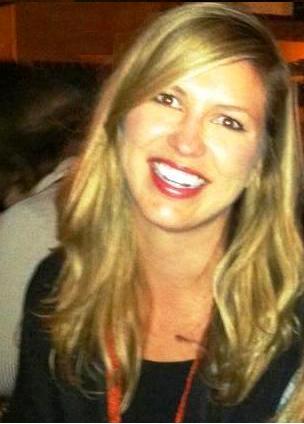
Meet Delia Whitfield.

It is my pleasure and honor today to introduce you to Delia Whitfield, Senior Outreach Manager of the Chesapeake and Potomac chapter of JDRF. She’s also Outreach Captian for the entire Mid-Atlantic region and Florida too, working with a large number of outreach staff. She’s a major part of getting the D.C.-area JDRF Research Summit off the ground every year. Her role is an important one, and it covers a huge population and geographic area. Did I mention that she’s also living with Type 1 Diabetes? On top of that, she’s one of the most positive people you’ll ever meet. It’s just impossible to walk away from a conversation with Delia without feeling better. I think her story is a good one, and it provides an example for others who might be thinking about making a career in the diabetes world.

I was able to chat with Delia by phone recently, and this is part of what we covered.

Delia… anything you want to tell us about your diagnosis?
DWhitfieldI was diagnosed when I was 21 and about to graduate college. I had all of the typical symptoms leading up to my diagnosis: thirsty, tired, and hungry. I was losing a lot of weight to the point that people were concerned and asking me if I was eating enough. One of those people was my roommate, who I vividly remember in the few weeks leading up to my diagnosis, was giving me funny looks every time I would make my regular late-night runs to the grocery store for more OJ and snacks! The final straw was when I went with some friends to a concert and had trouble seeing the band clearly. We were in the second row. The next day, I called to schedule an appointment with an eye doctor. It was a Friday and I remember telling the woman that I couldn’t go all weekend without seeing well. They squeezed me in that afternoon. At the appointment, I told them about how I had been feeling and that I was worried. They changed my prescription and sent me on my way. As I left the appointment, I called my mom, who had worked in the healthcare field for a long time. I had been telling my mom and my dad about some of my symptoms here and there, but I told her about all of them on that call and I think it hit her. She told me to go immediately the urgent care and get a finger-stick to check my glucose. I didn’t know what a “finger-stick” was, but I heard the urgency in her voice. I drove straight to the doctor’s office. It was there that I learned my glucose was over 600. They sent me immediately to the ER.

At this point, I knew it was somewhat serious. But, still, I was young and what I really wanted was to get in and out of the ER so I could still go out with my friends that evening. I hadn’t yet realized that not only did I have type 1 diabetes, but missing one night out with my friends was the least of my concerns.

So… you graduated college, and you originally went to work in the real estate industry. What eventually led you to JDRF?
After my diagnosis, I went through a pretty tough time adjusting and coming to grips with this “new normal.” I was angry. I was confused. I was scared. I was isolated. After months of my parents urging me, I finally went to a diabetes support group. I sat down and immediately realized that I not only was the only person under the age of 50, but I was also the only one with type 1 diabetes. One woman turned to me and told me that I was “lucky” because I was young enough to start eating healthy and exercising and reverse my diabetes. I left in tears, feeling worse than I felt before. If only I had “that kind,” I thought.

Thankfully, a few months later, I heard about this organization called JDRF that was dedicated to type 1 diabetes. It blew my mind that there was an ENTIRE organization dedicated to “my kind” of diabetes. I signed up to volunteer with my local JDRF chapter – the Coastal Carolina Branch (Wilmington, NC). I started going to events and helping out where I could. The chapter staff and other volunteers were awesome; I was hooked. Getting connected with the type 1 diabetes community was the single best thing that had happened to me since my diagnosis. It led me to accept my diagnosis and more importantly, it gave me hope.

Around this same time, my parents met Tom Brobson (JDRF’s National Director of Research Investment Opportunities) at a JDRF event. My mom asked him if he would be willing to talk to me since he was also diagnosed as an adult and was so knowledgeable on all things type 1. When we talked, he told me all about his personal experience with type 1 and what he does for JDRF. It was fascinating and I knew I wanted to work for JDRF. At the time, I was going back to school to pursue a nursing degree, so I just kept looking for opportunities to open up. A few months later, an outreach coordinator position opened up with the Capitol Chapter in D.C. And the rest is history.

What advice would you give to someone thinking about pursuing a career as well as managing their diabetes?
If someone is interested in a career in the diabetes field or specifically with JDRF, I would say start by volunteering. Volunteering allows you to figure out what you enjoy doing, engage and help people in the community who you can help, but it will also in turn help you. Getting connected with this community was the biggest game-changer for me not only in terms of management, but for me emotionally. Type 1 requires 24/7 attention, and takes up a ton of brain space. I didn’t realize how isolated I was when I was trying to do it on my own with no support network. I have learned some of the best tips and tricks about management from others living with T1D. I also have come to realize that for me, the balance of a good sense of humor (and not falling apart over spikes!), and leaning on others when you’re feeling a little discouraged, is huge. The biggest thing is, knowing you’re not alone! There are a number of ways you can get involved to the degree that you’ll probably know whether you’ll want to make a career of it. Everyone has different talents and strengths and I guarantee no matter what yours are, we could probably use them!

You’re Senior Outreach Manager for a big, big chapter. JDRF’s Chesapeake and Potomac chapter covers almost all of Maryland, the District of Columbia, Northern and part of Western Virginia, and a couple of counties in West Virginia. What are some of the challenges you face on a daily basis?
I think it’s making sure that JDRF has a greater presence in the large territory we serve. It’s tough knowing that there’s a large percentage of people in the type 1 diabetes community that don’t know that there are support programs (e.g. JDRF mentor program), resources (free toolkits and care kits for all ages and stages of diagnosis), and free outreach events (JDRF research summit) where they can connect with a community of people just like them. About 6 months ago, I spoke to a young adult that has lived with type 1 for 8 years, and he had never met anyone else with type 1. He didn’t have an endocrinologist and he wasn’t familiar with pumps or CGMs. I connected him with an adult mentor and he wrote me a note saying that it was “life-changing” for him. He now has an endocrinologist and recently started on a CGM! Because we do have such a large territory, we really rely on our awesome volunteers to help us get connected with their community and promote our outreach programs. We pride ourselves on working with a limited marketing budget so that we can reserve those dollars for research and advancing technology – conducting human clinical trials are very costly!

On the flip side, there are a lot of stigmas and misnomers about type 1 diabetes in the general public. Instead of looking at these situations as a challenge though, I’d call them good teachable opportunities. I think a positive spin helps me when I hear the insensitive, uneducated, or just plain ridiculous comments made to people with T1D, myself included! I was once yelled at and asked to get out of a cab because I had just given myself a shot and the cab driver did not accept “drug use” in his cab.

What are your goals for the future?
That I will be out of a job. That all of us working in the T1D community can close our doors because type 1 will be something that “used” to exist.

For me personally, I’ve finished two century rides doing the JDRF Ride for a Cure. I’d like to complete even more and do some other endurance races.

Finally… You were mentioned in Amy Ryan’s book Shot: Staying Alive With Diabetes. What was it like reading about yourself in print?
Amy is a very dear friend and an amazing person. When I first read that chapter, it was like an out of body experience! It was very humbling to read her kind words.
 
 
Delia, thanks so much for sharing with us! Your perseverance, your hard work, and your compassion for people living with and affected by type 1 diabetes is an example for all of us. JDRF, and by extension, all of us, are fortunate to have you in our corner.
 
 
JDRF could use your help in a variety of ways all year long. To find out more about how you can make a difference, go to JDRF’s volunteer page and learn more: http://jdrf.org/get-involved/volunteer/

Also, and you heard it here first: Next year’s JDRF Research Summit is once again coming to the Washington, D.C. area on March 7, 2015! Look for more on the summit as the year progresses.


#dblogcheck – It’s baaaack.

Here we are… it’s another D-blog Check-In Day.

Christopher Snider, author at A Consequence of Hypoglycemia, and moderator at the Just Talking Podcast, and also the originator of last year’s edition, has designated today as the day for all of us to leave a comment on each and every blog we visit.

Last year on #dblogcheck day I wrote about the importance of telling your story, being that hand that reaches out into the abyss to pull someone in and make them feel less alone. Today I’d like to talk about the importance of leaving comments.

If you write, think about what it was like the first couple of times you received a comment from someone. Anyone. It meant a lot, didn’t it? It was an instant measure of readership, to begin with. You were no longer posting your thoughts to an empty internet. That measure of validation, that show of support, that initial connection… it’s special.

It’s just as special to someone who’s been writing for some time and wonders if the community has somehow lost track of them. Leaving a note at the bottom of someone’s heartfelt blog post promotes a greater sense of community among all of us. We know the writer is special. I, for one, don’t want to miss the opportunity to tell them.

I started writing in this space about two and a half years ago. Since then, more and more diabetes blogs have popped up from writers all over the world. Those writers deserve just as much (or more) support than I’ve received.

But you know what that means: More writers = more comments.

I know that sounds difficult for some, and I understand… I do. I’ve heard a lot of “My time is so limited” and “I can never think of anything good to say”. I guess what I’m saying is I feel a sort of responsibility to support writers who share their personal stories in a way that challenges me to think more and feel things more deeply. Why? Because I want them to continue writing.

I should also talk about what it means for me to leave a comment on someone else’s blog. I look at this differently than most, perhaps. But to be honest, leaving comments makes me feel better. I didn’t come by this naturally. But I’ve found that it’s great therapy for me.

Especially when I’m feeling down, or when I’m experiencing trouble either within or outside of the diabetes community, as soon as I leave a little comment somewhere, I nearly instantly start to feel better inside. Even when I’m tired and I can’t think of anything witty to say.

So I’ll conclude by first reminding you to leave a comment wherever you visit today. Share your favorites via Twitter using the hashtag #dblogcheck. And second, think about using this day as encouragement to comment more. None of us has the market cornered on great writing (especially me). What you can do is help deliver that measure of validation, and remind someone that what they have to say is really important. It really is, isn’t it?

Finally, I want to ask a favor. I have a confession to make: I haven’t really discovered a lot of new d-blogs lately (this is my time-constraint problem). If you’ve found a blog that you really like, and you can’t think of anything else to say, just say “Check” and leave the address of yours or someone else’s blog below.

And since I haven’t mentioned it for a while… Thank you so much for reading!