Category Archives: Lows

Frustrated, but okay with it (sort of).

Do you ever experience a low where someone really goes out of their way to help you, when you don’t really need it, and it’s kind of annoying?

This wasn’t help during a low… this was, unfortunately, hindrance.

About three minutes earlier, I felt like I might be low, and tested out at 58 mg/dL. I started to eat some candy I keep in a jar on my desk at work. I suspended my pump, for what that was worth, and I was sitting quietly, not doing anything. Just concentrating on the one thing I needed to do in that moment, which was eat the candy (or, as some might call it, Stephen-eat-the-cheeseburger), and nothing else. Then someone came by, and noticed I was low. Before I knew it, I heard “Come with me… do you have something in your desk?… Here, I got your juice… drink it. NO, DRINK IT… NOW”.

My co-workers have come a long way in their understanding of diabetes, and especially their understanding of the dangers of hypoglycemia. But a few days ago, I came to the realization that there is a big difference between basic knowledge of highs and lows, and knowing about the nuances of diabetes.

I was definitely low in this instance. No doubt about that. But I was already treating, and as we all know, ingesting something now does not mean my BGs will come up at the very moment that fast-acting carbs are ingested. It takes fifteen minutes or so. Nothing I can do about that.

But it’s very hard for people who don’t live with diabetes to just sit there and wait, or even understand what it means to sit there and wait those fifteen precarious minutes. Especially when they’re worrying about you.

I have to tell you… it warms my heart to know that the people I work with are so eager to help when I hit a bad low. By the same token, it takes more than just literally shoving a juice box in my face and expecting me to be okay. The truth is, I would have been okay eventually, even if I was the only one there.

The thing is, it’s easy for me to be frustrated, because my low wouldn’t have been so difficult had I been left to my own devices. I was sitting in a chair at my desk, eating candy. My pump was off. I knew it was going to take a bit, but I knew I would eventually be okay. I didn’t need the extra grabbing and juice shoving and holding the juice so all I had to do was drink it. I also could have done without the “It’s because he’s stressed… the stress is making him low” comments.

But… how can I be unhappy about the level of concern and effort put into this moment? In reality, I cannot expect someone who doesn’t live with diabetes to know the difference between what 74 mg/dL feels like, and what 44 mg/dL feels like. And they really wanted to help me. How can I complain about that?

In the end, for all of the frustration, it’s just another brief episode in life with diabetes. I need to go through the mental checklist, examine the moment, and see if there’s anything I could have done better. To not do that would be folly. If it turns out it was just one of those crazy lows that happens from time to time despite our best efforts at diabetes management, then I just have to let it go. And thank everyone who tried to help me.

And be happy that there are people who want to help when I need it, even if I don’t need it all the time.

 

Saturday Night.

It was Saturday, about 6:00 p.m.

My BGs had been running high all day. It was time for dinner, and since I try to pre-bolus whenever possible, I washed my hands (like I almost always do), did my pre-dinner check, and saw that I was 138 mg/dL.

I was just making a sandwich and eating a tomato for dinner… no big deal, except that bread seems to spike my post-prandial numbers a bit. So I bolused based on that 138 number and continued watching the L.A. Dodgers and Pittsburgh Pirates game on TV.

Pre-bolusing being what it is, I had expected to wait 15-20 minutes before eating. About ten minutes after my bolus, I felt what I thought was a sign that I was low: A feeling of shakiness, sort of like I was sinking, and a suddenly overwhelming hunger.

But I had been high all day. I was 138 mg/dL just ten minutes before, right? In the next five minutes, the following occurred:

– I went back into the kitchen to test again. The result: 48 mg/dL.

– I grabbed the juice bottle from the refrigerator and, carefully, a glass from the cabinet. Somehow, I got the glass and the juice on the counter just before I slunked down on the kitchen floor.

– Now I’m trying to (again, carefully) get the glass and juice off of the counter and onto the floor next to me so I could drink it. I didn’t know if I could get back up again until I could get my BG back up again.

– After trying for what seemed like a long time, but really wasn’t, I was no closer to getting the glass or the juice off the counter, but I had managed to lay flat on my back, feeling very sleepy, if that makes sense.

– Somehow, something inside me made me realize that I needed to get up to the counter to get my juice. I had no other choice. Again, it seemed to take a long time to stand up, but it wasn’t a long time after all.

I finally got my juice, and within 15 more minutes, I had eaten my sandwich and was feeling almost normal again. Except for the post-low hangover that comes with an episode like this. And it was significant.

Immediately after, I called The Great Spousal Unit, who was away, and let her know what happened and that I was okay.

Then I took to Facebook and recounted what happened. I also replied to some of the replies I received, and posted a little more too. I was so grateful to have people who understand help me feel better after an awful experience like that. Still, I generally don’t spend my Saturday night hanging out on Facebook, and that made me ask a few questions.

Was I really trying hard to connect after almost being permanently disconnected? Was I trying to keep a lifeline (so to speak) open in case of another low? Was I just trying to show how strong I am and that I was okay and no one should worry about me because I’m tough as nails?

Maybe it was a combination of some of those things. Plus this:

When you nearly lose your life (because, for worse or for worse, hypoglycemia is a near-death experience), you want to connect with the special people in your life and forget about anything else that doesn’t really matter.

Hypoglycemia sucks. Diabetes sucks.

As a person with diabetes, I am in a unique position to let the rest of the world know that we need the best accuracy possible from our glucose meters. We need Medicare coverage for seniors who simply must keep their continuous glucose monitor technology. We need artificial pancreas technology that will help read our glucose levels and adjust pump settings automatically based on reliable algorithms designed with patient safety as its first priority.

And we all need to have people to reach out to, to make us feel less alone when we’re at our most vulnerable. God bless those who don’t have anyone to turn to.

If you have no one to turn to when diabetes wrecks your evening, I encourage you to find the Diabetes Online Community. Search the #DOC hashtag on Twitter. Do a Google search for diabetes blogs. Or send me an e-mail. Don’t be alone.
 

Hello, Mr. Middle-of-the-Night low.

Well hello there, Mr. Crazy out-of-nowhere-middle-of-the-night low.

It’s been a while, but as soon as I woke up at 2:15, felt strange, and put my hand on the back of my sweaty head (in the air conditioning), I knew you were back.

And it wasn’t just my head: my PJs, my pillow, my bed, everything was drenched with sweat. I didn’t even bother getting my meter to check right away. I just grabbed a juice box and started sucking back The Thing That Brings Me Back Up.

After a small snack and even more juice, about half an hour later, I was staring at 81 mg/dL on my meter.

I’ll bet you were thinking you could sneak up on me, right? You thought I had let down my guard, that I would just sleep peacefully right through it all. Until, you know, I wasn’t sleeping anymore.

The fact that I didn’t, that I actually did wake up and take the necessary steps to save my life, must have pissed you off. Because I had that awful post-hypo hangover that was only partially mitigated by a long, hot shower. Also, I had a 258 mg/dL on my meter this morning.

But that’s okay. I’m still here, Mr. Crazy out-of-nowhere-middle-of-the-night low. I’m still here. I bested you this time. I’m not giving up. And I’ve got my eye on you. So watch it.


Wordless Wednesday: Kryptonite.

I like to change things up once in a while. I love my Glucolifts to help get me up from low blood sugar. But every now and then I like to get something else to put in my pocket, and it provides a nice change of pace so I don’t get burned out on the Wildberry, which is my absolute favorite.

This week, I decided to get these little buggers, and I put a few in my pocket for… well, you know. I even needed a couple on my way home from work yesterday, and I couldn’t understand why they didn’t seem to bring me up at all. I also experienced some serious gastrointestinal discomfort through the night.

This morning, after closer inspection, I found out the reason why:

DSC02192

After this experience, I’ll be happy to run back to my Glucolifts.

And God help me when I get older and have trouble reading my prescription bottles. I’m only half kidding about that.


Let’s talk.

I feel like this must be Hypoglycemia Week or something. I’ve already read two excellent posts on the subject this week, which I’ll link to during my post today. First, let me share a few photos with you:

DSC01663

DSC01660

DSC01658

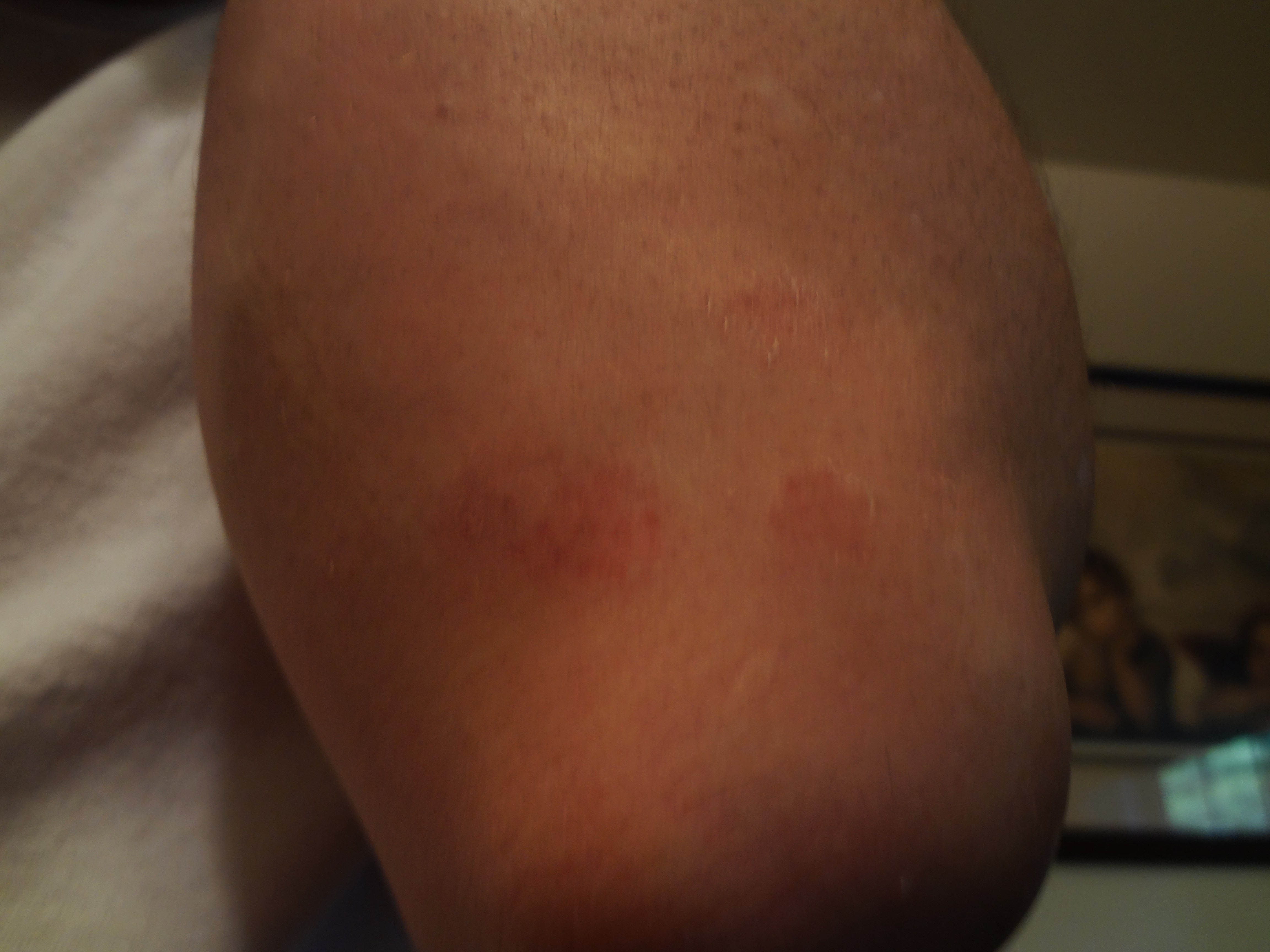
I received these scrapes and bruises (plus a couple of bruises on my head) thanks to a Sunday night low that happened around midnight. I was alone in the house, and I fell down once getting to the kitchen, and once in the kitchen. I never lost consciousness, and everything turned out okay in the end. But I had a serious fog that lasted for a while. I also spent some time after cleaning up spilled juice and a broken candy dish, so I wound up getting about 4 ½ hours sleep before heading to work on Monday.

I should mention that I believe this low was a mistake on my part, borne out of frustration for a remarkably stubborn high the previous Sunday. I didn’t want to face that again, so I over bloused. When Allison Nimlos wrote of her Sunday low, she did a great job of describing, clinically, what I think happened to me on Sunday night too.

For me, writing about this now is more of a thought process, stream of consciousness thing rather than a “Look at my bumps and bruises, feel sorry for me” thing. Scraped knees, bruised elbows, and a bruised head just serve as outward reminders of what happened. But how do I talk about it?

When I put on a pair of shorts and go outside, what do I say to my neighbors when they ask what happened to my knees? Do I come right out and say what happened? If I do, I don’t want to invoke pity. I don’t handle pity well. I don’t want to draw attention to myself that way. But I also don’t want to admit to a mistake in front of someone who doesn’t know me well and doesn’t live with diabetes day after day. Because the truth is, I can have 364 great days of diabetes management in a row, and one bad night can happen anyway. Every day is different. I don’t want someone thinking that the bad night is the norm, or something they have to worry about.

It’s weird because I want to look like I’m handling my diabetes well, but I need to be realistic and recognize that I’m not perfect. I think this is the kind of thing that people mention when they talk about wanting to be “normal”. We just want to live our lives, and not do or show anything that makes us stand out. We just want to be seen as “normal”, when really, our life is already normal. For someone living with diabetes.

So we keep it all inside, which leads to frustration and feeds the feeling of guilt over what happened. And the feeling of being alone, because we’re keeping it all to ourselves. Let’s face it: I made a mistake. I can’t make that mistake again! If I do, I’m less than perfect! No one will appreciate me or love me if I’m not perfect! If anyone knows about it, they’ll know I’m not perfect!

Then we complicate things by thinking: What does it hurt if no one really knows? If I don’t talk about it, no one will know that even though I’m doing better than ever in my constant battle with this condition, I still screw up one percent of the time (or maybe two percent). Or maybe I do everything right and my endocrine system doesn’t cooperate anyway. But as long as I don’t say anything about it, they’ll think I’m sitting at 100 mg/dL all the time. Problem solved, right?

The hard reality is that if I’m going to own my diabetes, I need to own 100 percent of it. One hundred percent of the time. That’s really difficult to admit, and even more difficult to put into action.

But if I don’t, I’m being less than honest with myself. It’s hard to keep that up for very long without imploding. And if I’m less than honest, less than forthright with my story, I miss the opportunity to share how incredibly dangerous living with diabetes every day can be. I miss the opportunity to explain why new technology, new drugs, and new therapies are crucial to saving lives, and in our country, saving money.

Understand me: It is really difficult for me to share a story like Sunday night’s outside of a forum like this one. But… It is very, very important for me to do so. People need to know how serious diabetes is on an everyday basis, and the damage that it does. I think many don’t know, or they forget. Not everyone is going to give us a pass for one slip-up. But if we’re honest with ourselves and others around us, the truth is that some people will. I also know this: Every generation that doesn’t bring their diabetes out in the open means another generation goes by thinking everything is just fine with us. And not understanding when it isn’t.

—————————————————————————————————

I’m doing the best I can. But every day is different with diabetes, and so every day the potential exists for me to kill myself with too much or too little insulin. Sometimes that happens because we can’t get the supplies we need to test our blood sugar as often as needed. Sometimes that happens because people are over 65 and Medicare won’t approve a CGM. Sometimes that happens because my body used insulin a lot better today than it did yesterday, and different from the way it will use it tomorrow.

And sometimes, it’s because I made a once in a year (or five years, or ten years) mistake.

I’m not perfect. Diabetes is unpredictable.

Smarter, more accurate technology will help minimize those errors and keep me out of the emergency room. Better coverage for CGMs will help seniors live longer, more meaningful lives. Better drugs and delivery systems will help me live a more normal life. More diabetes research will help today’s children achieve more than anyone can imagine. And why not? Why shouldn’t they?

I know… life is tough, and we all have our problems. Why shouldn’t we all have the same opportunities? My pancreas has failed. I am not a failure.