Category Archives: Events

Chesapeake Bay Tour de Cure.

I went to Maryland’s Eastern Shore (east of the Chesapeake Bay) again this past weekend. This time it was for Saturday’s Chesapeake Bay Tour de Cure.

This slideshow requires JavaScript.

I rode the 55 mile route this time. Maureen was engaged with some dog walks at home, so she wasn’t able to be there. Even if she was, she wouldn’t have let me do the 100. That’s okay though.

So, how was it? More difficult than I thought. The weather, which was just about perfect on Friday, was pretty lousy on Saturday. The 55 mile ride started off at 9:00 under cloudy skies and temperatures around 63-64 degrees. It stayed cloudy, with a little rain too, all through the day.

My glucose wasn’t very cooperative either. I bolused less than normal for my high carb breakfast at 7:30, which I normally do. But when I checked my BG just before the ride started, I was at 312 mg/dL. Still, I was a little worried about correction bolusing and crashing too fast later on. So I didn’t bolus, and started the ride.

The first rest stop was about 12 miles into the ride, and I thought that it wasn’t worth checking my glucose because I had only been on the bike for about 40 minutes.

The next stop was at around mile 28, after the Bellevue to Oxford ferry. That’s right… our ride included a ferry ride across the Tred Avon River. Yes, it was a nice break in the ride. Especially since my BG at the Oxford rest stop checked in at 61 mg/dL. I loaded up with an energy bar, some grapes, and a couple of honey stingers. Then I was off to the next rest stop, about 10 miles away.

Once I got there, I checked my BG again: 71 mg/dL. Another bar, a bag of chips, and two more honey stingers. No bolus since about 7:30 in the morning. I stayed at this stop for about 20 minutes, which is 10 to 15 minutes longer than normal. Then I was off again.

I now have about 17 miles to go. I’m very concerned about going hypo at this point. Part of why I was worried was because I wasn’t riding with a pack. What I mean by that is there were about five or six people that passed me and disappeared quickly at around the 45 mile mark, and they were the only people I saw in the last 25 miles or so of this ride. ADA does a fantastic job of tracking riders and equipping everyone with emergency numbers, etc. But if you’re nursing your BG along in the last leg of the ride over mostly country roads, you don’t want to take any chances. I decided to suspend my pump.

At that point, I just kept reminding myself: Keep those legs moving, keep the wheels rolling. I managed to get back without an issue. When I checked my BG prior to partaking in the post-ride lunch, I was at 86 mg/dL. After suspending my pump for about an hour and twenty minutes up to then.

I finished the ride in about 4 1/2 hours, including time spent at rest stops. That’s faster than I thought I would go, but I didn’t feel like I was really pushing it. That’s a good sign.

All of the event volunteers were wonderful. They were helpful, informative, and always very nice. At the stop in Oxford I was helped by a volunteer with Type 2 who was putting together sandwiches, someone handing out grapes and chips who’s had Type 1 for twenty years, and her son, who also has Type 1 and a great service dog. They all looked happy, and they were doing great. How can you not feel empowered by that?

I’m glad I made the commitment to ride. I’m happier still that we were able to raise about $266,000 for the American Diabetes Association. That’s pretty good for a still-new ride with a relatively low turnout. Now, if they can just get the weather worked out next year, it will be a lot of fun.


Manning Diabetes Symposium, part two.

Just in case you’re wondering, I did not receive anything for attending this symposium, or for writing about it. I paid my fee to attend, I drove to Charlottesville, and I made (and paid for) my own accommodations.

DSC00782

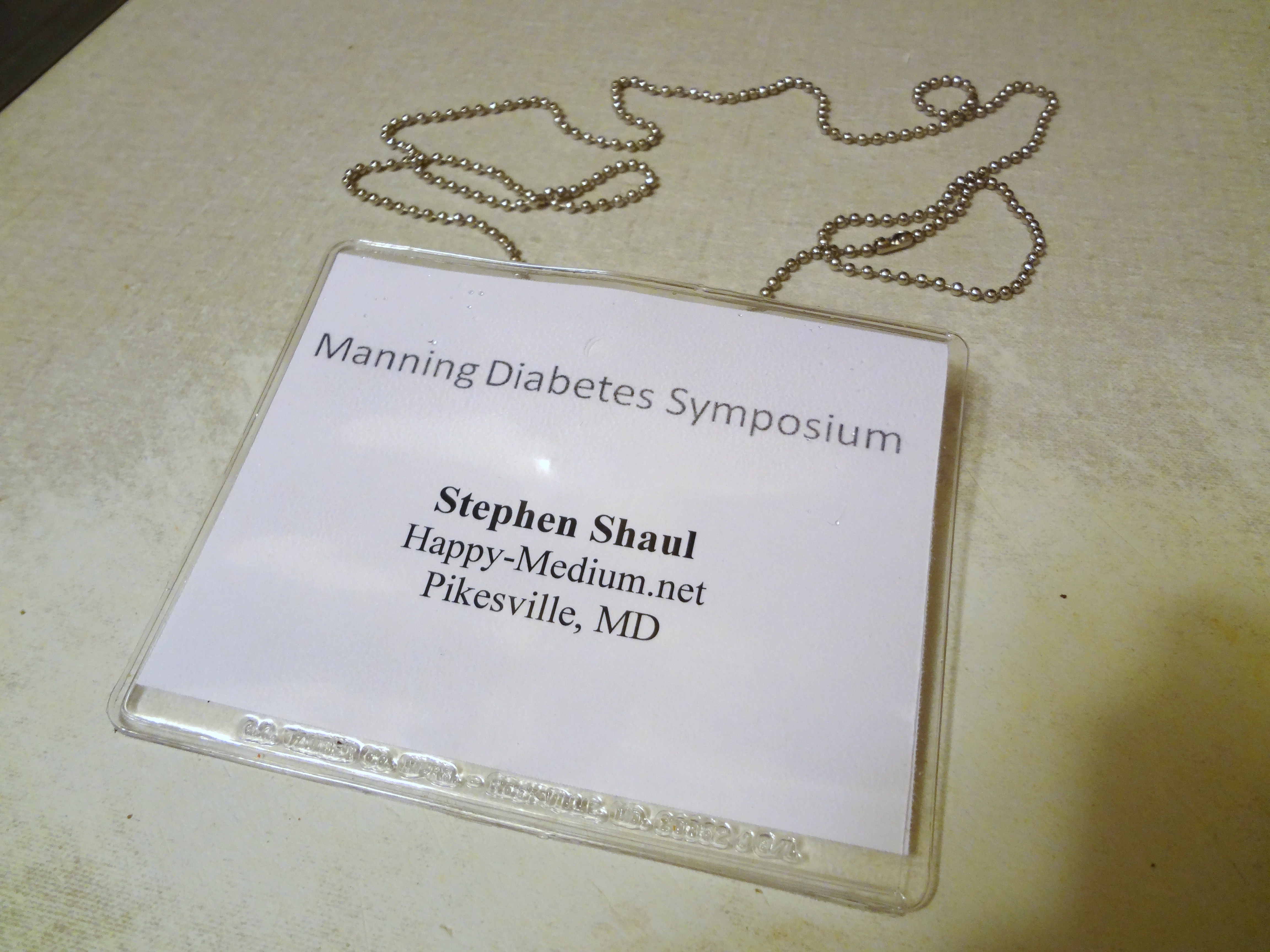
Going to the Manning Diabetes Symposium at the University of Virginia Medical Center was an amazing experience. To be honest, I was a bit worried about being in the same room with all of the brainiacs in attendance. I was surprised when I received my badge for the symposium and saw that it had my name and my blog address on it. Instantly, I thought Oh No, they’re going to know I’m a writer! Then I thought… Cool!

I was speaking to someone about a month ago, and they were talking about being in meetings with industry executives and other very important people in their field, and wondering sometimes whether they really belonged. I said this, and I really believe it: We all deserve to be in the room. We deserve to be part of the discussion. We shouldn’t take our participation for granted, but we definitely deserve to be there. If you get a chance to attend something like this, I encourage you to go and be part of it. After all, they’re talking about things that are very important to you. Don’t you want to know what’s going on?

——————————————-

Friday’s lectures began with information from three heavyweights in the diabetes research arena: Guillermo Arreaza, MD from the National Institutes of Health (NIH) and the National Institue of Diabetes and Digestive and Kidney Diseases (NIDDK); Dr. Richard Insel, Chief Scientific Officer at JDRF; and Marc Anderson, Senior Program Officer for the Helmsley Type 1 Diabetes Program, part of the Helmsley Charitable Trust. They all covered what they’re about and what they’re working on right now. Dr. Insel, in particular, gave a very compelling presentation. I’m very appreciative of what these three groups do to research and study diabetes, therapies, and new technology.

What they didn’t talk about, and what I’m concerned about for the future, is this: I have a good job, with good benefits. So I have access to new therapies and new technology when it’s available. But there are many in the USA who do not. And there are many around the world for whom a diabetes diagnosis amounts to a death sentence. I’d like to know what these three organizations are doing to study or address that.

——————————————-

Then there were two compelling talks focused on genomics and diabetic complications. Jesus Flores, MD and PhD from Massachusetts General Hospital and Harvard Medical School, covered the work that his group is doing on research and analysis of genome-wide association studies of Type 2 Diabetes. In addition, he leads research for the Diabetes Prevention Program, studying genetic variants on the development of diabetes. And those are just two of the things he’s involved in.

——————————————-

Rama Natarajan, PhD from City of Hope in California gave a super presentation on Epigenetics in Type 1 Diabetes and its Complications. That description sounds pretty nerdy, and it might be hard to understand, but trust me: I was hanging on every word. Honestly, if I was looking for someone to speak at a diabetes conference, she would be near the top of my list.

——————————————-

Then it was on to Immunointerventions and Cellular Therapy. Presenting was Dr. Kevin Herold, Professor of Immunobiology and Medicine at Yale University; Dr. Camillo Ricordi from Diabetes Research Institue; and Dr. Matthias von Herrath, VP and Director of Novo Nordisk’s Type 1 Diabetes Research and Development Center. They each gave tons of information related to studies designed to identify potential targets for cellular and immune system therapies for the treatment of Type 1 Diabetes. I’m skeptical when it comes to this kind of research, but I’m glad that they’re all involved in it. We need to explore every available possibility, and this is one of those possibilities.

——————————————-

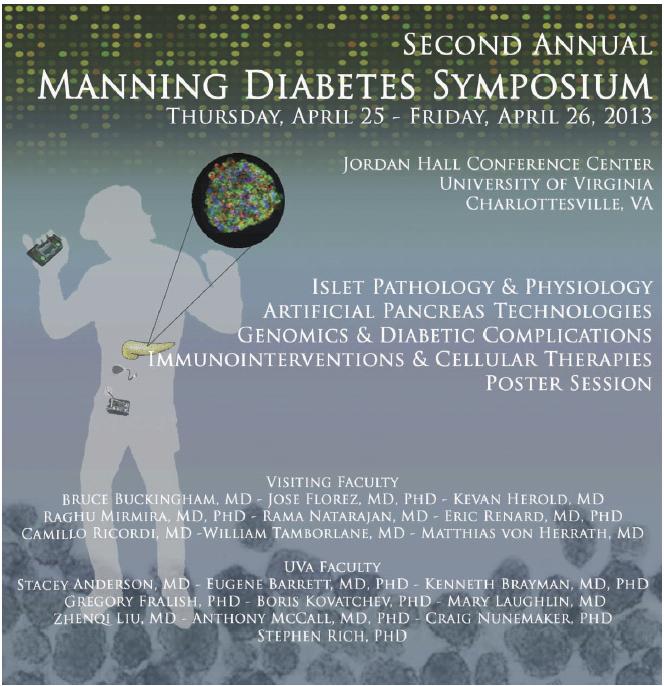
So now, let me back up to Thursday evening. There was something called a Poster Session. Maybe you’ve heard of this, but I had never seen it before. Basically, there was a separate room containing about a dozen bulletin boards. On each side of the bulletin boards were posters containing information on diabetes studies recently completed or currently underway (including the one I’m participating in! I felt special). Next to about half of the posters were people who were leading or directly involved somehow in the studies. It was great to read about important investigations being done and then speak to the experts who were getting their hands dirty in the research. It was absolutely the best part of the symposium for me.

Here’s a tidbit: A study was done looking for a link between certain personality traits and management of blood glucose. The results? People who tested as “conscientious” has more lows and were at higher risk for lows than others in the study. People that tested as “industrious” had higher BG variability. People noted as “independent and achievement oriented” had fewer normal range BGs, had a higher BG risk, and had higher BG variability. People who tested as just “independent” had significantly lower BG variability. And people with “openness and understanding” had fewer lows, but fewer normal range values. They were at a lower risk for lows, but higher risk for highs. Didn’t see all that coming, did you?

——————————————-

So that’s it. Thanks to everyone who organized and presented this sypmosium. I’m very glad I could be there. If you have any questions about any of the presentations or the presenters, please let me know.


Manning Diabetes Symposium.

MDS

I was back in Charlottesville last Thursday and Friday. Not because of my clinical trial or for medical screenings, or anything like that. This time I went to attend the Manning Diabetes Symposium. This is a meeting of very, very smart people who spent parts of two days talking about the great diabetes research taking place in various parts of the world.

Seriously, I was the only one there that didn’t have a ton of letters after their name. In the sessions, the speakers would cover their topic then take questions from the audience, many of whom were presenters at the conference too.

————————————————

Day one was devoted partly to islet beta cell stress and islet pathology and potential targets for therapy. Basically, they’ve nailed down the development of diabetes to beta cell stress, leading to insulitis (inflammation of the islets), which leads to pre-diabetes, then destruction of the beta cells resulting in diabetes. Can anything be done to stop this process, or possibly reverse it? They’re working on it. Interesting insights from Dr. Raghu Mirmira, Eli Lilly Professor of Pediatric Diabetes and Director of the Pediatric Diabetes Research Group at Indiana University, Indianapolis.

Also speaking was Dr. Alberto Pugliese, Head of the Immunogenetics Program at Diabetes Research Institute in Florida. He spent a lot of time talking about JDRF’s nPOD program, a program that provides, without cost, rare and difficult to obtain tissues beneficial to their work in (hopefully) curing Type 1 Diabetes. The nPOD acronym stands for Network for Pancreatic Organ Donors with Diabetes (don’t know what happened to the extra D, but what the hey). Anyway, it’s a very interesting looking program, and I invite you to check it out at
http://www.jdrfnpod.org.

————————————————

Also on Thursday was a lot of artificial pancreas talk. First off, from Dr. Bruce Buckingham, Professor of Pediatrics Endocrinology at Stanford University, information on camp and in-home studies designed to try and measure reductions in nocturnal hypoglycemia related to the AP. In short, they were successful and they plan to do more studies in the near future.

In addition to that, Ed Damiano, PhD from Boston University came and spoke about all of the great AP research and trials they’re doing up in Boston. This was mostly the same talk I heard back in February at the Children With Diabetes Focus on Technology conference in the D.C. area (you can read about it here). I really liked the fact that during the question-and-answer session afterward, he made a real point of saying that artificial pancreas technology is a great thing, but it’s far from the perfect solution. I liked the question-and-answer portion with him anyway. He’s very passionate about the work they’re doing up there, and he really is an intelligent person who seemed to be very forthcoming and a step ahead of the questioners the whole time.

Finally on Thursday, there was Dr. Eric Renard, who is doing AP work at Montpellier University in France. He brought us up to date on current developments in Artificial Pancreas technology and testing, including what’s happening in Europe, where their testing is a little further along than it is here in the USA.

————————————————

After the talks, there was something called a Poster Session, which I’ll talk a little more about tomorrow because it was very cool. I’ll also cover what was presented on Friday before the end of the conference. This was a very educational couple of days and I can’t wait to tell you about the second half.

Just in case you’re wondering, I did not receive anything for attending this symposium, or for writing about it. I paid my fee to attend, I drove to Charlottesville, and I made (and paid for) my own accommodations.