Category Archives: Athletes With Diabetes

A Champion Athlete from Trinidad.

Today, I’m thrilled to bring you our latest Champion Athlete With Diabetes, and the first guest post here at Happy-Medium.net!

Corey Melke is a U.S. expat living with her husband in Trinidad. She’s been living with Type 1 diabetes for about a year and a half, and she writes about her life (with some fantastic recipes too) at her blog, Learning Patience.

Corey’s story is the perfect example of perseverance in the face of adversity. She never let her setbacks define her… In fact, she seems to have used them as touchstones for even greater accomplishments. Don’t ever tell Corey she can’t do it– She’ll prove you wrong! Take it away Corey…

IMG_2226

Ever since I was little, i played sports. Softball, basketball, swim team, track…i tried it all. I loved the thrill of competition and it helped me stay in shape. But when college was over and work started, working out kinda fell off my daily to-do list. My vegetarian diet helped keep my weight in a decent spot, but I was not strong or frankly, all that healthy. It wasn’t until I met my husband that I decided to make a lifestyle change and get healthy. That meant more sleep, less drinking, working out at the gym and starting to run. At first, I couldn’t even make it a block without stopping. Running did not come easy to me, it was a real challenge and it had been way too long since I felt that thrill of working hard to achieve a non- work related goal. We ran 5k’s together, mud runs and a 10k right before we moved to Trinidad. In one year, I had gone from couch potato to runner girl!

run blog 2

Moving to Trinidad, 3 years ago, meant a world of new experiences and lifestyle changes and not working. Not working meant being able to workout whenever I wanted, but it also meant I would need to be more focused than ever, because it’s just as easy to be lazy or snack whenever you want. One day, a blog friend convinced me to train for my first half marathon, something I never thought I would do. I agreed, but with loads of hesitation and fear of failure. It was then that I signed up to the Daily Mile, a website where you can friend other runners, track your workouts and get support and advice from others. It has been a critical part of my success. As the race date got closer, my friend got injured and I was devastated. I felt like I could never do it without her, but the next morning I ran 13.1 miles. I did it under 2 hours too, definitely one of my proudest adult moments. There was no crowd cheering me on and no shiny medal handed out at the finish line, it was just me and my determination to succeed.

431314_10150655279567708_516307707_9169843_1398760251_n

After that, I was hooked. I wanted to run faster, participate in a “real” race and i wanted a medal. I was lucky enough to be selected as an Ambassador for the Women’s Half Marathon series and planned to run in September in Nashville. Training was going great until one Sunday afternoon when a simple photo op at the pool, changed my life forever.

jump

The picture is fantastic, eh?! When I landed in the water my right toe touched my right heel and I sat on my foot underwater. I basically crushed my foot. When I surfaced, i was crying without even knowing what had happened. Getting injured underwater is very weird. There really isn’t time to feel pain because you are focused on trying to hold your breath. I saw a specialist the next day and was told I had a fracture, I needed a aircast for 6 weeks and all would be OK. If you have ever been injured when you are in the best shape of your life, you know its dreadful.

552526_10151074807027708_757545382_n

I followed the Drs. orders and was soon pool running and my life was almost back to normal. While on a vacation in the US, I was told I could finally take the aircast off and even go for a run. I cannot explain how amazing those 3 miles felt. But while running, I had noticed that my eyes were really dry. I mean like my eyelids were sticking to my eyes, dry. Weird. Later that day, I felt sick, my mouth was dry, my appetite gone and I had no desire to drink wine at all. You can laugh at the wine comment but it just might have helped saved my life. By the time my husband arrived a couple days later, I knew something was wrong. I felt worse, much worse and I went to the ER. At first, I was told I had jet-lag and to go home, but I pressed for more tests. Then, the the lady who said I was “fine”, told me that I had diabetes. The nurse told me that I was a Type 2 diabetic, which didn’t make sense to me – I was healthy, in shape and had been a vegetarian since 6th grade. At that point, I was in a state of shock. The nurse showed me how to test my blood sugar and gave me Metformin. At that point my blood sugar was 835. I was released, I took 1 pill and we went home to figure it all out. I sat my husband down and told him and we all just kinda sat there. The next morning, I hoped a run would help clear my head, but as I started on down the driveway, I couldn’t breathe. I fell to the ground, gasping for breath and then somehow managed to crawl back into the house for help. I felt like I was dying, I couldn’t get a full breath in and it was terrifying. After a quick call to the pharmacy, my dad just looked at me and said “You have to go to the ER, now”!

August 10, 2012

Turns out, I was not a Type 2 diabetic, I was a Type 1. I was in DKA, just minutes from passing into a coma and that pill was making things much worse. DKA occurs when the body cannot use glucose as fuel because there is no insulin in the body. So, the body burns fat instead which produces keytones. A urine test showed my keytone level was over 90. That week I lost almost 10 pounds. I found out that I never should have been released from the hospital the day before, in fact, I was so sick, I had to spend an entire week there. Going for that run saved my life, it helped my body process the Metformin faster, which took my breath away, which then alerted me to go to he hospital. Our original plan was to get on the boat and spend all day on the lake. If I wouldn’t have gone for a run, the Dr. told me that sometime that day, I mostly likely would have lapsed into a coma and could have died. My endocrinologist say its hard to determine how long I had T1D, I had probably been controlling my own BS with running. Then, when I was side-lined with the aircast, my BS just kept creeping higher and higher and higher.

set backs (1)

Figuring out my new life of insulin shots, counting carbs and all that other fun stuff that goes with having this horrible disease was hard, but realizing I was only 4 weeks from my BIG Nashville race and I wasn’t going to be able to run in it, was even harder. I was banned from running for another 2 weeks. All of my organs were shutting down and I had lost almost 60% of my vision, a result of having a high blood sugar for so long. My body was broken, my cells needed more time to repair themselves and eventually my sight would return. After two long weeks of resting, I was finally able to start running again. Running with diabetes was much more difficult than originally expected. Keeping a steady blood sugar while burning 800-1000 calories and running in almost 100 degree temperatures is a huge challenge.

393642_10151159452662708_1784022632_n

603354_10151158061677708_792233349_n

I went to Nashville anyways and competed in the 5k. Although it stung not to be running the half, I’m glad I went and did my best, I even placed 2nd in my age group! The amazing folks at the WHM series offered me a re-do in St. Petersburg, FL in November, 2 months later. I was thrilled and started training again. Once my training runs got over the 8 miles mark, I soon realized how training with T1D would be MUCH HARDER than originally thought. I had to learn how to fuel properly before, during and after my runs. No more not eating post workout, I experienced a couple extreme BS drops and was soon reading all I could about athletes with T1D. The more I learned, the more I felt overwhelmed. My endocrinologist told me I needed to slow down. She had never seen a new T1 who had gone from a 11% A1C and almost dying to a 6.2% A1C in three months and running 15 miles a a week. It was then that I got my first Dexcom, we call him Dex in my family.

No more sore fingers from testing 10-13 times a day and no more scary nights wondering if I would wake up all sweaty with a low. Dex saved my life and continues to help me be as healthy and as safe as I can be every, single day. Sure, he can be annoying at times and sometimes he’s off a little bit every now and then, but I simply could not imagine my life without him. So, with Dex, my training improved and I was more confident on my runs. But just as things seemed like they were getting better, on my last long run before my big race, I felt more than the usual pain in my right foot.

It was then that my Dr. told me that his original thought, that I might have a LisFranc injurya very complicated injury that 50% of people need surgery to repair, was right. He told me to pull out of the race and head to the US. Against my Dr. orders and against my husband & parents wishes, I went to Florida and i ran that race anyways. I don’t suggest running injured but after all I had been thru earlier that year, I wasn’t going to be stopped.


30986_10151243940522708_538825862_n
The next day, I headed to Houston where I was told that I needed surgery ASAP. The middle joints of my foot were separated more than 5 times the normal amount. He was shocked I was even able to walk on it, let alone run a half marathon. 3 days later I had surgery. The surgery took over 3.5 hours and required 11 pieces of titanium to fuse 4 bones together.

281695_10151289705432708_84289025_n

Foot Hardware 3

The next 7 days were complete hell and that was with pain meds every 3 hours! I don’t think I have ever gone thru something so incredibly painful in my life, EVER. Growing bones isn’t as easy as one might think. I had to get off the pain meds ASAP because they were throwing off Dex & I couldn’t handle that.

I would be in a non-weight baring cast from Dec 22 until April 1.

150048_10151357589962708_1103327242_n
When the cast came off, I couldn’t wait for rehab.
I had no idea how difficult the process of just learning how to walk again would be…

b3
I had rehab 3-4 times a week, every week till June. On June 20, my birthday, I ran 4 miles.
#feltliketen

Then, I found a half marathon in October in Houston and signed up…my BIG comeback run! I was going to show diabetes and my stupid LisFranc injury who was boss. Don’t tell me I cant run again!

8

On October 27, in the pouring rain and cold, I finished in 2:02. I did it and crossed that finish line with a smile on my face and tears in my eyes. The next day I visited my foot surgeon with my much deserved medal around my neck. He was beyond thrilled. He told me that the chance of me running again was slim, he just didn’t want to tell me that from the beginning.

1623653_10152164901452708_1169121123_n

I’m currently training for 4 races in the Spring and I’m running faster than ever before. My last A1C was 6.1% and I currently am using the latest and greatest Dexcom, which I wear on the back of my upper arm, and I am on injections, Levimir (2X day) and Apidra My diabetes will be always be a daily challenge and a pain in my ass the rest of my life but it will never stop me from achieving my goals and living life to the full! You can follow my island life, training, travels and recipes over on my blog, Learning Patience. Last November, I even traveled to Africa and saw a cheetah kill, it was pretty amazing!

P1120417

Life tried knocking me down not once, but twice and I still got back up. Without sounding too cheesy, LIFE IS A GIFT, don’t waste it. Break a sweat each day, eat healthy and colorfully, drink loads of water and laugh as much as possible!

xoxo from Trinidad

P1120111

Thanks Corey! You are an inspiration, and very worthy of the designation Champion Athlete With Diabetes!

So maybe you’re thinking: “Hey, I’ve been working hard… where’s my medal?”. To find out how to get yours, click here.


If this Champ With Diabetes can do it, I can too.

Time to introduce you to another one of our medal winners. Trust me: You’re going to want to read this story through to the end. Just reading about this athlete’s accomplishments makes me want to get out and conquer the world. Though I’ll settle for a metric century ride, a triathlon, and a 5K run (not all at the same time).

Bob Parant has been living with Type 1 Diabetes for 41 years now. The Long Island resident was diagnosed back in the 70s while getting a physical prior to competing in college (this is the second of our athletes diagnosed during sport physicals). As Bob says, it was the Dark Ages of diabetes:

“No computers, no glucose meters, no pumps, no support groups, no chat rooms and very little education on the disease and how to live with it.

Coach told me diabetes was dangerous and to take care of myself. That burned me up. What I did know at that time was exercise was good for diabetics. There was not much out there regarding handling your highs and lows while exercising. So from that point on I have always played a sport and worked out while finding the proper balance of carbs and low blood sugars.

Right after that diagnosis I played rugby for 7 years, then played softball and over age 30 hardball baseball league. After the team sports I relied on running on a regular basis and did many races varying distances. I then moved to biking as it was easier on my feet.”

Pretty great, right? But wait… there’s more. Brace yourself.

Three years ago, Bob lost part of his right leg due to infection secondary to diabetes. Think he was going to let that get him down? Think again. Bob unequivocally states:

“The diabetes never stopped me and the leg was NOT going to stop me either.

July 2013 I rode in my second JDRF Ride for the Cure. I was able to ride 65 miles in the JDRF Ride to Cure Diabetes in hilly Vermont and raised $7000. The previous year I won the ‘Spirit Award’ for the ride and the ‘Crankees Intrepid Award’ for most inspirational rider for the year and also raised $7000 that year as well. I cannot explain the feeling of accomplishment and pride after my battle to come back from the leg and diabetes. My family and JDRF family were all there cheering me on. As you can imagine, crossing that finish line both years was quite emotional. The first year I literally broke down at the finish line. Athletics have always given me goals and pushed me to stay positive in every situation and never give up or say ‘I can’t’ in sports or life. I hope by telling my story that this can encourage diabetics to get moving, stay active and that will keep you positive, eating better and more consistent A1c’s.”

BP

Even though all of that sounds like Bob is already busy 24 hours a day, he still finds time to serve as Research Information Volunteer for his local JDRF chapter, and he helps with the Kids Walk program at local schools. In addition to that, he was asked to speak at New York’s big Promise Ball this past year, where 2.1 million dollars were raised for JDRF.

Bob Parant, for your dedication, your perseverance, your triumph over adversity, and the inspiration you give all of us, we are proud to recognize you as a Champion Athlete With Diabetes. I promise you I’ll be thinking about you while I train and compete this year.

——————————————————————————————-

You don’t have to be a beast of an athlete like Bob. Just get out and get going! If you’re living with diabetes, and you’re active; or if someone close to you is living with D and is active, we’ve got an honest-to-goodness medal we’d like to award you. It looks like this:

DSC01178

There are only four simple things to do to get yours:

1. The athlete receiving the award must be living with diabetes.

2. The athletic event must have taken place in the last six months. For now, we’re going with a pretty loose interpretation of the word “event”. If you feel you’ve accomplished something important to you, that’s an event. ‘Nuf said. And yes, we’re flexible on the six month thing.

3. Send me an e-mail at champswithdiabetes@gmail.com. Tell me your name, name of the athlete (it’s okay if it’s you), and your address (gotta know where to send the medal). Most important, tell me what athletic goal was accomplished, and when. Extra points if you tell me how you felt accomplishing the goal. Full disclosure: I reserve the right to use your testimonial here, on Twitter, and on Facebook. I will not use your name if you don’t want me to. As always, I will never share private information.

4. When you receive your medal, it would be great if you post a photo of it around the athlete’s neck. You can send a Tweet to @ChampsWithD (hashtag: #champdathletes) or post it on the Champion Athletes With Diabetes Facebook Page.

I think D-Athletes are amazing. It takes a tremendous amount of planning, effort, and bravery to compete, or maintain an exercise routine. Heck, sometimes, it’s everything we can do just to walk around the block. Getting out of your comfort zone and taking that brave step is something that should be recognized and rewarded.

If it’s a big deal to you, it’s a big deal to me too. I want to support you, or support the Athlete With Diabetes in your life. Send an e-mail for your award today.


Two more medal winners!

I’m so thrilled to tell you about our latest Champion Ahtletes With Diabetes.

One of these winners you probably don’t know at all (though you’ll recognize who sent us the request). The other winner you know quite well. What you’ll recognize about these stories though is that it’s the stories that matter in this medal quest.

Sue Rericha of RFamHere’s Ramblings sent me a request for a young person in Illinois. This athlete wanted to play 7th grade volleyball. Sue wrote:

My co-worker’s 7th grade daughter was diagnosed with Type 1 a week before school started at her sport physical. Tonight she found out she made the volleyball team (the whole reason for the physical that may have saved her life).

How can I not want to send a medal for that? So inspiring! Twelve days later, I received another e-mail:

It arrived yesterday! I gave the medal to Katie’s mom and she asked the volleyball coaches to give it to her at tonight’s practice. Perfect timing as tonight they were doing team building and motivation.

A story like that just melts me right down to butter. Congratulations Katie!

——————————————-

Our other medal winner this time is Mike Hoskins of Indianapolis. Mike writes at DiabetesMine, when he’s not writing at The Diabetic’s Corner Booth.

Mike-with-Medal

Mike has dealt with a lot of the issues we all face as People With Diabetes who strive for athletic achievements. It’s hard, and while the motivation to succeed is great, the motivation to give up is great too. Sometimes, perseverance is what gets you through, no matter how hard the road may be. That, and remembering people who inspire you, like I’m sure Mike inspires others. His road was literally a road, during the ADA’s Indiana Tour de Cure. Mike e-mail from early December says:

It was my first-ever Tour de Cure on June 8, 2013 (I’m just inside the six month mark!). Here in Indy, at the Indy Motor Speedway and around that central part of Indianapolis.

I’d signed up for a 50k because for some reason that was the shortest you could sign up for aside from the “family recreational” stretch just going around the 2.5-mile speedway track. I trained at least a few times a week in the couple months leading up to this event, around my neighborhood and the city on streets and bike paths. On the day of the tour, I made it a little more than 15 miles — about 25k which is half of the registered route. That was my limit, and at times it was very challenging for me, especially when it came to the non-level highways and streets around Indy that were very different from the smooth flat downtown streets and paths I’d been training on.

But I pressed on, in large part because of the people who were there cheering me on as they rode by and saw me struggling to just keep pedaling and offered a “Go Red Rider!” in support. At some of the toughest times, it was that support that kept me going. (support and empowerment… that’s what this is all about!)

This was the most I’ve ridden my bike as an adult, and I am very proud of pushing myself and going the distance that I did. It was never about making it to the very end or being first, because that just wasn’t me. But I wanted to prove that I could do it, that I could push myself to my limit and not stop when it seemed impossible, and that no matter what that diabetes wasn’t going to stop me from doing this.

Before the ride, and even during that time and afterward, it’s people like Scott Johnson, Mari Ruddy and George Simmons who I’ve seen accomplish their own athletic achievements that have really served as my biggest motivations and inspiration in believing I could do this, and pushing myself to make it happen.

Mike also took the time to write about his achievement at DiabetesMine last week. You can read it here. Congratulations Mike!

——————————————-

Okay, it’s your turn. Time to write in and request the medal you deserve for accomplishing athletic goals. Time to nominate someone who inspires you. For more information on the Champion Athletes With Diabetes initiative, click here or send me an e-mail at happymedium[dot]net[at]gmail[dot]com. And don’t forget to follow @ChampsWithD on Twitter and like our Facebook page too!


Meet our first three medal winners.

DSC01178

The movement is underway, and gaining momentum. Athletes With Diabetes are writing in and receiving their medals for bravery and resilience in completing their important athletic goals.

How did this get started? Like I mentioned on DSMA Live in November, I’ve always been a huge fan of athletes, and I’ve competed in several sports myself over the years. For People With Diabetes, the adjustment from non-activity to regular activity, plus the adjustment in BGs, basal rates, and boluses often requires a fair amount of bravery. I don’t think People With Diabetes get enough recognition or rewards when they get out and compete, or even when they make a concerted effort to stay active. I had been thinking about that on and off for a while, and then I saw this video from Kerri Sparling at Six Until Me. In short, it was inspiring.

It inspired me to get medals produced and purchase certificates and create Twitter and Facebook accounts to promote the idea that all Athletes With Diabetes are Champions.

Here are the first three Champions who received their medals.

——————————–

MB

Mary Beth Wyss lives in Dayton, Ohio with her husband David. She has a son in the army, and a daughter in college. She’s also been living with Type 1 diabetes for nearly 30 years. About five years ago, Mary Beth decided to go to a boxing class. Five years later, she’s still with it.

In MB’s words:
“At first it was overwhelming and I had to keep dropping out to catch my breath or rest my arms. But with each week, month, year it got easier and easier and now my body craves it. If I miss a day, my body drags. I’m doing more push-ups, more planks, more squats, more tire lifts and more jumping jacks than I’ve ever done in my life. But I am DOING SOMETHING!”

Five years of boxing class… wow! Congratulations Mary Beth. I’ll be sure to mind my P’s and Q’s next time we’re together. No need to put your training to use.

Full Disclosure: Mary Beth is a college friend of The Great Spousal Unit, and she appeared in this space once before talking about her diagnosis and treatment of diabetic macular edema, and her participation in clinical trials. She is a dear friend.

——————————–

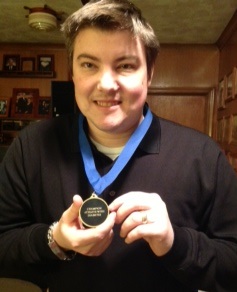
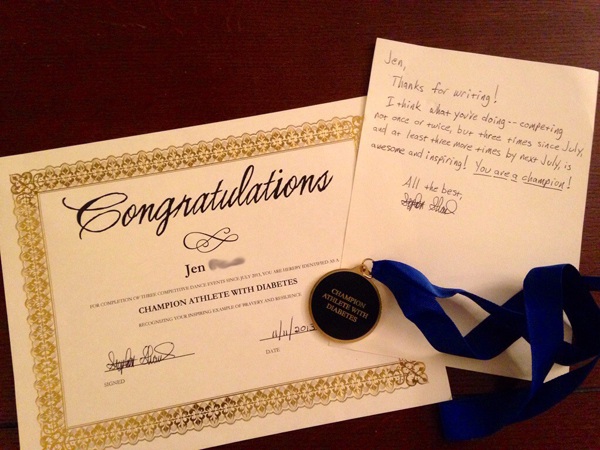
Jen

Jen lives in California, where, among other things, she writes the popular blog See Jen Dance. As you can imagine, Jen’s athletic achievement has to do with tripping the light fantastic. Not once. Not twice. But three times in dance competitions since July. And she’s planning to compete three more times before next July!

Jen writes:
“I’ve been at a few events in the last 6 months. I competed with my instructor at the International Grand Ball at the end of July in pro/am Smooth events (so waltz, tango, foxtrot, v-waltz) and I’m an avid competitor in the west coast swing community.”

By the way, she also posted a photo of her certificate and medal on her blog, and they look great. Way to go, Jen! You are a Champion!

——————————–

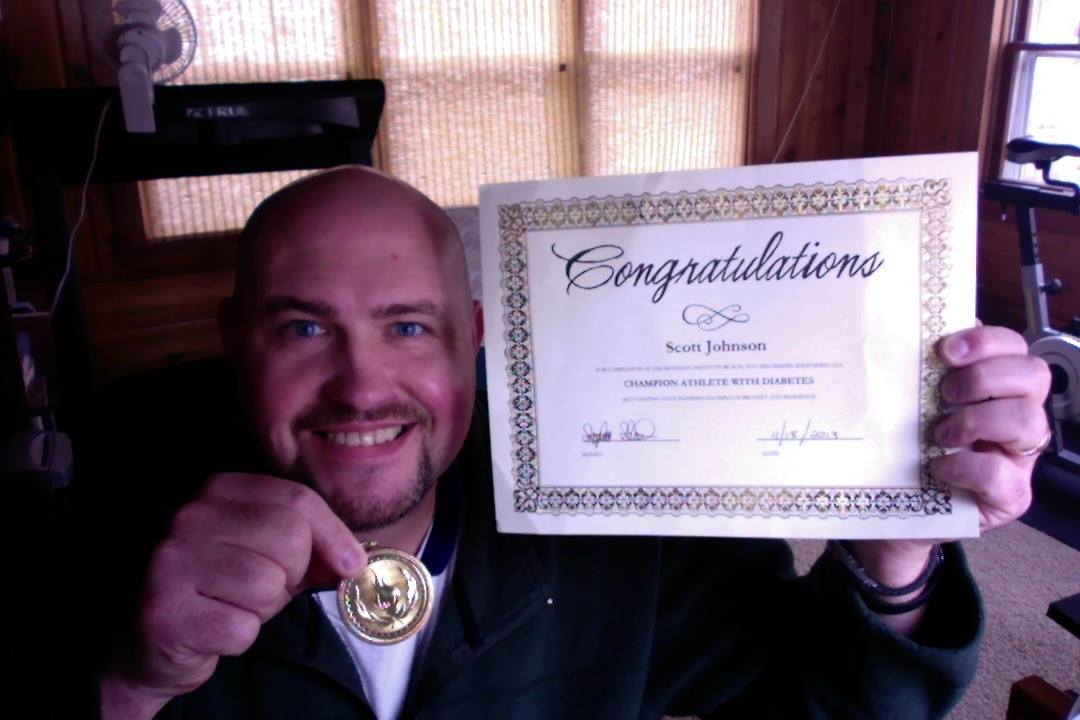
SJohnson

Everybody knows Scott Johnson. Writer of the awesome Scott’s Diabetes blog, facilitator at Children With Diabetes events around the country, co-host of DSMA Live, friend and advocate and there-aren’t-enough-exclamation-points-to-describe-how-amazing-Scott-is. I’m sure the medal we sent him pales in comparison to the Insulindependence Athletic Achievement Award he received this year (partly because of the money). But for Scott, finishing the Rothman Institute 8K run in Philadelphia back in November was a huge milestone in itself.

“I felt great while doing it, and great afterward. Great all around! I trained for 8 weeks to build my physical abilities and learn how to manage my diabetes, and all of the hard work paid off. A big thanks to Insulindependence for making the whole event happen for me.”

Congratulations Scott… Perseverance is like kryptonite to the diabetes monster.

——————————–

So… How about you? Are you next? Are you living with diabetes and getting active and showing your resilience like a champion? Is someone special in your life doing that? If so, I urge you to write in for your medal, or a medal for the important AWD in your life today. Here are the simple rules:

1. The athlete receiving the award must be living with diabetes.

2. The athletic event must have taken place in the last six months. For now, we’re going with a pretty loose interpretation of the word “event”. If you feel you’ve accomplished something important to you, that’s an event. This is all about you, not about stupid rules. ‘Nuf said.

3. Send me an e-mail at champswithdiabetes@gmail.com. Tell me your name, name of the athlete (it’s okay if it’s you), and your address (gotta know where to send the medal). Most important, tell me what athletic goal was accomplished, and when. Extra points if you tell me how you felt accomplishing the goal. Full disclosure: I reserve the right to use your testimonial here, on Twitter, and on Facebook. I will not use your name if you don’t want me to. As always, I will never share private information.

4. When you receive your medal, it would be great if you post a photo of it around the athlete’s neck. You can send a Tweet to @ChampsWithD (hashtag: #champDathletes) or post it on the Champion Athletes With Diabetes Facebook Page.

I think D-Athletes are amazing. It takes a tremendous amount of planning, effort, and bravery to compete, or maintain an exercise routine. Heck, sometimes, it’s everything we can do just to walk around the block. Getting out of your comfort zone and taking that brave step is something that should be recognized and rewarded.

Congratulations again to our first three medal winners. Keep those e-mails coming, and let’s get the medal count up even higher!


Athlete with diabetes? You deserve an award.

Welcome to November 1st, the first day of Diabetes Awareness Month, 2013. World Diabetes Day is once again scheduled for November 14th, which is a Thursday. There will be many happenings this month, which I will do my best to keep track of over the next few weeks.

You know, every year around this time, I see blog posts and Twitter conversations filled with “What are you going to do this year for Diabetes Awareness Month or World Diabetes Day?”. And to me, that question is always kind of intimidating. I mean yeah, it’s helpful to remember that one thing at a time is important, and small changes can have a big impact. But when I hear that question this time of year, I don’t hear “What are you doing?” as much as I’m hearing “What big, gargantuan thing are you doing that will wow the masses?”.

Well, I don’t know if this will wow the masses. But it’s an idea that came to me a few weeks ago, and I’m going to try it and see if it gets any traction. If it does, great. If not, no big deal.

What am I talking about? I’m glad you asked!

This slideshow requires JavaScript.

I am constantly in awe of athletes with diabetes. Not just the ones that climb Everest or run the Sahara desert. I’m also in awe of those people who get up and make a commitment to exercise, and keep going, despite how our bodies initially respond to said exercise, and in some cases, what years of insulin, and diabetes in general, does to our bodies (raising my hand here). Seriously, as an athlete prior to and after my diagnosis, I can tell you that it is waaaay more difficult to start and maintain exercise as a Person With Diabetes. It can be both scary and exhilarating all at the same time.

Yet, competing in events and going to the gym generally means you’re competing for the fun of it. No prize money, no podiums, you get the idea. Very few events give out awards or medals to anything lower than the top three finishers, if they give out anything at all. But the efforts of all of us are worthy of recognition and support. If you finish your first 5K run, if you ride your bike 50 miles, if you get up and hit the trails for a week when you haven’t gone for years, you’re a champion in my book. And I want to give you a medal.

Your effort as an Athlete With Diabetes should be recognized and rewarded.

So I had this crazy idea to see how much it would cost to have medals produced. They aren’t Olympic medals, but they turned out nicer than I thought they would. And I thought the blue ribbon was a nice touch.

Maureen and I sat around this week and came up with a few simple rules for getting your medal. You are encouraged to send a request if you are an Athlete With Diabetes, a spouse or partner of an AWD (see what I did there?), or an awesome parent of a kid Athlete With Diabetes.

1. The athlete receiving the award must be living with diabetes.

2. The athletic event must have taken place in the last six months. For now, we’re going with a pretty loose interpretation of the word “event”. If you feel you’ve accomplished something important to you, that’s an event. ‘Nuf said.

3. Send me an e-mail at champswithdiabetes@gmail.com. Tell me your name, name of the athlete (it’s okay if it’s you), and your address (gotta know where to send the medal). Most important, tell me what athletic goal was accomplished, and when. Extra points if you tell me how you felt accomplishing the goal. Full disclosure: I reserve the right to use your testimonial here, on Twitter, and on Facebook. Let me know if you don’t want me to use any names.

4. When you receive your medal, you need to post a photo of it around the athlete’s neck. You can send a Tweet to @ChampsWithD (hashtag: #champdathletes) or post it on the Champion Athletes With Diabetes Facebook Page.

Those are the only rules so far, though I reserve the right to change them as this thing develops. Not to make it more restrictive. To make it more fun.

I have all of 24 medals to send out. If this idea takes off, I’ll order more. If not, we’ll all forget about it by December.

So instead of asking what big thing you’re doing this month, I’m asking: What big athletic goal did you complete? Send me your e-mail today.