Category Archives: Advocacy

It’s Black Friday. And I need your help.

Did I say I need your help? In fact, we need your help.

For the next week, the U.S. Food and Drug Administration has a docket open, waiting for public comment from you and me and anyone else living with or affected by diabetes. What makes this docket unique is that they are actually asking us to weigh in on how we want to be included in the review of diabetes devices and drugs. Can you believe it?

From the FDA’s official docket:

The Food and Drug Administration (FDA) is announcing the establishment of a public docket for comments on FDA activities performed under the Food and Drug Administration Safety and Innovation Act (FDASIA), Patient Participation in Medical Product Discussions. This notice announces FDA’s intent to gather input from stakeholders on strategies to obtain the views of patients during the medical product development process and ways to consider patients’ perspectives during regulatory discussions.

The thing is, we only have until next Thursday, December 4th, to respond. After that, our opportunity is gone. Can you help? Will you please be an advocate and comment? It’s very easy to do, and so, so helpful.

Here’s the link to the public docket

Here’s the link to leave a comment on this docket

Needless to say, it’s absolutely necessary to let the FDA know how important the patient perspective is in the review of things we use to manage our diabetes and stay alive every day. How can you do that?

Tell your story! Personal stories are more important than statistics. Just speak from the heart and tell them what’s important to you, and why. In addition to your personal story, you might want to include these ideas too (feel free to cut and paste):


Thank you. Thanks for the FDA’s openness with the Diabetes Community in 2014. FDA opened a number of dockets for people with diabetes to comment. The docket on glucose meters and MDDS provided specific opportunities for diabetes patients to share our views on accurate glucose measurement, and how great it would be to share that information with our support systems.

– FDA engaged in two significant and well received webinars that the community referred to as #DOCasksFDA. These were unprecedented opportunities for patients to hear from FDA and use social media to talk among themselves about specific issues. These webinars were a significant opening and I feel there is an ongoing need to continue the dialog.

– FDA came out and participated at a number of events including the DiabetesMine Innovation Summit, MasterLab at Friends For Life, Keystone, ADA Scientific Sessions, AACE, DTS, and other events. These help consumers as well as physicians and researchers better interact with the agency.

– 2014 saw the creation of patient driven diabetes solutions under #WeAreNotWaiting initiatives. Notably, the NightScout CGM in the Cloud project. FDA is to be commended for their openness to talking with representatives of this ad hoc effort.

– The efforts of FDA’s consumer representative, Rebecca Killion, is an excellent example of the value a patient can bring to the regulation process. As a member of ADCOM panels, she is a champion of patient views.

– I hope that the dialogue between FDA and people with diabetes continues to grow in both content and diversity in 2015 and beyond. I hope that the #DOCasksFDA process leads to a unique and meaningful PDUFA meeting on diabetes.

Finally, I believe that

  • The patient perspective is unique, and should be included whenever the FDA reviews drugs and devices.  This is the most important part of interaction.  No one can understand diabetes the way those who live with it do.
  • Including the patient viewpoint can reduce the time spent gathering information for both reviewers and submitters.  It can help provide a fresh set of eyes on impactful changes to devices and drugs.
  • Having a patient as part of the process focuses concerns and speeds approval of meaningful improvements.  We’re able to ask questions and provide real-world experience of why something works for the patient, and why it doesn’t.
  • Under MDUFA III, the Patient Preference Initiative is critical to give FDA a meaningful look into how people with diabetes consider the benefit/risk paradigm regarding new devices under review.
  • The idea of a person with diabetes, or a parent of a child with diabetes serving as a Special Government Employee, such as Ms. Killion, is extremely beneficial.


I know I’m asking a lot, asking you to help with this right now. Think of it as a way to get one more ounce of advocacy in before Diabetes Awareness Month is over. And we need your advoacy. The best part is, you don’t have to even leave your home. If you’re reading this right now, you can make a difference right now. Let’s not only not lose this opportunity… Let’s make the most of this opportunity before it’s gone.

On behalf of myself and all People With Diabetes, Thank You.

Special thanks to Bennet Dunlap, Christel Marchand Aprigliano, and the rest of the Strip Safely team for their help with this effort.
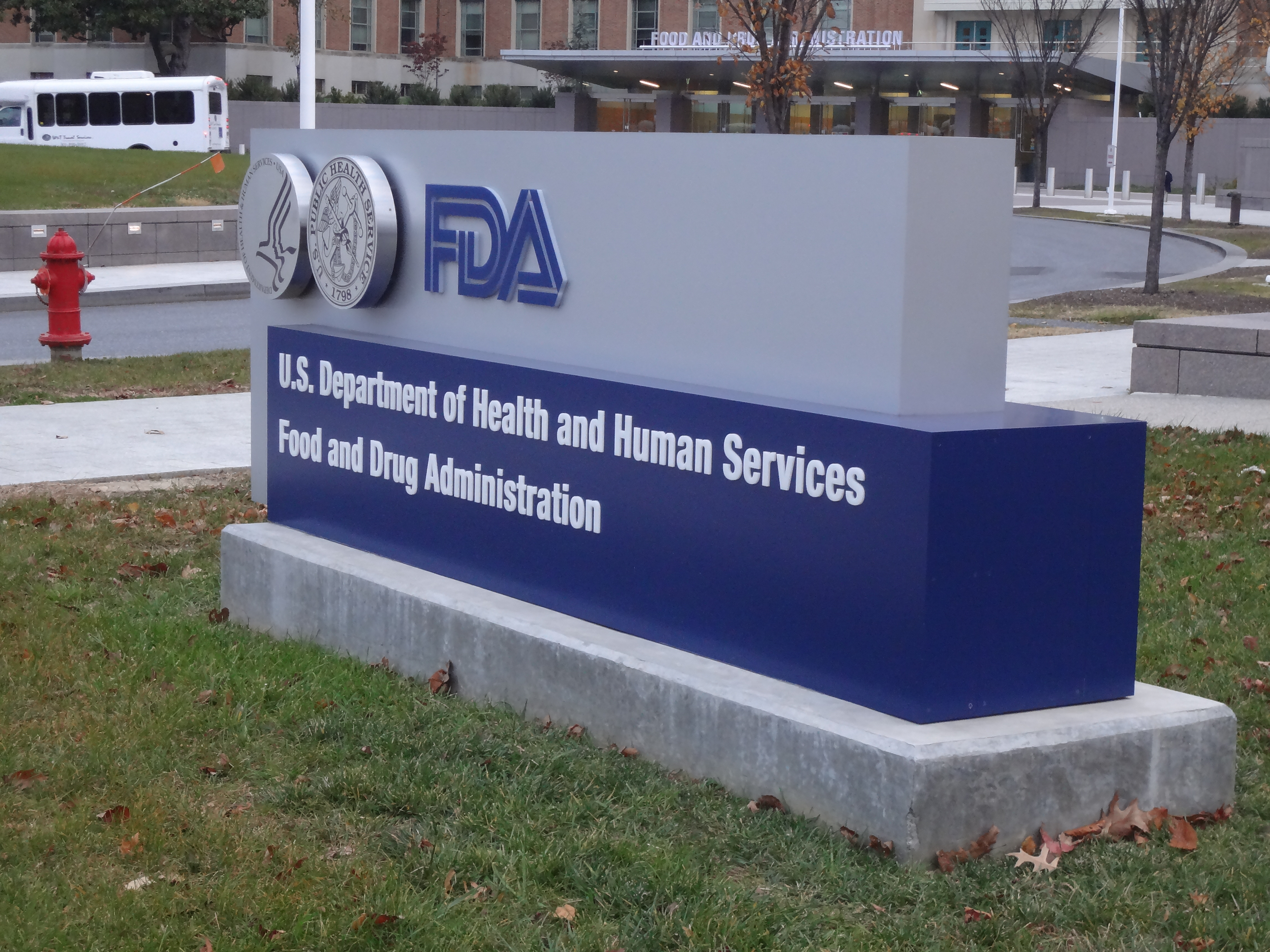


FDA Workshop– I came, I saw, I listened.

FDA

I mentioned last week that I would be attending the public workshop at the U.S. Food and Drug Administration, titled Regulatory Science Considerations for Software Used in Diabetes Management.

It was a pretty full day.

Remember, this was a day off from work. You know, that thing I do to make money so I can actually attend these things in person. I woke up earlier than I do when I actually go to work, and instead of leaving the house between 7:00 and 8:00, driving a mile and then getting on a train, I left at 6:00 and drove to FDA headquarters in Silver Spring, Maryland, over an hour away through almost rush hour traffic.

The proceedings started at 8 a.m., and the day started with presentations related to something that I’ve really taken notice of this year: Interoperability.

When I go to meetings and workshops where a lot of presentations are made, I try to go over each person’s message and convey that to you here. This time, I’m not going to do that. Instead, I will refer you to the webcast replay that’s available over at the FDA’s website, where you can get video, audio, and presentation slides. I will, however, share a little of what I experienced on that day.

I always learn a lot when interoperability is discussed. It’s such an interesting subject to me, and it’s an idea that’s long overdue in the diabetes world. I didn’t expect to get much out of the bolus calculator presentations, but I was wrong about that. The talks were very good, and the panel discussion at the end was great to see.

The presentations were all informative and interesting. Particularly, those from Howard Look of Tidepool, who made an excellent presentation, making the case for interoperability based on the simple fact that we need to reduce the burden of diabetes on the patient, and interoperability would most definitely be a step in the right direction. Dr. Joe Cafazzo talked about the research his team is doing in Toronto, working to understand and map out a strategy for a standard of device data interoperability. As someone in the Q & A session mentioned (a corporate representative in the room), think about when you purchase a lamp and it has the UL symbol, or think about how HTML is the standard code throughout the internet. If we can arrive at a standard for diabetes devices, it might make it easier for a company to deliver trusted product to consumers (us), and then market it by saying it meets the standard.

Adam Brown of diaTribe was fantastic speaking about insulin bolus calculators, how they work, and what the impacts of bolus calculators are to people living with diabetes, backing everything up with lots and lots of supporting data (the FDA really likes that). Dr. Howard Wolpert from Joslin Diabetes Center and Jane Seley of New York Presbyterian Hospital gave fact-based talks that confirmed the anecdotal stories they shared about dealing with diabetes patients on the front lines over the course of many years of service.

The panel discussion surrounding bolus calculators was interesting. Most of the discussion had to do with the many bolus calculator apps that are out on the market now. While a calculator within my insulin pump must be approved by the FDA, apps that perform the same function do not right now. The moderator of the panel was convinced that these bolus calculators should be regulated. Adam Brown and Howard Wolpert made a convincing case (in my eyes, anyway) that, in Adam’s words, “a patient using a bad bolus calculator is still better off than a patient just winging it”.

At the end, Dr. Courtney Lias (look her up) shared a few things with us. She appreciated everyone’s viewpoints, and indicated that the FDA intends to continue the discussion. Not sure how yet, but they are willing to commit to having more discussions in the future on these subjects. What is not on the table: Restricting bolus calculators. The important thing, she said, is that the FDA get the right touch between innovation, patient safety, and the idea of benefit vs. risk for people living with diabetes. She reminded us that the patient is key… safe, effective tools to manage diabetes is everyone’s goal… and one person’s diabetes is not like another’s, so not every solution will meet the needs of every PWD.

In addition to all this, I got to sit down at lunch with a person working on the Nightscout project, and with another industry representative. It was great getting a chance to share my story with them firsthand (though I’m not using Nightscout—or a CGM right now).

And during the public comment portion of the proceedings, I was allowed to speak…

Photo of my best side courtesy of Bennet Dunlap

Photo of my best side courtesy of Bennet Dunlap

I’m usually a good public speaker. I enjoy getting up in front of people and talking. This, however was not my best performance, though I think I got my message across. It was basically the same thing I published here earlier. You’ll probably be better off if you go to that and read it to yourself, rather than listening to my ramblings.

Anyway, there were a couple of people left to speak after I was finished, and while I sat there listening to them, something strange happened. I was almost overcome with a wave of emotion. I started to ask myself “What did I just do?” and “Four years ago I wasn’t involved in anything outside of my own neighborhood… How did I get here?”.

I think it was just a feeling that I had something to say, and I said it, and damn anyone who might try to belittle it. Including you, industry representative on the aisle who gave me that sour look as I walked back to my chair. I understand that companies want to advocate for what’s in their best interests. Well, that’s what I was doing too. Advocating for what is best for me as a patient. I understand and respect their concerns, but when they clash with what I need and deserve as a patient, I’m going to advocate for me and not be sheepish about it.

In the final assessment, I can say it was a day in which I was able to learn a lot, meet new people, and share my needs with the federal agency that plays such a big role in our lives. All of that made it well worth losing a little sleep and schlepping to D.C. in the dark. The timing (November 13) made it feel like an early World Diabetes Day gift.


Happy World Diabetes Day, Advocates. I’m looking at you.

So here we are. World Diabetes Day, 2014. And everyone’s burned out.

Sorry to throw cold water on a day when we should all be showing our true diabetes selves to the world. But hey, the burned-out part is part of our diabetes selves, isn’t it?

It is. There are also soooo-oo-ooooo many initiatives out there right now that even energetic-little-old-me is feeling overwhelmed. And that’s what I want to talk about.

Because I think there’s a difference between feeling burned out and feeling overwhelmed. Burned out is “I’ve done all these things and I’m so tired and I just can’t muster the energy for one more task”. Plus “I’m tired of doing all these things and seeing no outward result”. Completely understandable, and believe me, I’ve been there.

On the other hand, overwhelmed, to me, is “Big Blue Test”, and “Dexcom Share has been approved”, “#Vote4DM”, and “#MedicareCGM”, “Blue Circles” and “Diabetes Awareness Month” and “National Diabetes Awareness Month” and “National Diabetes Month” and “Where do I start?”. Again, I totally get it. It’s hard to keep up with everything and give 100 percent effort to all the things.

It’s even possible to feel burned out and overwhelmed at the same time. Plus, the magnitude of this month in addition to the big things people are doing has a certain way of making the rest of us (and what we’re doing) feel kind of small by comparison.
 
 
So let’s take a deep breath. Find some perspective.

Let’s acknowledge a few diabetes truths here:

– If you’re living with diabetes, or helping someone who lives with diabetes, You Are An Advocate. That’s true if you’re in your first year or your fiftieth. Or sixtieth. Or… you get the idea. Pat yourself on the back every day. You deserve it.

– If you’re telling your story by writing a blog, shooting a video, tweeting your #WalkWithD, participating in the 24 hour #WDDChat2014 today, or engaging with your diabetes brothers and sisters via Facebook, Instagram, Tumblr, or any other social media outlet, You Are An Advocate.

– If you’ve mentored another person living with or affected by diabetes, either online or offline, whether anyone was looking or not, guess what? You Are An Advocate. Extra points if you picked someone up who was feeling defeated by this disease.

– If you’ve ever set the record straight for someone who didn’t know better, dispelling myths and taking back your dignity, whether anyone was looking or not, guess what? You Too Are An Advocate.

If you’re living with diabetes and pursuing your athletic goals through adversity and despite the extra toll it takes on your psyche and your blood sugar, You Are An Advocate.

– If you’re a woman who has lived through both diabetes and pregnancy, You Are Most Definitely An Advocate. And Congratulations Jen and Kelley and Elizabeth.

– If you’re a Mom or a Dad who is raising a child at the same time you’re managing your diabetes, or you’re a Mom or Dad raising a child living with diabetes, gosh, I have such admiration for you, and by the way, You Are An Advocate.
 
 
There are many ways we show our advocacy, and it doesn’t always have something to do with the latest D-cause. Often, it has to do with the examples we set by living our lives with diabetes, rather than having our lives ruled by diabetes. There are no levels of deserving. You are just as worthy of my respect and admiration as anyone ever cursed by this chronic condition.

So while you rest up from your diabetes burnout and your diabetes-advocacy-event overload, remember to acknowledge the amazing ways you’re already making a difference. Write a list of your advocacy accomplishments. Look at it whenever you need a boost. If you want, you can leave a comment listing them here, either with your name or anonymously. I’ll bet when you do, you’ll find a lot to be proud of. Know that I and many others are proud of you. And grateful.

Thank You.

And please remember: I support you… no conditions.


Interoperability Awareness.

I’ve been living with Type 1 Diabetes for 23 years.

Like everyone else who was diagnosed with Type 1 around the time I was (1991), there were just a few options. Those options included, thankfully by then, glucose meters that gave us a reading from a drop of blood we provided. We used the data from those meters as a base for our dietary decisions and our insulin dosing. Also, as a basis for the imagined success or failure of our diabetes management.

Today, with little exception, we’re using the same system. The tools are better, probably more accurate, but we’re using the same system. Whether we’re using a continuous glucose monitor, an insulin pump, a Low Glucose Suspend system, or something else, we’re still using the same drop of blood to guide our decision-making process and the decision-making process of the systems we use.

And that’s okay, except it’s not, because we still can’t get what that drop of blood, or that CGM, or that insulin pump, or that LGS system is doing to work all on the same platform, informing the same data sources. That holds us up from sharing our data with our families (I’m familiar with Nightscout—I’m talking about all of our data). It keeps me from informing healthcare professionals on a real-time basis, at regular appointment times and if, God forbid, I wind up in the emergency room unable to speak for myself. It keeps researchers from being able to use my data to inform and support their discoveries. It keeps the diabetes devices that I wear from working efficiently, keeping me from achieving better outcomes with less effort. I’m talking big picture here: Not just “Can my CGM talk to my pump?”. I mean “Can my meter readings and CGM graphs and pump settings and prescription dosage and anything else health-related reside in one space?”.

Let’s face it: We’re now talking about cars that can drive themselves and using drones to deliver packages to our homes. Meanwhile, our diabetes devices are still dependent on years-old technology that is mostly confined within the length, breadth, and depth of the device itself.

If my data is all available via one source, where I control who can see it, but once I make it available, it’s easily accessible? That’s the jackpot in this discussion. And guess what? If that ever happens, I’m still going to want an insulin pump. I’m still going to want a CGM. I’m not going away as a customer.

To talk about the proprietary nature of software that a company has developed just doesn’t hold water anymore. The software that comes with your device doesn’t have a separate line item on the invoice. It’s baked into the price. Protecting “intellectual property rights”, in this case, is a 20th Century complaint for a 21st Century world. And it’s an 18th Century argument when it comes to what is best for the patient. I’ve said it before, and I mean it: Patient trumps Proprietary.

People With Diabetes need and are deserving of 21st Century technology that will not only help us reach better outcomes, but will help everyone who helps us reach better outcomes. Please join me in speaking out for greater awareness, and improved access to our data.
 
 
Tomorrow I’ll be attending the U.S. Food and Drug Administration’s Public Workshop – Regulatory Science Considerations for Software Used in Diabetes Management.

This is the message I’m taking with me.


Why Diabetes Awareness Month Matters.

Saturday, November 1st marks the beginning of Diabetes Awareness Month 2014.

I saw this video the other day, and part of it keeps coming back to me. It was when Kim Vlasnik said “My disease is not a punch line”. I’ve seen the video a few times now, and every time I hear that part I shift uncomfortably in my chair, thinking of a couple of moments in my recent past. I had shoved these memories deep inside, I thought, to the point where I didn’t think I’d be reminded of them (I’m good at sweeping these kind of things under the rug and moving on with my life). But watching that part of the video brought them to the surface again, and I’m having trouble shaking them.

One was during my workday, while I was walking outside, on my way to have lunch by the harbor. The other happened on the subway, on my way home. In both cases, a sudden low hit me hard. I wound up on the ground on Baltimore’s beautiful harbor promenade, and on the disgustingly dirty floor of a subway car, struggling to maintain consciousness, mere moments from potentially losing my life.

In both cases, no one helped or asked if I needed help. No one called 911. However, in both cases, at least two people got out their phones and started shooting video of the entire episode. People with good jobs, good clothes, and disposable income stopped what they were doing in order to commit my trauma to digital media before it was over. My medical emergency became fodder for their Facebook post or their Tweet or their ha-ha YouTube video.

In my country, about ten times more people will be diagnosed with diabetes this year than will be diagnosed with breast cancer. In October, countless media outlets help promote marathons designed to help raise money for an organization that has, according to some reports (like this one), contributed as little as 15 percent of of its donations on research awards that fund studies on everything from hard-core molecular biology to the quality of breast-cancer care for Medicaid patients. In October, the White House was lit up in pink. In October, the National Football League sells pink accessories and pink jerseys and pink who-knows-what-else and donates a portion of sales to breast cancer research. The same thing happens in May as Major League Baseball tries to get in on the action.
 
 
Meanwhile, people are using the near-death experiences of people living with diabetes as social media entertainment. I wonder how much this might change if diabetes received even one tenth of the awareness of breast cancer.
 
 
Awareness.
 
 
This is only one reason why we need Diabetes Awareness Month.
 
 
This is only one reason why we—why I—need the Diabetes Online Community.
 
 
Ignorance does not look good in pink, or blue, or any other color.
 
 
If you can’t do it for any other reason: As you take the Big Blue Test, form a human Blue Circle, or even think about performing some other measure of outreach or advocacy this November, please remember the importance of awareness.
 
 
I know I’ll get over these brief moments in my life.
But don’t allow anyone else to experience anything like this ever again.
 
 
Awareness.
 
 
This is only one reason why we need Diabetes Awareness Month.