Author Archives: StephenS

Hello… I’m Stephen. I live in Baltimore, Maryland, USA with The Great Spousal Unit, Maureen. I’ve been living with Type 1 Diabetes since January 1991. I’ve been a pump user since April 2010, and I’m currently wearing the Animas Vibe pump. Also wearing the Dexcom G5 continuous glucose monitor.

I found the Diabetes Online Community in the summer/fall of 2011, and that discovery has changed my life. I started this blog in April 2012, and since then, my diabetes advocacy has continued to grow. Among other achievements, I’ve attended and spoken up at FDA workshops and participated in clinical trials.

I’ve been thrilled to serve as a facilitator for the Diabetes UnConference. And I’ve been honored to volunteer for Diabetes Patient Advocacy Coalition. You should Google both of those.

I’m currently serving as a member of the State of Maryland’s Advisory Council on Health and Wellness, where I am co-chair of the Diabetes committee. In addition, I’m part of the 2018 Reader Panel at Diabetes Forecast magazine.

I’m always searching for the perfect balance between the highs and lows of my blood glucose level and my life… always searching for the Happy Medium.

Anything you’d like to share? Please let me know… I’d love to hear from you.

Reminders, reminders. And more reminders.

Here are a few reminders of things happening right now where you can make a difference:
 
 
Tweet your elected officials! Tell them to #Vote4DM!

VOTE4DIABETESM

Maybe you were getting ready for last week’s DSMA Twitter chat and you started noticing all of the tweets going out from the Diabetes Community to House members and Senators here in the USA. Do you know where that started? It started at Strip Safely, who started the campaign and even provided this nifty web page that made it super easy for people to Tweet their elected officials about coordinating the federal response to diabetes, covering CGMs for senior citizens on Medicare, and permitting Certified Diabetes Educators to provide already approved education benefits to their patients.

Guess what? There will be a brand new Tweet-In again tonight (October 29) beginning at 8:00 p.m. eastern time. Once again the Diabetes Community will be showing strength in numbers by massively tweeting the lawmakers we elected and letting them know how important it is (less than a week before election day) to make diabetes an integral part of the legislative landscape. And soon.

It will take less than five minutes for you to be an advocate.

At 8:00 eastern time tonight (US)– You can help by going to this page, finding your congressperson and senators, and clicking on the specific links listed to either encourage the people (that we elected) to take up the cause, or to thank them for already doing so.

————————————————————————————–

Five days until #DOCAsksFDA

I’m very much looking forward to the conversation (via webcast) that will be taking place on Monday, November 3 beginning at 1:00 p.m. eastern time (US). This is a chance for you to learn more about the U.S. Food and Drug Administration, how and why they review devices and drugs, and how we, as a community, can work with the FDA toward better outcomes in all areas.

To RSVP for the webcast, go to this Diatribe link or this FDA link, get all the information, and register. Once you’ve done that, you’ll get a look at the agenda and a link to join the webcast on Monday. I hope you’ll be there!

————————————————————————————–

Don’t forget about the Big Blue Test

Hashtag-Big-Blue-Test

The Big Blue Test is going strong. As of this writing, there were over 1600 Big Blue Tests recorded so far. But that’s a far cry from the goal of 35,000 set for this year’s event.

Don’t forget… Now until November 19, every Big Blue Test that is logged will result in a $1.00 (US) donation to non-profit diabetes groups that are working tirelessly to provide education, support, and supplies to people who need them. My guess is maybe you’ve forgotten to log all of your activity. Well what are you waiting for?

Here’s how it works:

1. Test your blood glucose. If you do not have diabetes, you can skip this step.

2. Get active. For 14 to 20 minutes, get up and get moving. You can , walk, run, clean the house, swim, tap dance…whatever!

3. Test again. On average, Big Blue Testers seen their blood glucose level drop 20% after 14-20 minutes of exercise.

4. Share your results. Answer the questions in the right column of the page at bigbluetest.org. And don’t forget to talk about your experience on social media using the hashtag #bigbluetest.


So there you have it. Three great ways to learn, stay active, and hold congressional feet to the fire for People With Diabetes. It’s not always about big projects with huge budgets and lots of manpower. Sometimes it’s as simple as saying, “Yeah, I can do that” and making a small effort.

And while I’m at it, let me say: Thank You for your advocacy. Your efforts continue to make a difference.


What hapens to your blood sugar when you give blood?

Note: This is only my experience while donating blood. Your experience, like your diabetes, may vary.

I got up early the Saturday before last, had breakfast, and made my way to the American Red Cross Mt. Hope Donor Center in Baltimore. I had intended to write about the blood donation process; being transparent about what transpires is a good thing.

But… sometimes, your blood sugar numbers just get in the way of your best-laid plans.

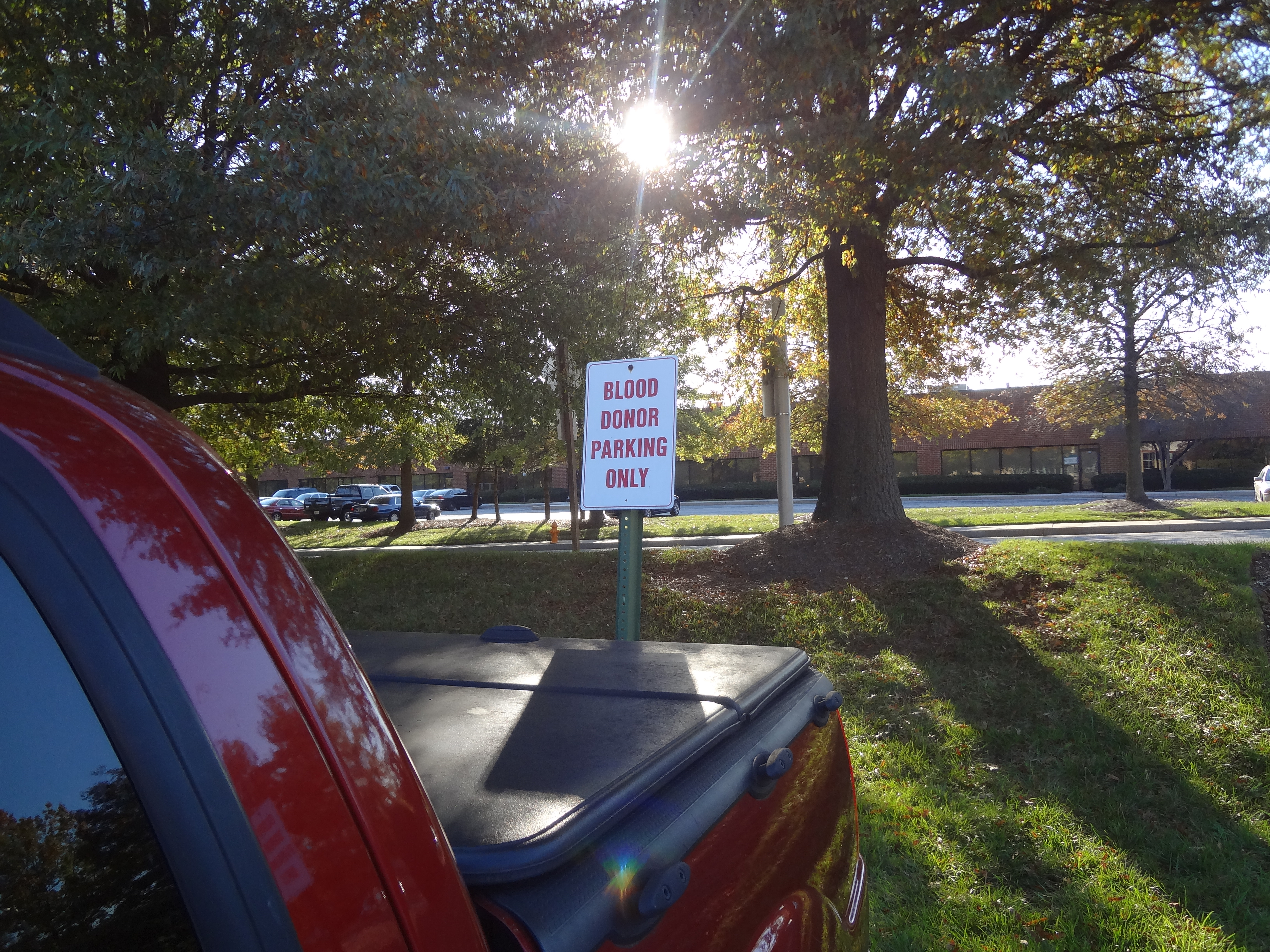
Donor-Parking

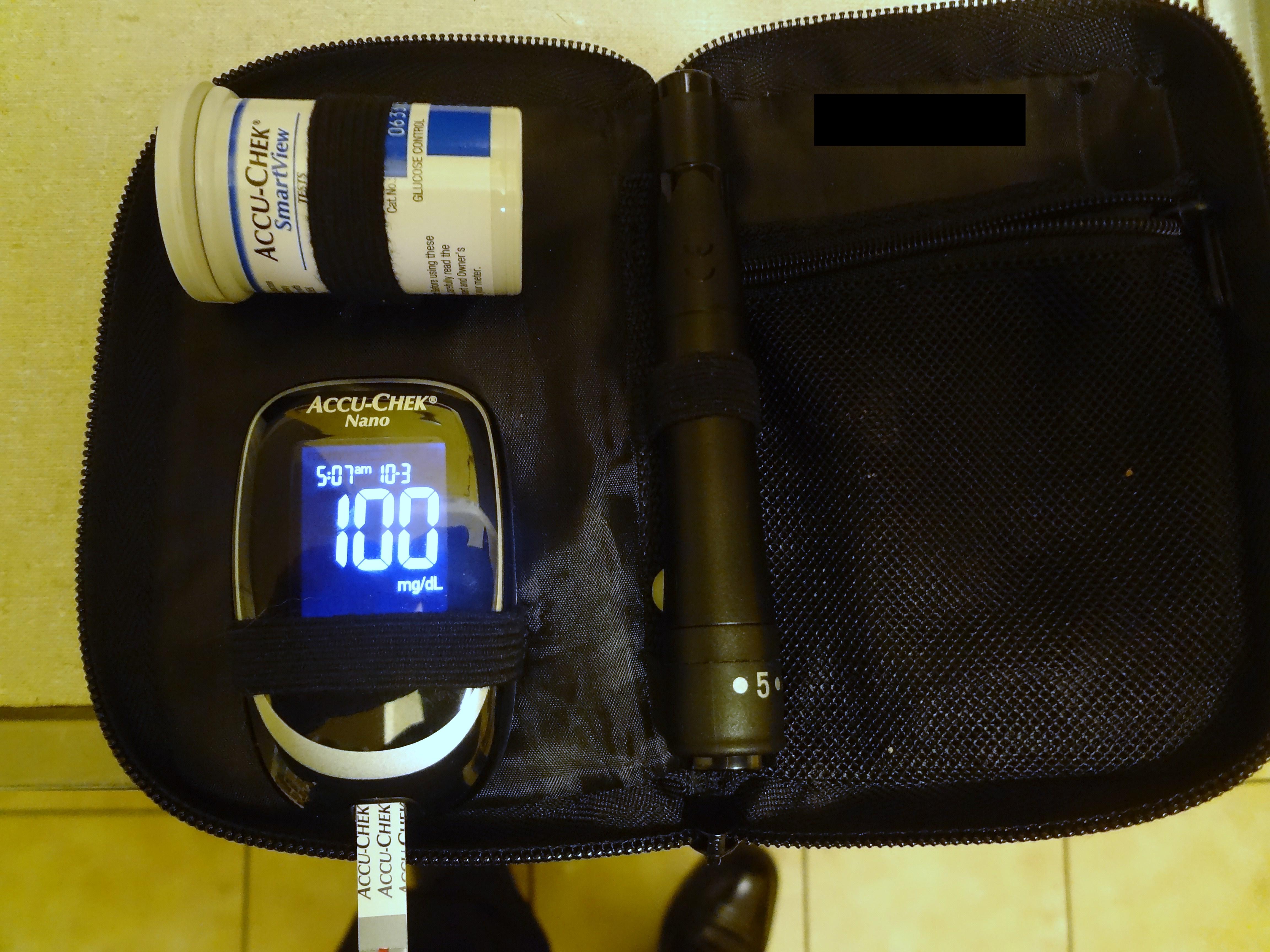
I arrived at the center about ten minutes early Saturday. I figure, early in, early out. Prior to going in, I checked my BG and it was 156 mg/dL (8.6 mmol/L). I did carry my meter in with me, which you should do too if you decide to donate blood.

Red-Cross

I was not concerned about this number, but I knew my BG would probably come down during the donation process, so as I entered the center I suspended my pump. What if I wound up high later? I didn’t care. In this case, better to be high than to go too low during the donation process.

I went through the initial reading of information, being tested for anemia, and answering questions to make sure I didn’t have any conditions and that I’m not taking any medications that would preclude me from giving blood. Then it was on to the donation.

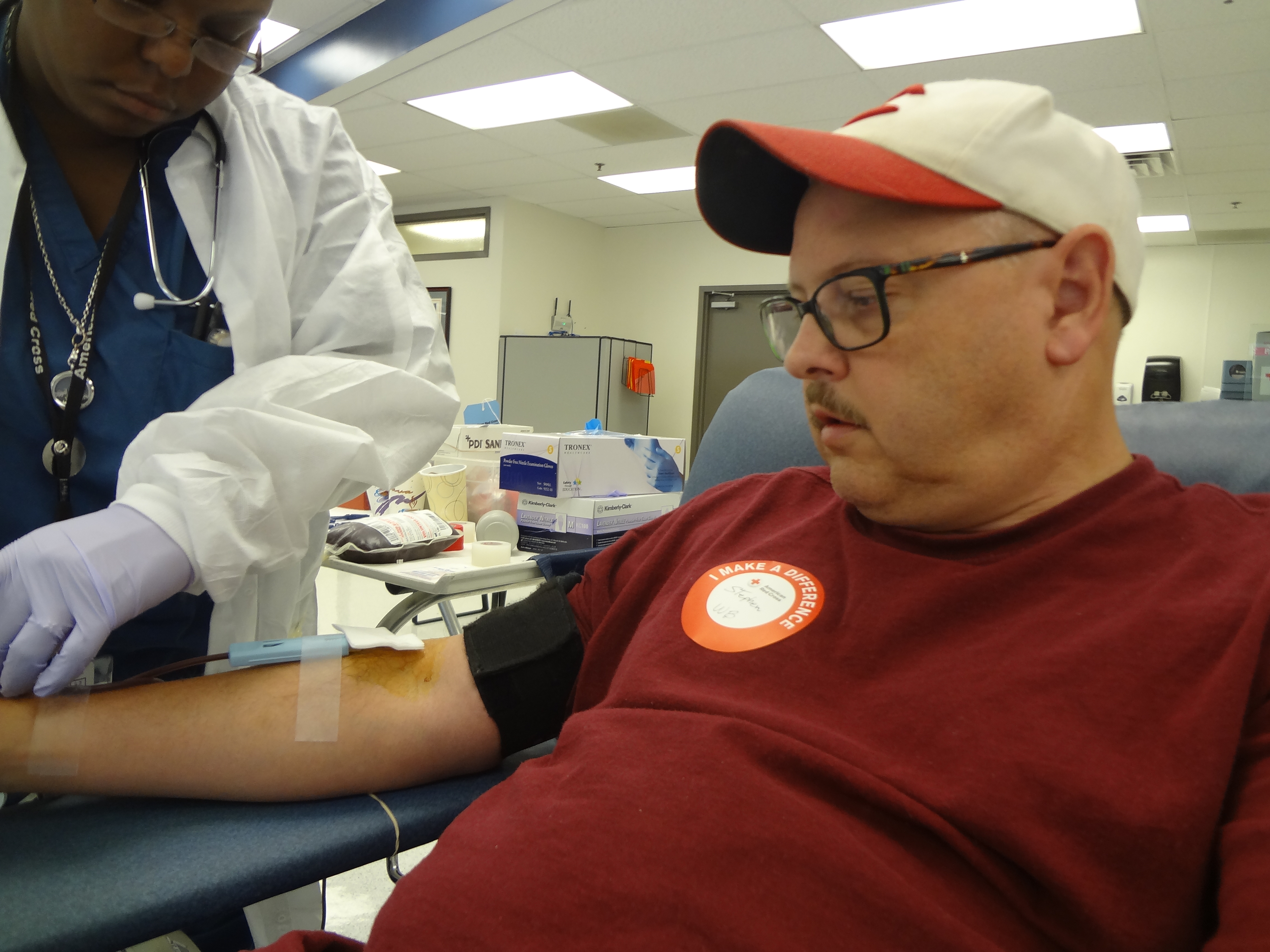
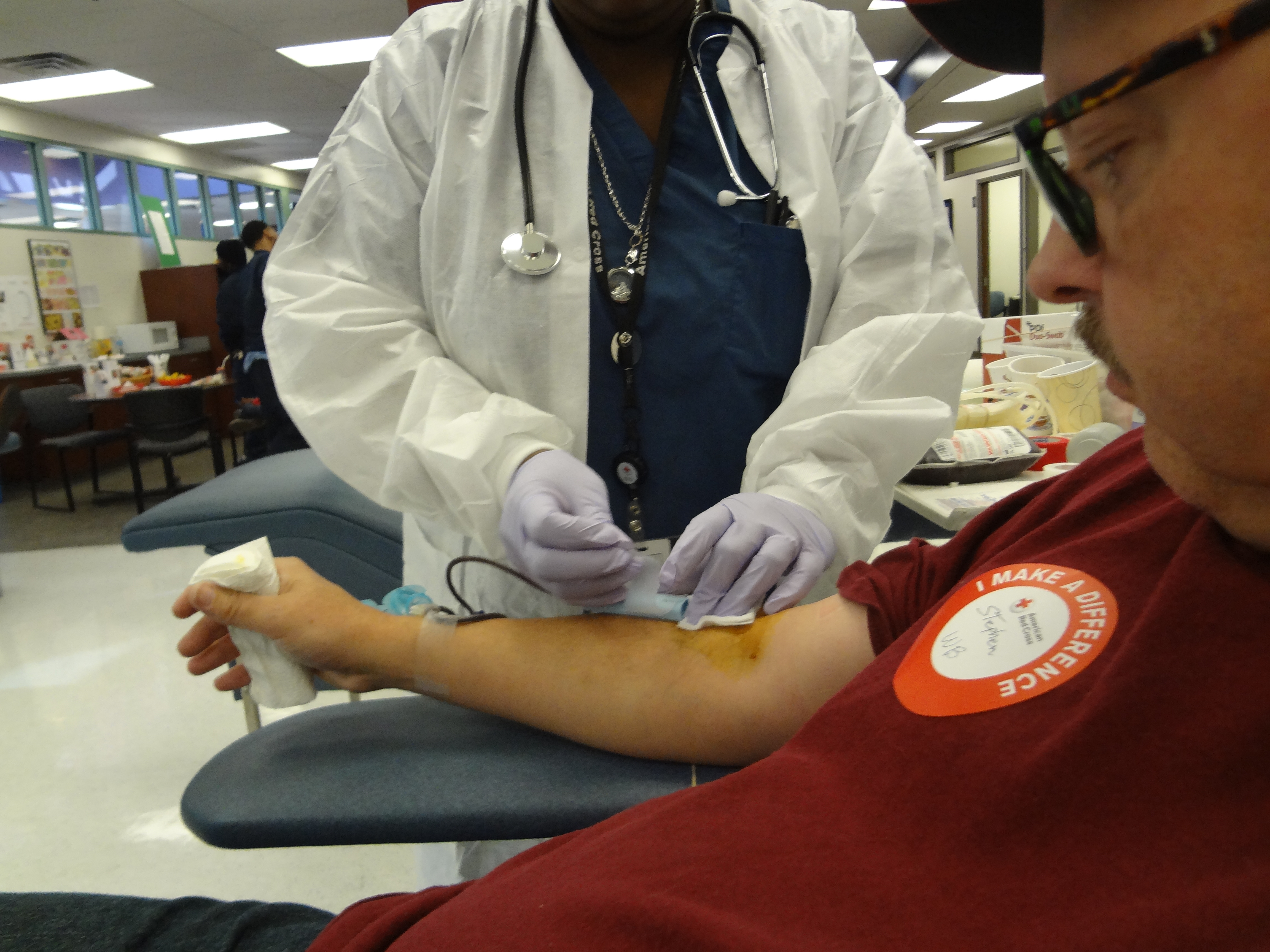
I went through the donation process (see photos), and during this entire time I thought I was okay, but in fact, I was dropping. When the donation process was complete, we’re encouraged to take a moment and have a snack and a little juice, so our blood sugar can recover from the process. I was sure that since my pump had been suspended for about an hour after my BG was 156, I wouldn’t have a problem with that.

DSC01823

DSC01827

I sat down, and the first thing I did was pull my meter out of my pocket and check. Which, if you decide to donate blood, you should do too. What was the result? 50 mg/dL (2.8 mmol/L).

Wow. I had a little juice and a bag of pretzels. Twenty minutes go by, and I’m sure I must be higher. Don’t forget, I haven’t restarted my pump yet. My next check revealed: 59 mg/dL (3.2 mmol/L).

What? I was sure I was going to be okay after this, so I made the huge mistake of driving home. In retrospect, I feel horrible about driving at that point, but I should be honest, and that’s what I did. I drove home. It was about a ten minute drive, and I checked again once I got there: 56 mg/dL (3.1 mmol/L).

I’m now at the “I can’t believe this” stage. I downed a glass of juice and had a slice of bread with peanut butter. I waited another twenty-five minutes to check this time. Finally… at 11:20… 169 mg/dL (9.4 mmol/L). After nearly two hours, I finally started up my pump again.

I guess I always knew that my blood sugar could be affected by donating blood. But this experience was something I did not count on. So next time (and there will be a next time), I’ll be more prepared than ever.

There is currently a desparate need for whole blood and blood platelets for patients of all kinds. If you’re living with diabetes in the USA, you may still be able to donate blood– and save a life. Find all the info at redcrossblood.org, or send me an e-mail using the link in the upper-left corner of this page and I’ll tell you what I know.


October DSMA Blog Carnival: What’s easy about living with your type?

The October DSMA Blog Carnival topic is easy to answer, but as you can probably guess, the premise of the question goes a lot deeper:
 
 
Type 1, Type 2, LADA, Gestational, diabetes brought on by surgery . . . . the list of types of diabetes goes on. Each type may have differences, but ultimately they are all diabetes. When we think about it, there is a whole lot that all types have in common. However, that doesn’t mean we can’t give credit for some differences too. So let’s look back to our “Breaking down the barriers between types” chat on September 10th and discuss . . . . .

Anything easy about living with your type of diabetes that isn’t easy for another type?
 
 
I remember this question (I moderated this chat, and I still have my notes). The idea behind asking the question was that I wanted to ask people to acknowledge that there may be something that helps them manage their diabetes, that maybe another Person With Diabetes doesn’t have at their disposal.

The easy answer for this Type 1 is that I can take insulin for anything I may eat, at any time of day. That flexibility is something the vast majority of Type 2s, especially, do not have. I’m not going to get into whether Type 1 is easier than Type 2, or easier than any other type of diabetes. The fact is, all diabetes requires a lot of work. But if I acknowledge that some part of diabetes may be slightly easier for my type, I’m recognizing that that’s a part of diabetes that is more difficult for another type. In making this admission, I’m saying to my fellow Type 2s, LADAs, Gestationals, etc… I wish you had it as easy as me.

As I recall, there were one or two Type 2s who mentioned how taking insulin was something that seemed more difficult to them compared to how they manage their day-to-day life with diabetes. Isn’t it interesting how we can think about the same things in different ways?

I also remember asking this question from an educational perspective. I’m intensely curious about nearly everything, and I wanted to see how other people viewed their diabetes versus another type. I wondered how they might consider having to manage their diabetes a different way. Most of the Type 1s participating in the chat that evening answered the same as I did. I found it fascinating that people considered insulin an easy thing for them, even though it meant taking injections or having an insulin pump attached to them 24 hours per day. It’s all in how you look at it, I guess.

In the final analysis, when the word “diabetes” is part of your diagnosis, it doesn’t matter what word (or words) preclude it. You’re dealing with something serious and challenging on a daily basis. The best part was the outpouring of support and understanding for all types during the chat that night. It goes without saying, but I’ll say it anyway: A diabetes diagnosis automatically makes you eligible for as much encouragement and support as the Diabetes Community can muster. As a community, we are stronger and capable of much more when we welcome and support all people, of all types, living with diabetes.
 
 
This post is my October entry in the DSMA Blog Carnival. If you’d like to participate too, you can get all of the information at http://diabetescaf.org/2014/10/october-dsma-blog-carnival-4


8 Questions: Can you guess the answer?

Ready for a guessing game? Let’s see if you can find the answer in 8 questions (or less):
 
 
1. Dexcom users: What is neither red nor yellow?
 
 
2. What can make you smile?
 
 
3. Goldilocks would love this.
 
 
4. For many of us, this eliminates half of the bolus equation.
 
 
5. In some parts of the world, this is worth one dollar. #hundy
 
 
6. According to Joslin Diabetes Center, “People who do not have diabetes typically have fasting plasma blood glucose levels that run under” this.
 
 
7. The square root of this many Maniacs:


8. For this Type 1 patient, it’s the Happy Medium!
 
 
Answer:
DSC00251


It’s Big Blue Test Time!

Big-Blue-Test
 
 
Today marks the start of one of my favorite parts of the year. It’s Big Blue Test time!

For the next month, every Big Blue Test that is logged will result in a $1.00 (US) donation to non-profit diabetes groups that are working tirelessly to provide education, support, and supplies to people who need them.

Here’s how it works:

1. Test your blood glucose. If you do not have diabetes, you can skip this step.

2. Get active. For 14 to 20 minutes, get up and get moving. You can , walk, run, clean the house, swim, tap dance…whatever!

3. Test again. On average, Big Blue Testers seen their blood glucose level drop 20% after 14-20 minutes of exercise.

4. Share your results. (Answer the questions in the right column of the page at bigbluetest.org). And don’t forget to talk about your experience on social media.

Hashtag-Big-Blue-Test

Tell everyone you know, whether they’re living with diabetes or not. Log those moments of activity throughout your day.
Share this with everyone you know (use the hashtag #bigbluetest).

Have you been looking for a way to help move the needle toward better outcomes for People With Diabetes, but you’re not sure how? This is how.

I’ve already logged my first one! I took the long way walking from the train station to work, and my BG dropped 53 points. I’m going to try to do this every working day (twice per day, of course) for the next month. I’ll bet there’s something similar you can do where you live and work.

Sometimes, diabetes advocacy is both fun and easy. Go to bigbluetest.org to find out more.