Author Archives: StephenS

Hello… I’m Stephen. I live in Baltimore, Maryland, USA with The Great Spousal Unit, Maureen. I’ve been living with Type 1 Diabetes since January 1991. I’ve been a pump user since April 2010, and I’m currently wearing the Animas Vibe pump. Also wearing the Dexcom G5 continuous glucose monitor.

I found the Diabetes Online Community in the summer/fall of 2011, and that discovery has changed my life. I started this blog in April 2012, and since then, my diabetes advocacy has continued to grow. Among other achievements, I’ve attended and spoken up at FDA workshops and participated in clinical trials.

I’ve been thrilled to serve as a facilitator for the Diabetes UnConference. And I’ve been honored to volunteer for Diabetes Patient Advocacy Coalition. You should Google both of those.

I’m currently serving as a member of the State of Maryland’s Advisory Council on Health and Wellness, where I am co-chair of the Diabetes committee. In addition, I’m part of the 2018 Reader Panel at Diabetes Forecast magazine.

I’m always searching for the perfect balance between the highs and lows of my blood glucose level and my life… always searching for the Happy Medium.

Anything you’d like to share? Please let me know… I’d love to hear from you.

It’s not that simple

I watched the beginning of a show on my local public television station last weekend. Staged as kind of a talk show, it was really about the people in the show trying to make themselves look smart and caring by telling us how bad sugar is.

That was really all I saw, and all I heard. Sugar is bad… that was the message.

The problem with that statement, or that sentiment anyway, is that sugar, by itself, is not bad. Sure, Americans eat too much sugar. It’s not the healthiest thing in the world. But it’s also not the source of everything wrong with our society.

And saying that sugar is bad has the added effect of making some people feel bad for eating any sugar at all. It’s a by-product, if you will, of demonizing an ingredient for the sake of trying to make yourself look smart.

But people aren’t bad for eating sugar. Heck, people aren’t bad for eating too much sugar. Let’s stop demonizing people too, okay? Things just aren’t that simple.

Eating well, eating healthy, is something all of us would like to do. We’re not trying to go out and eat crap every day. Some of us eat healthy and still gain weight. I’ve been told that most of my weight gain over the years can be attributed to the fact that insulin analogs, while good for people who need them to live, cannot be completely metabolized. So I’ve kept some of it behind in the form of fat. Yay.

My point, however, is that all of us have reasons for why we do, or don’t, have perfect bodies. And it rarely has anything to do with sugar.

Stress. Lack of access to good ingredients. Knowledge of how to create a healthy meal. We had a bad day at work. These reasons and others are all why we may not eat well on a given day, a given week, or a given year. What do any of those things have to do with sugar, or with the kind of people we are?

It’s just not as easy as blaming an ingredient or blaming a person. Instead of finding something or someone to blame, maybe we should be searching for innovative solutions so that ingredients are improved, and choices in eating them, and the people eating them, are more informed and less infused with guilt.

That’s something that I think we can all be proud of and happy to live with.
Video: Tell your story wherever you can

I thought I would share this little nugget today… it’s a story from TRT World, which, according to Wikipedia, is “… a Turkish international news channel broadcast 24-hours per day in English.”

It’s more about affordable access to insulin here in the USA, and though I’m only featured briefly (this is what they aired from almost two hours with me), and though it’s on a channel that few have in the cable lineup, I was happy to tell my story and tell my truth on this subject again.
The video also features Christel Marchand Aprigliano in an uncredited role(?).


That’s what you have to do. If you’re passionate about something, tell your story wherever someone will listen. You never know who it will touch, and you never know what good it might do someday.

Have a great weekend, and keep on advocating!

DPAC Champions Ride Again

Last week was a capital week on Capitol Hill. Advocates joined again with Diabetes Patient Advocacy Coalition (DPAC) for another Policy Training Meeting, culminating in a stellar Hill Day advocating before Congressional staffers.

On April 30 and May 1, over 20 advocates convened to learn the latest on important diabetes issues and how to effectively bring our own stories to bear when lobbying lawmakers. We learned a lot about the issues we were there to talk about, and a lot about how to talk about them.

What did we talk about? Affordable access to insulin, of course. It’s the hot diabetes issue right now, and we wanted to make sure that our House Representatives and Senators didn’t forget that people with diabetes need relief from the high cost of insulin now.

We also talked about H.R. 1840 and S. 814, the Expanding Access to Diabetes Self-Management Training Act of 2019. This one was introduced late in the 115th Congress, and it just didn’t have time to get through before the election. Now it’s back for the 116th Congress.

H.R. 1840 and S. 814 aim to remove some of the barriers in place that are keeping Medicare recipients from learning how to better manage their diabetes today, next year, and for years after that. There’s a lot to like in this bill, and I encourage you to use the links above to find out if your Representative and your Senators have cosigned on this important legislation. If they haven’t cosigned yet, use this link to go to the DPAC website and ask them to put their support behind these bills today.

Now, let me take a moment and talk to you about how important your voice is when it comes to affordable access to insulin, and a better path toward self-management training for seniors in America. Hint: it’s super-important.

Maybe you’ve seen the tweets and Facebook posts from advocates who were in Washington last week, and thought, “I dunno, all that advocating stuff might be over my head”. But it’s not!

There are over 40 people who have taken part in DPAC Policy Training Meetings and Hill Days in the past seven months, and most of us weren’t too sure we could handle it either. But we received great training from Christel Marchand Aprigliano, CEO of Diabetes Patient Advocacy Coalition; Leyla Mansour-Cole, Policy Director of DPAC; and DPAC’s Board Vice President, Stewart Perry. We also received valuable lessons from Diabetes Educator and Pharmacist extraordinaire Jasmine Gonzalvo, and from Logan Hoover, Senior Legislative Assistant to Representative Tom Reed, Chair of the Congressional Diabetes Caucus.

They were able to give us the knowledge that we needed to be able to speak effectively, and the confidence to share the passion we all have for improving the lives of people living with diabetes wherever they live in the USA.

In short, you can do this, and I hope that when the next DPAC Policy Training Meeting is announced, you sign up to be a Champion too. We need your voice. Your voice is worthy.

Do it for yourself. Do it for a family member. Do it because you pay taxes and they work for you. Do it for all of the people who can’t go to Washington but will benefit from your advocacy and passion. When you do, you will leave with a wealth of knowledge and a renewed sense that being a DPAC Champion makes a crucial difference for everyone affected by diabetes.

Thank you Kerri

I started blogging a little over seven years ago. By that time, Kerri Morrone Sparling had been writing at Six Until Me for nearly seven of her fourteen years.

Saturday, she published her last blog post at that location. While I’m sad that I won’t be able to go there to find something new, I’m also happy for what comes next for Kerri.

People will occasionally ask me about people in the diabetes community, and what they’re like. When I’m asked about Kerri, all I can say is what you read is what you get. Believe it or not, that makes her unique.

I’ve never reached greatness in anything I’ve been involved in, but I’ve been lucky enough to interact with a number of people over the years who were at the top of their field. Nearly to a person, they all differed from who they seemed to be at a distance. In a couple of cases, they were downright jerks.

But Kerri is different. No secret anger hiding just below the surface, no friendly public persona wrapped around a desire to escape from all human interaction. No asking for everyone else to help with everything else while singularly taking credit for a group achievement.

Every time I’ve encountered Kerri, I’ve walked away from our conversation feeling better. That doesn’t happen often, and it happens even less often when encountering someone who has absolutely no incentive to be nice to me.

Kerri, I’ve also learned from you. I have my own style of writing, but I’ve learned how to write about a difficult subject by watching how you did it. I’ve learned how to take being gracious to a new level. I’ve learned how great it feels to do something nice for someone without anyone ever knowing about it.

I’ve been happy to share the internet with you for seven years Kerri, and happier still that you’ve always been more popular than me. Because you deserve it, and because you’re probably better at dealing with the slings and arrows that are sometimes thrown at someone sitting on such a lofty perch.

I’m going to miss reading the remarkable displays of your rapier wit, and the world will be lesser for it. But… I will be thoroughly satisfied with the Kerri that emerges from this transition.

I realize this is all kind of sappy, and kind of suck up, but I promise not to write about this tomorrow. For now though, I think a little gratitude and celebration are in order.

Thank you Kerri… I know that what comes next will be worth waiting for.

Eye Care as a Human Right.

I’ve alluded to this a lot, but since I’m probably the King of Burying the Lead, blogging edition, let me just share that I have a lot of doctor appointments to make and keep this year. A lot, covering so many things.

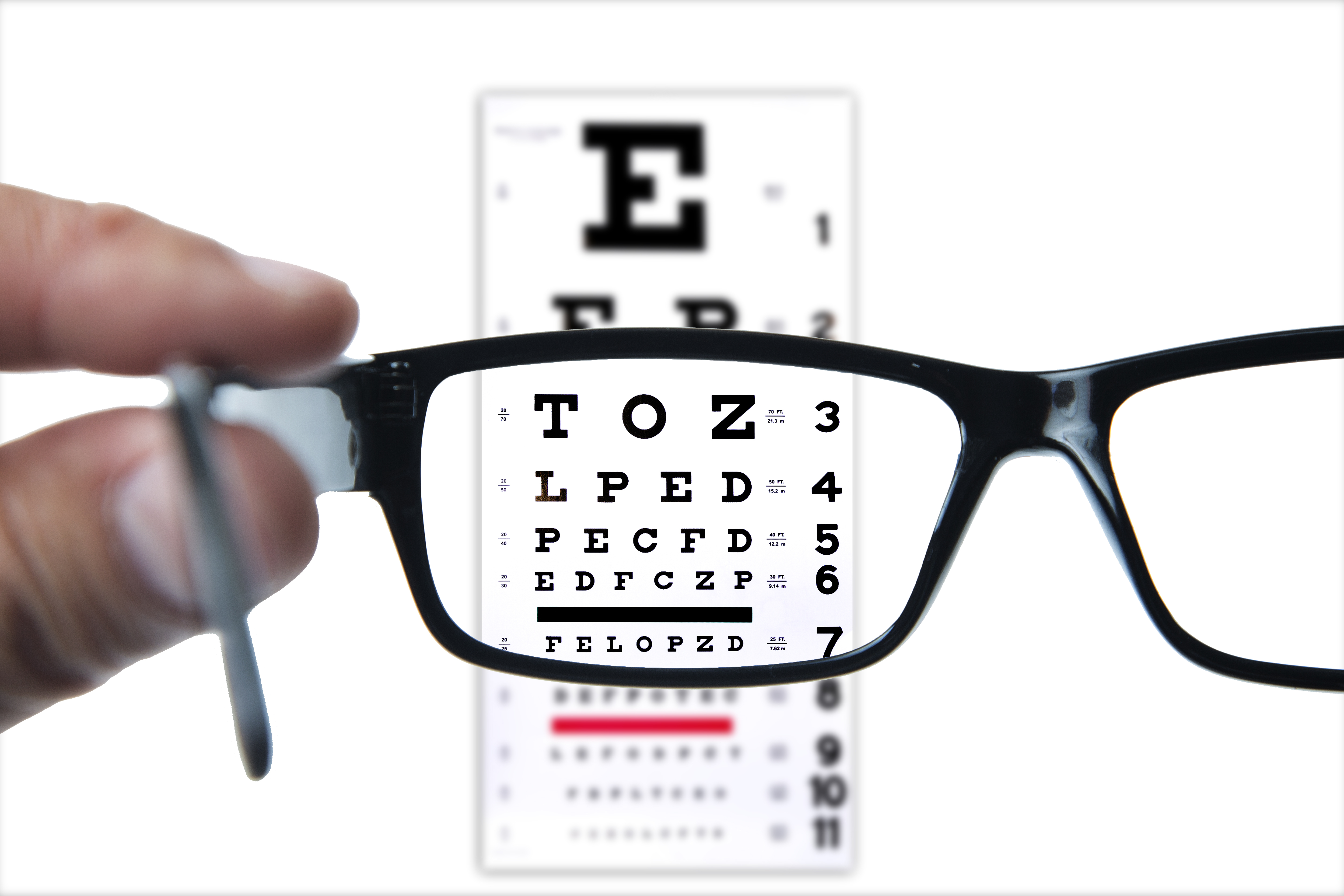
That includes seeing an ophthalmologist for a comprehensive eye exam. My appointment was last week.

The news was all good, mostly… no glaucoma, no sign of retinopathy or macular degeneration. My prescription changed just a bit, but I needed new eyeglasses anyway, so I’m not complaining.

It sucks that I live in America, where I have to pay a fortune for health care, devices, and drugs. But it’s great that I’m one of the lucky ones in America with coverage good enough to allow me to get to the eye doctor every year.

That’s one of the things about medical insurance, and the fight to make health care less expensive here. If it’s less expensive, it’s naturally more affordable for more people, and that is way less expensive to the government and its citizens than just relying on emergency room care when things get really bad.

That’s true for eye care. It’s true for diabetes management. It’s true for someone with heart disease, and it’s true for those going through depression and a host of other psychological issues.

From a patient point of view, denying coverage, denying care, and denying affordable access to the drugs we need denies us our right to exist on the same plane as someone not living with a chronic condition. And when we do that, we’re not only acting in a shameful way toward our own fellow man, we’re collectively paying more for the privilege to do so.

I still have many more appointments left this year. They’re almost all like this one: designed to check out one part of my body or another so I can detect (hopefully) small problems before I might need to solve larger ones.

Don’t we all deserve the same opportunity?