Monthly Archives: June 2015

Thank you for your support.

It’s that time of year again… the time when riders are out on their two wheeled vehicles, getting ready for the ride of a lifetime. Or lifetimes. Yours and mine.

These riders are training for the JDRF Ride to Cure Diabetes, which is held in several locations throughout the year. Today, I’d like to feature five riders, most of whom you probably know already, especially since four are also diabetes bloggers.

A rider needs to raise at least $2,000 to be allowed to join one of these rides. That’s the kind of money I can never even hope to raise, so the least I can do is support the riders who can (or who are close). I hope you’ll click on the links to their pages and help support their rides. The money they’re raising will go toward research to help make a future with less, and then hopefully no, Type 1 Diabetes. Here they are, in no particular order.
 
 
– Our first rider does not write a blog. But he has been featured on other blogs, including this one back in February 2014.

Bob Parant will be riding in Burlington, Vermont again on July 25. Bob’s a 43 year veteran of living with Type 1, and he never lets it get him down. Read his inspiring story here. And:

Support Bob’s Burlington, Vermont ride
 
 
– Moira McCarthy Stanford writes a compelling blog at Despite Diabetes, chronicling her life as the mother of a young woman living with Type 1 Diabetes. She’s been a tireless advocate for a long time, and three years ago, she participated in her first Ride to Cure Diabetes. This year, she’s participating in two rides—LaCrosse, Wisconsin on August 15, and Death Valley on October 17.

The best part for Moira will be in August, when her daughter Lauren will join her for the first time. Their stories are amazing, and you can help them both get to their destinations by supporting their rides. Here are the links:

Support Moira’s LaCrosse, Wisconsin ride
Support Moira’s Death Valley ride

Support Lauren’s LaCrosse, Wisconsin ride
 
 
– Jeff Mather is a beast of an athlete. He writes a very interesting blog at Jeff Mather’s Dispatches, and right now, he’s diligently working on training for a complete ironman triathlon: 2.3 mile swim, 110 mile bike, and a full marathon. All in the same day. All with Type 1 Diabetes along for the ride. He’ll be taking a break from his training (who takes a break from training with a 100 mile bike ride?) on July 25, when he’ll be in Burlington, Vermont for his latest JDRF ride, one of several for him in the past decade.

Support Jeff’s Burlington, Vermont ride
 
 
Jeff will probably spend part of his time in Vermont riding alongside Victoria Cumbow. Victoria writes at her self-titled blog about life with Type 1, her life as a new homeowner and resident of Nashville, Tennessee, and her absolute love of transportation on board her bicycle. Her first JDRF ride was two years ago in Death Valley, and she completed the Nashville ride a year ago. This time, she’ll be in Vermont, after already completing a sprint triathlon and a half marathon this year. Just… wow.

Support Victoria’s Burlington, Vermont ride
 
 
Last, but certainly not least, is Alecia Wesner, writer at SurfaceFine. In years past, she’s been a top fundraiser for JDRF walks in New York, where she lives and works. This year, she’s decided to give up sneakers for bike shoes, and head to Vermont for her first 100 mile ride. When I read what she writes about it, I think she may be unsure if she’ll make it. Regardless of what she says though, I think she’ll do great. And she’s bringing her sister along for the ride too!

Support Alecia’s Burlington, Vermont ride

Support Paige’s Burlington, Vermont ride
 
 
I’m not sure I know what else to say except how much I appreciate what these athletes are doing to help all of us living with Type 1 Diabetes. I hope you feel the same way, and I hope you’ll either join them or donate to help them on the ride of a lifetime. Many lifetimes. Yours and Mine.
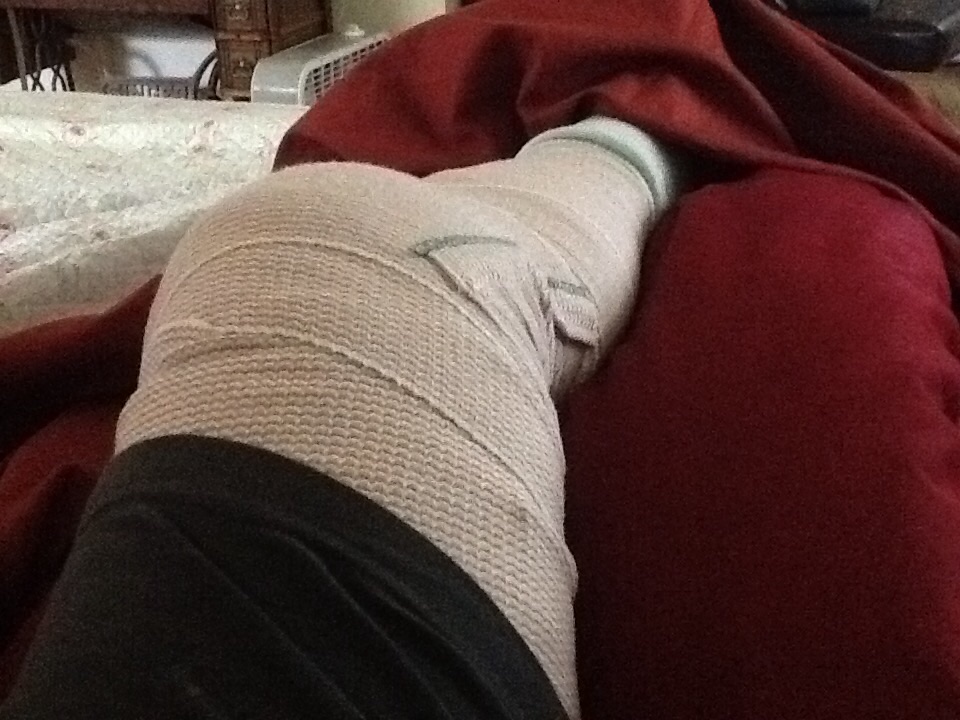


Post-op.

My arthroscopic knee surgery is complete. I’ve got a few more days of slowly getting used to using it again, and another couple of months of geting it stronger and back to normal.
image

I have to admit to having had a little fear over being put under for the operation. It had been nearly 50 years since the last time I was under general anesthesia (1966– I was four years old– can you believe it?). But it was relatively simple. One minute I was awake, and the next I woke up in recovery. And fortunately, no nausea like a few people had warned me about.

The thing I was most proud of was the fact that I fought for, and won, the right to keep my insulin pump on through everything. In coordination with my endocrinologist, we agreed to do a fifteen percent reduction in my basal rate after midnight. The surgery took place around 9:30 a.m.

I got my endocrinologist to write an okay for me to keep everything running during surgery, and she also included all my basal settings, insulin-to-carb ratio and correction factor numbers, and sent it to the orthopedist. In addition, I gave the staff detailed instructions I wrote up (photos included) on suspending and restarting my pump, and disconnecting my pump, should that have been necessary. They probably thought I was nuts, but better to leave nothing to chance while you’re unconscious.

I should also mention that I spent some time cleaning up my pump the night before, since I knew I was going into a sterile environment. That wasn’t a requirement, but I thought it would be a respectful thing to do.

We did glucose checks before and after (the procedure was only half an hour start to finish). I was 181 mg/dL pre-op, even though I had been fasting since about 10:30 the night before (hello, nerves). I was 151 mg/dL post-op.

I was told I had a significant tear of my interior meniscus, and that got fixed. The doctor also told me I had some arthritis in my knee, and he cleaned that out. I don’t know much about arthritis, so I don’t know if that makes sense.

At any rate, like I said, I’ve got to work on getting steady on my feet enough to get back to work on Monday. After that, I need to get everything stronger little by little, every day. In a couple of months, I hope to get back to riding my bike and swimming some (as a workout, as opposed to just soaking).

Now that it’s over, I’m eager to get this chapter behind me as soon as possible, and get back to feeling good, and being as healthy as possible.

Mid-Season Garden Update.

To say I’ve been insanely busy these last few months is quite an understatement. Right now, it’s work… all day meetings, but don’t forget to get the rest of the work done, rinse, repeat.

I’m not really complaining. Every so often in a job like mine, you have a year when a lot of things happen, and you’re depended on to give the extra measure of devotion for the good of the team. This is one of those years. It happens.

All this extra work makes it even nicer when I can come home and eat out of my garden. Here’s a mid-season update:
Garden

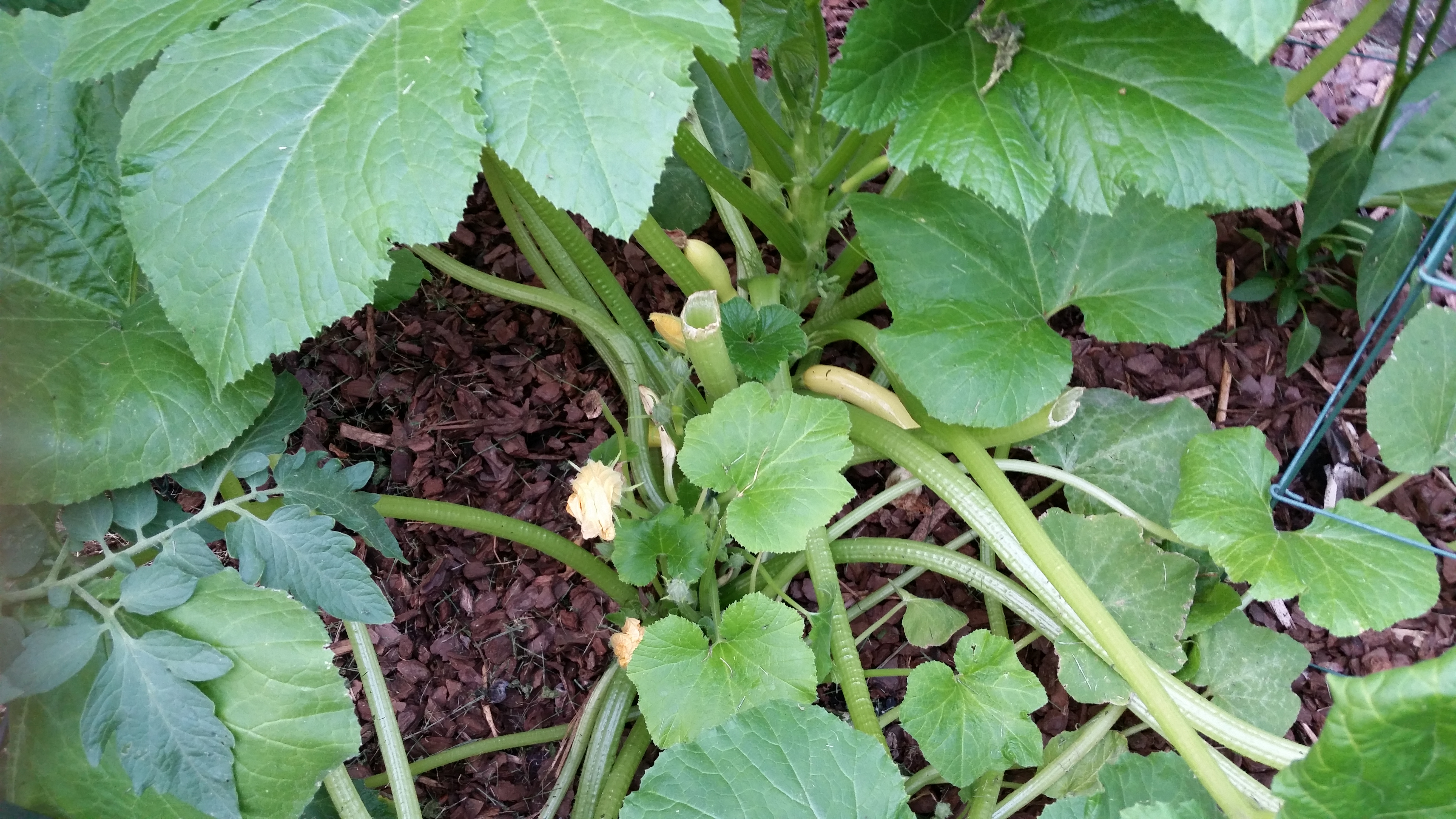
The big thing you notice here is the yellow squash plant, which I should never have planted there. They get pretty big after a while (like “Feed me, Seymour” big), and if they can, they’ll steal sunlight from any other plants in the area, like my tomatoes and my peppers. So I have to trim off a leaf or two now and then to make some space.

The bad news is that there seems to be evidence of some creature (squirrels, probably) eating the flowers (which come just before the squash), which is what helped me maintain a healthy plant that bore absolutely no squash last year.

The good news is that I have a couple of squash that have survived anyway.
GardenSquash

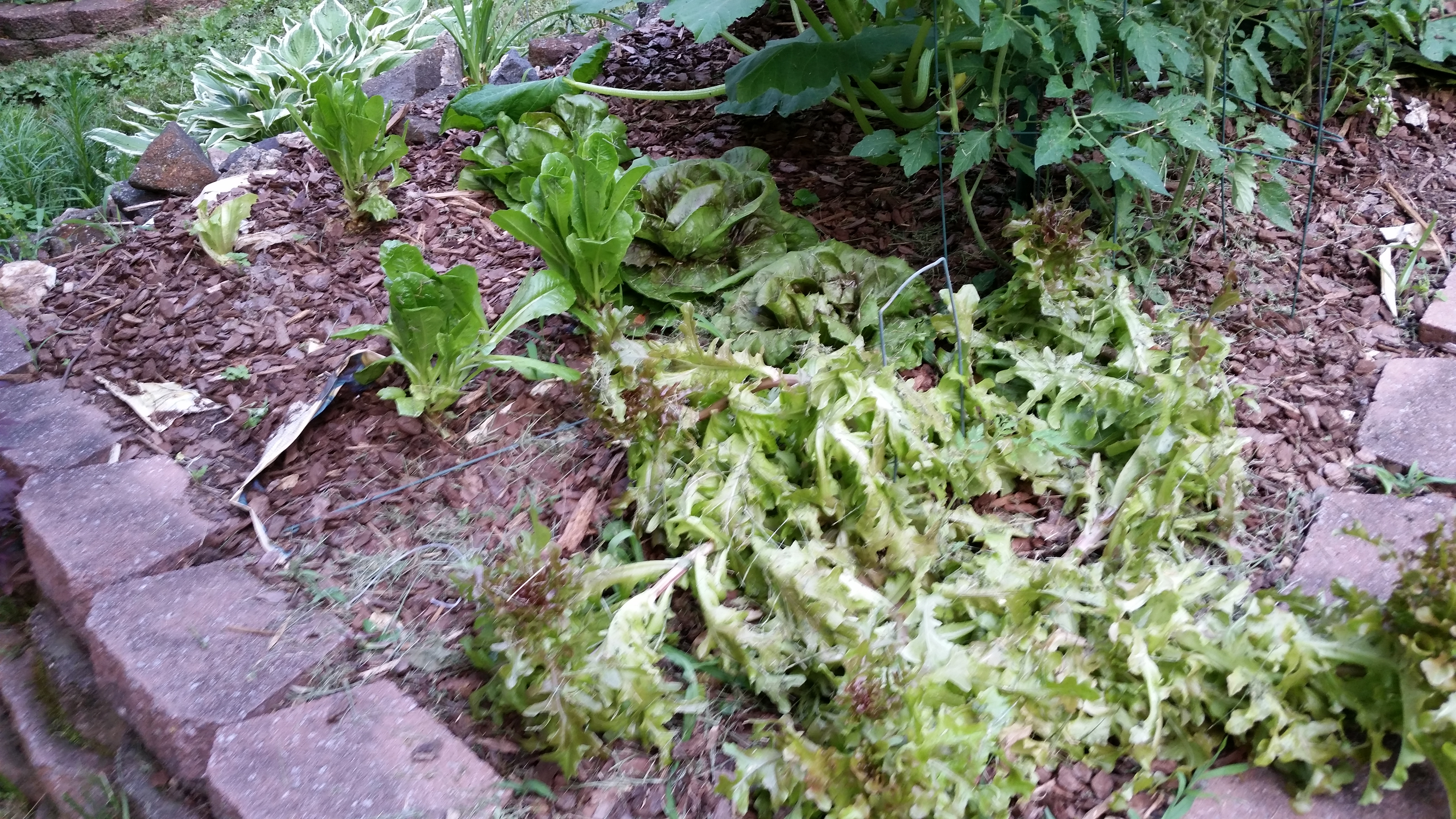
But, more bad news: In Monday night’s thunderstorm for the ages, my red leaf lettuce plants got pelted and fell over. This looks like the beginning of the end for these guys, which is sad because I’ve been eating salads nearly every day for over a month. I mean, these guys were the gift that keeps on giving. We’ve already eaten the romaine… there are just a few secondary shoots that have grown back, and they’ll make good salad. In addition to that, most of the radicchio (to the right of the romaine) has done very well.
GardenLettuce

Other than that, it looks like my pepper plants are surviving and thriving, and two of my three tomato plants are going gangbusters. I don’t know what happened to the third one, but it just stopped growing up a few weeks ago. I’m still holding out hope, but not much.

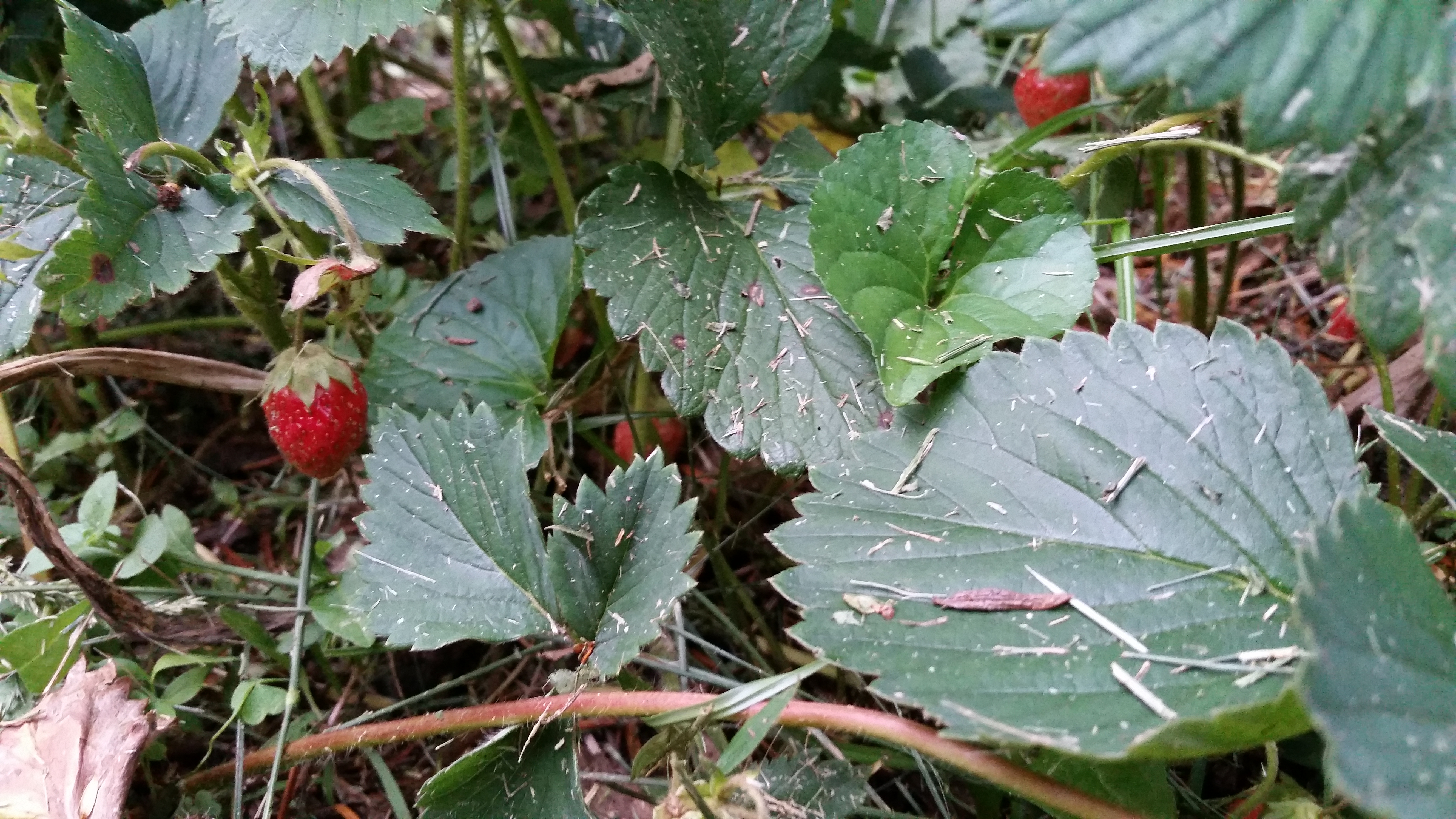
Oh, and I almost forgot: I’ve managed to get a few strawberries this year from a secondary garden. Most of them are smaller than what you’ll find in the grocery store, but they are so amazingly good! I can’t find enough adjectives to describe how mouthwateringly fresh they are.
GardenStr
 
 
So that’s what’s happening in the garden so far this year. Things aren’t perfect (like diabetes, gardening rarely is), but there’s still a lot to look forward to.

How ‘bout your summer? What are you up to, and what are you looking forward to?


Repetition is not progress.

If you’ve been following updates from me on Facebook recently, you may know that I’m due for arthroscopic surgery on my left knee in about a week. I haven’t talked about it here because, really, who wants to read about me while I whine about how I’ve been in pain for six weeks?

But I do have a point in talking about it now, so please bear with me.

I had to visit an orthopedic surgeon for the first time once I realized the pain wasn’t going away. This orthopedist, the one who repaired The Great Spousal Unit’s ACL 18 years ago, and fixed her broken ankle five years ago, is also performing my surgery. Seeing him means filling out the requisite paperwork, and at their insistence, registering for their patient portal (it’s a fairly large practice). Aside from the paperwork, and creating a new user name and password that I’ll never remember, I lost about 15 minutes that I’ll never get back. But that’s not all.

After my first visit, I was sent to get an MRI on my swollen, painful knee. I haven’t had an MRI in decades, so this meant going to a new place, filling out more paperwork, and losing another 15 minutes. The radiology practice also insisted that I registered for their patient portal, which I declined this time (“Don’t you want your MRI images mailed to you?” / “No, I’m happy with the CD you gave me, thank you”). Two sets of medical history, drugs that I’m taking, and pump settings. But that’s not all.

My surgery will be performed at a surgical center near my orthopedist’s office. The orthopedic surgeon is part owner in the surgery center. Guess what? The surgery center needed me to submit medical history, a list of medications I’m taking, and my pump settings. And the only way to submit all this is through their patient portal. This fifteen minutes stuff is getting repetitive. Fifteen minutes is time to wait for your BG to come up when you’re low, not to document the same information for the third time in a week and a half.

When People With Diabetes think about interoperability, we often think about getting our CGM readings to display on our insulin pumps, or sharing our CGM data with our spouses while we’re at work. And that’s true… all of that, in my opinion, qualifies as important steps in interoperability.

But I also think of interoperability as having one source of data, in one place, for all to access. For instance: I have my medical information, my device data, my list of medications in one secure place, and I get to decide when I want to share it with a medical team. I give them access to it at my discretion, for the amount of time I decide.

So if I need to see an orthopedic surgeon, and they want to see all of this, I can choose to allow them access to my information, and they can get it with a simple click from their desktops. In an emergency, we’ll have to work out a way so someone can access my information instantly from the hospital.

Certainly, my orthopedist can say to me, “If you don’t allow us access to your medical data, we won’t treat you”. But I’ll know that 1) My medical information is in one place, always; 2) Access to my information could be gained by others at my discretion; 3) My information could be kept up to date and accurate by me, on an ongoing basis (who knows if I made a mistake on that first set of information I submitted, or the second, or the third?); 4) I could revoke access to the data when it’s no longer needed; and 5) The data is available, staff isn’t necessary to hand it out, file it, or access it when my appointment comes up.

I could add to the list all day.

Nearly everyone is on board these days with the idea of less burden on the patient, and what I’m talking about here, in theory, solves some of that. What I think healthcare professionals and insurance companies have forgotten about is the importance of less burden on healthcare professionals themselves, and how less burden on collecting the same data over and over (and not making them read handwritten forms) will gain them extra time to care for patients.

I’m going to keep talking about it, because it needs to be talked about. A central place for someone’s medical information may be just as impactful as interoperability between diabetes devices. I mean, seriously, after my knee gets worked on, they might have to work on my hands because they’re tired from writing and typing. This can and should happen. I hope someone is working on it.